8 Essential Indoor Plants Placement Mistakes to Avoid
Indoor plants have quietly become one of the most loved design elements in modern homes. They soften harsh interiors, clean the air, boost mood, and create a living connection to nature. Yet despite all the enthusiasm, many people unknowingly sabotage their plants before they even have a chance to thrive.
Most plant failures aren’t caused by bad watering habits or poor soil. The real culprit is placement. Where you put a plant determines its light exposure, airflow, humidity, temperature stability, and even pest risk.
This guide explores the most common indoor plant placement mistakes people make — and how to fix them. Along the way, you’ll find practical examples, quick-check tables, room-by-room strategies, and real-life scenarios that will help you rethink how plants live inside your home.
Why Placement Matters More Than You Think
Before diving into mistakes, let’s understand what placement truly affects.
Indoor environments are artificial ecosystems. Unlike outdoor plants that adapt to natural cycles, houseplants depend entirely on micro-climates created inside your home.
Placement influences:
| Factor | Why It Matters |
|---|---|
| Light intensity | Drives photosynthesis and growth |
| Temperature stability | Prevents shock and stress |
| Air circulation | Reduces pests and fungal diseases |
| Humidity | Affects leaf health and transpiration |
| Accessibility | Determines watering consistency |
| Safety | Protects plants from pets/kids and vice versa |
A plant in the wrong spot may survive, but it won’t thrive. And struggling plants become magnets for pests, yellow leaves, drooping stems, and slow growth.
Now let’s explore the mistakes.
Mistake #1: Treating All Windows as Equal
One of the biggest misconceptions is that “a window is a window.” In reality, windows behave completely differently depending on direction.
The Direction Illusion
Light exposure changes dramatically depending on orientation:
| Window Direction | Light Type | Suitable Plants |
|---|---|---|
| North-facing | Low, cool light | Snake plant, ZZ plant, pothos |
| East-facing | Gentle morning light | Peace lily, ferns |
| South-facing | Bright, intense sun | Succulents, cacti |
| West-facing | Harsh afternoon sun | Rubber plant, ficus |
Many beginners place plants near a random window and assume it’s enough. Then they wonder why leaves burn or turn pale.
Common Scenario
You place a fern in a south-facing window → Leaves crisp within days.
You place a cactus in a north-facing window → It stretches and becomes leggy.
Fix
Create a window map of your home. Observe sunlight throughout the day and assign plants accordingly.
Mistake #2: Placing Plants Too Close to the Window
This sounds contradictory, but it’s extremely common.
Plants need light — but not window glass extremes.
The Glass Problem
Windows magnify environmental extremes:
- Summer: Glass amplifies heat → leaf burn
- Winter: Glass radiates cold → cold shock
- Drafts seep through window gaps
Leaves touching glass often develop:
- Brown spots
- Yellow edges
- Sudden leaf drop
Ideal Distance Guide
| Plant Type | Distance from Window |
|---|---|
| Succulents | 5–12 inches |
| Tropical foliage | 1–3 feet |
| Low-light plants | 3–6 feet |
Think of windows as light sources, not plant shelves.
Mistake #3: Ignoring Airflow
Plants need fresh air just as much as humans do.
Poor airflow leads to:
- Fungus gnats
- Mold growth
- Powdery mildew
- Weak stems
High-Risk Areas
- Closed bedrooms
- Tight corners
- Packed plant shelves
- Bathrooms without ventilation
Plants placed in stagnant air behave like plants trapped in a sealed box.
Airflow Checklist
- Leaves gently move occasionally
- No musty smell
- Soil dries within expected timeframe
If soil stays wet too long → airflow issue.
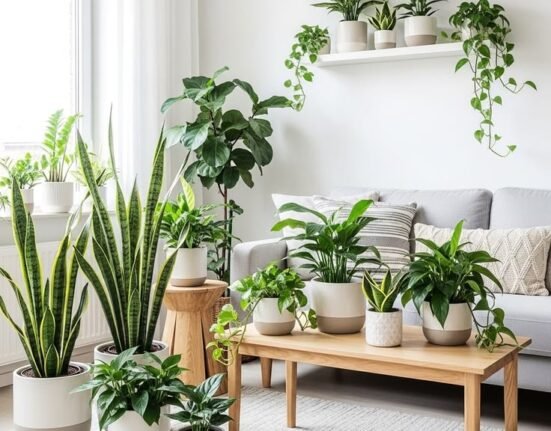
Mistake #4: Crowding Plants Together
Plant clusters look stunning on social media — but overcrowding creates hidden problems.
Why Crowding Fails
Too many plants together:
- Compete for light
- Trap humidity excessively
- Spread pests quickly
- Block airflow
One infected plant can infest an entire collection in days.
Smart Grouping Rule
| Group Size | Minimum Spacing |
|---|---|
| Small plants | 2–4 inches apart |
| Medium plants | 6–10 inches apart |
| Large plants | 12–24 inches apart |
Plants should see each other, not suffocate each other.
Mistake #5: Placing Plants Near Heat Sources
This is a silent killer.
Heat sources include:
- Radiators
- Heaters
- Ovens
- Stoves
- Air conditioners
- Electronics
These create microclimate deserts.
What Happens to Plants Near Heat
- Soil dries too fast
- Leaves curl or crisp
- Humidity drops dramatically
- Roots overheat
A plant near a heater experiences conditions similar to drought.
Safe Distance Guide
| Heat Source | Minimum Distance |
|---|---|
| Radiator | 3–6 feet |
| Heater vent | 5 feet |
| Kitchen stove | 3 feet |
Plants prefer stable temperature zones.
Mistake #6: Forgetting Vertical Light Gradients
Light intensity changes dramatically with height.
The top shelf gets 5–10x more light than the floor.
This mistake happens when people decorate plant shelves without thinking about light levels.
Shelf Light Strategy
| Shelf Level | Ideal Plants |
|---|---|
| Top shelf | Succulents, cacti |
| Middle shelf | Philodendron, pothos |
| Bottom shelf | Snake plant, ZZ plant |
Placing light-loving plants on low shelves leads to stretching and weak growth.
Mistake #7: Ignoring Seasonal Sun Changes
Sunlight shifts throughout the year.
A perfect summer spot can become a dark cave in winter.
Seasonal Light Reality
| Season | Sun Intensity | Placement Adjustment |
|---|---|---|
| Summer | Strong & high | Move plants away from windows |
| Winter | Weak & low | Move plants closer to windows |
Plants often decline in winter simply because their light disappeared.
Seasonal Routine
Twice a year:
- Spring → Move plants slightly back
- Autumn → Move plants closer
Think of it as seasonal plant migration.
Mistake #8: Placing Plants Where You Forget Them
The most overlooked mistake is accessibility.
If you don’t see a plant often, you won’t:
- Water it correctly
- Notice pests
- Rotate it
- Prune it
Plants hidden on high shelves or unused rooms are often forgotten.
Visibility Rule
If you don’t pass by a plant daily, move it.
Plants thrive where they become part of your routine.
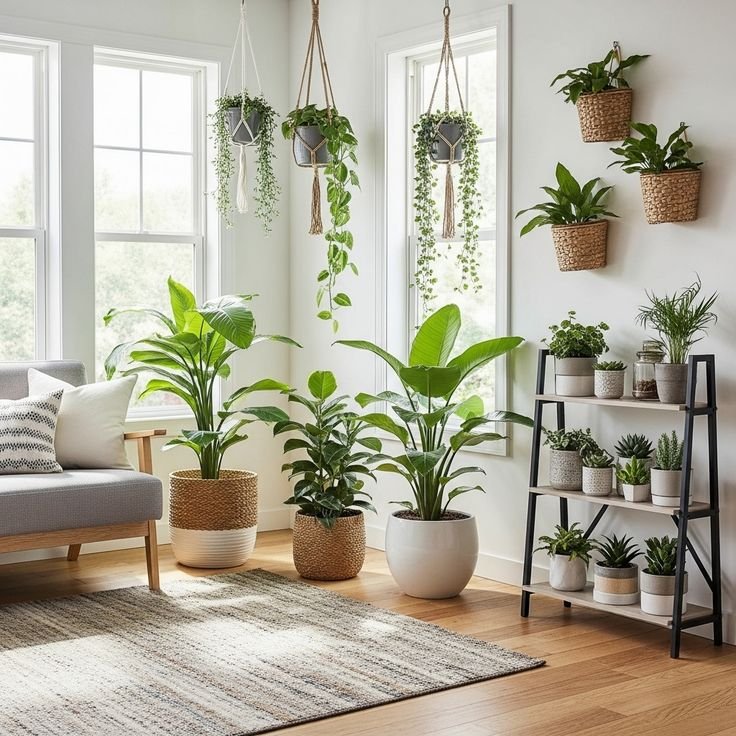
Room-by-Room Placement Guide
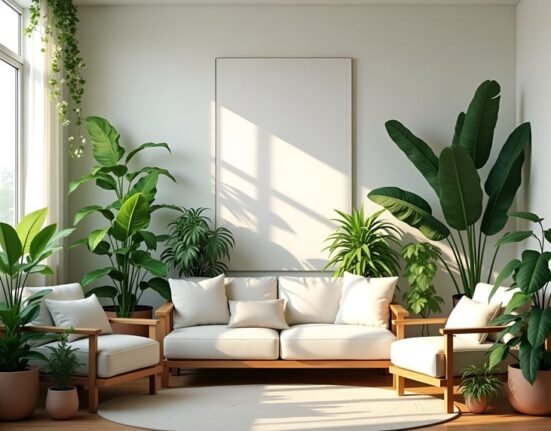
Living Room
Best spot for large statement plants.
Ideal plants:
- Rubber plant
- Fiddle leaf fig
- Monstera
Placement tips:
- Near bright windows
- Away from TV heat
- Rotate monthly
Bedroom
Focus on low-light, calming plants.
Ideal plants:
- Snake plant
- ZZ plant
- Peace lily
Avoid overcrowding for better air circulation.
Kitchen
Warm, humid, bright — perfect for herbs.
Ideal plants:
- Basil
- Mint
- Aloe vera
Keep plants away from stove heat.
Bathroom
Humidity paradise (if windows exist).
Ideal plants:
- Ferns
- Orchids
- Pothos
Avoid bathrooms with no natural light.
Quick Placement Decision Chart
| Question | If YES | If NO |
|---|---|---|
| Does it get natural light? | Place most plants | Use grow lights |
| Is airflow present? | Safe spot | Add fan or relocate |
| Near heat source? | Move plant | Good |
| Easily visible daily? | Perfect | Reconsider placement |
Signs Your Plant Placement Is Wrong
Watch for these clues:
| Symptom | Likely Cause |
|---|---|
| Leggy growth | Not enough light |
| Leaf burn | Too much sun |
| Yellow leaves | Poor airflow or overwatering |
| Drooping | Temperature stress |
| Slow growth | Wrong location |
Plants tell you when placement is wrong — if you learn their language.
Creating Micro-Climates at Home
The best plant homes mimic natural environments.
Create Zones:
- Bright zone near windows
- Medium zone mid-room
- Low-light zone corners
- Humid zone bathrooms/kitchens
Your home becomes a mini ecosystem.
Plant Placement Checklist
Before placing a plant, ask:
- What direction is the nearest window?
- Is temperature stable?
- Is airflow present?
- Will I see it daily?
- Is humidity suitable?
If all answers feel right → you found the spot.
The Psychology of Plant Placement
Beyond biology, placement affects how we connect with plants.
Plants in visible, comfortable areas:
- Get more attention
- Get better care
- Live longer
When plants become part of daily life, they thrive naturally.
Conclusion
Indoor plants are resilient, but they aren’t mind readers. Most problems we blame on watering or fertilizers actually begin with poor placement.
Avoiding these eight mistakes can transform struggling plants into thriving ones. Once you learn to read your home’s micro-climates, plant care becomes easier, more intuitive, and far more rewarding.
Good placement is not decoration — it’s the foundation of plant health.
FAQs
1. How often should I move my indoor plants?
Ideally twice a year — adjust placement in spring and autumn to match seasonal sunlight changes.
2. Can indoor plants live without windows?
Yes, but they need grow lights to replace natural sunlight.
3. How far should plants be from air conditioners?
At least 5 feet away to avoid dry air and temperature shock.
4. Why do my plants grow toward one side?
They’re reaching for light. Rotate pots every 2–4 weeks.
5. Is grouping plants good or bad?
Good in moderation. Keep spacing to maintain airflow and reduce pest spread.
6. What’s the best beginner placement tip?
Start with bright indirect light near an east-facing window — it suits most indoor plants.
If you master placement, plant care stops feeling complicated and starts feeling natural. Your home becomes a balanced environment where greenery thrives — and so do you. 🌿