6 Fast Indoor Plants Light Fixes for Dark Spaces
There’s something quietly heartbreaking about a dark room. You walk in and feel the heaviness before you even notice it—the way colors dull, shadows settle into corners, and plants lean desperately toward a window that never seems to give enough.
If you’ve ever tried to grow indoor plants in a dim home, you already know the frustration: yellow leaves, leggy stems, stalled growth, and the slow guilt of watching greenery fade.
But here’s the good news: dark spaces are not plant death sentences. They simply require smarter light strategies.
This guide is not just theory—it’s a practical, experience-driven playbook full of quick fixes, visual layouts, decision tables, mini experiments, and actionable frameworks. By the end, you’ll know exactly how to turn low-light rooms into thriving indoor jungles.
Let’s start by understanding the problem most people misdiagnose.
Why Dark Rooms Kill Plants (And Why Most Advice Fails)
When people say “low light,” they usually imagine shade. But indoor darkness is very different from outdoor shade.
Outdoors, even shade receives thousands of lux of ambient light. Indoors, a room may receive only 50–200 lux — far below what most plants evolved to handle.
Here’s a quick comparison.
Indoor Light Reality Chart
| Location | Typical Lux |
|---|---|
| Direct sunlight outdoors | 100,000+ |
| Bright shade outdoors | 10,000–25,000 |
| Window indoors (sunny day) | 1,000–3,000 |
| Bright room (no sun) | 300–700 |
| Dark room corner | 50–150 |
Most houseplants need 500–1500 lux to survive comfortably.
See the problem?
Your “bright living room” might actually be a cave.
The following six fixes are designed specifically to bridge that gap quickly and affordably.
Fix #1 — The 3-Foot Window Rule (The Fastest Placement Upgrade)
This single rule can double the usable light your plants receive overnight.
The Rule:
If a plant sits more than 3 feet from a window, treat it as living in low light.
Light drops exponentially indoors. Every foot matters.
Light Drop Demonstration
| Distance from Window | Light Remaining |
|---|---|
| 1 ft | 100% |
| 3 ft | 50% |
| 6 ft | 25% |
| 10 ft | 10% |
Most plants slowly decline simply because they sit too far away.
Quick Fix Layout
Instead of spreading plants around the room, create a window cluster zone.
Bad layout:
Plants evenly spread across the room.
Good layout:
A concentrated “light hub” near the window.
Mini Experiment
Try this for 7 days:
- Move all plants within 3 feet of a window.
- Observe leaf angle changes.
- Look for brighter new growth tips.
You’ll often see improvement in a week.
This is the fastest fix on the entire list.
Fix #2 — Use Mirrors as Light Amplifiers
Mirrors don’t just decorate rooms. They recycle sunlight.
A single mirror can increase plant light exposure by 30–60%.
Why Mirrors Work
Plants use reflected light almost as effectively as direct light.
This means light bouncing off a mirror is still valuable plant fuel.
Best Mirror Placements
| Mirror Position | Effect |
|---|---|
| Opposite window | Doubles room brightness |
| Behind plants | Creates backlighting |
| Adjacent wall | Spreads light sideways |
Simple Setup Diagram
Window → Plants → Mirror
Sunlight → Reflect → Bounce → Feed leaves again.
Budget Tip
You don’t need expensive décor mirrors.
Even inexpensive wall mirrors or mirrored trays work beautifully.
This fix is instant, aesthetic, and shockingly effective.
Fix #3 — The White Surface Light Hack
This trick feels too simple to work… until you try it.
Dark furniture absorbs light.
White surfaces bounce it back into the room.
Reflection Power Comparison
| Surface Color | Light Reflected |
|---|---|
| Black | 5% |
| Dark wood | 15% |
| Beige | 40% |
| White | 80–90% |
Fast Changes You Can Make Today
- Switch dark plant stands → white stands
- Add white trays under pots
- Place plants near light-colored walls
- Use white shelving for plant displays
You’re essentially building a light echo chamber.
Plants receive light from multiple angles instead of just one.
Fix #4 — Sheer Curtains Instead of Heavy Curtains
Heavy curtains can block 70–90% of sunlight.
Many people unknowingly sabotage their plants every morning.
Curtain Light Comparison
| Curtain Type | Light Passed |
|---|---|
| Blackout curtains | 5–10% |
| Thick drapes | 20–30% |
| Sheer curtains | 60–80% |
Switching curtains can instantly transform a room’s plant viability.
The Privacy + Light Balance
If privacy is needed:
Layer curtains:
- Sheer layer (daytime)
- Blackout layer (night)
Plants get light.
You keep privacy.
Everyone wins.
Fix #5 — Strategic Grow Light Zones (Not Whole Rooms)
People often assume grow lights must flood the entire room.
They don’t.
Plants only need light on their leaves, not everywhere.
The Grow Light Mistake
Wrong approach: lighting entire room
Smart approach: lighting plant clusters
Mini Grow Light Zone Blueprint
| Area | Setup |
|---|---|
| Shelf | Clip grow light |
| Desk | Small LED bar |
| Corner | Standing lamp grow bulb |
| Wall plants | Under-shelf strip |
Targeted lighting uses less electricity and looks more natural.
Simple Lighting Formula
12–14 hours of artificial light = replacement for sunlight.
This single fix saves countless struggling plants.
Fix #6 — Rotate Plants Weekly (The Forgotten Habit)
Plants lean toward light.
Over time, one side thrives while the other weakens.
This causes:
- Uneven growth
- Weak stems
- Bald patches
Weekly Rotation Routine
| Day | Task |
|---|---|
| Sunday | Rotate all plants ¼ turn |
| Monthly | Full position swap |
This equalizes light exposure and strengthens structure.
It’s simple, free, and massively underrated.
Putting It All Together — The 7-Day Dark Room Transformation Plan
Here’s your quick-start checklist.
Day-by-Day Action Plan
| Day | Action |
|---|---|
| Day 1 | Move plants within 3 ft of windows |
| Day 2 | Add mirrors near plant zones |
| Day 3 | Introduce white surfaces |
| Day 4 | Switch to sheer curtains |
| Day 5 | Install small grow lights |
| Day 6 | Create plant clusters |
| Day 7 | Start rotation habit |
Within one week, your space becomes plant-friendly.
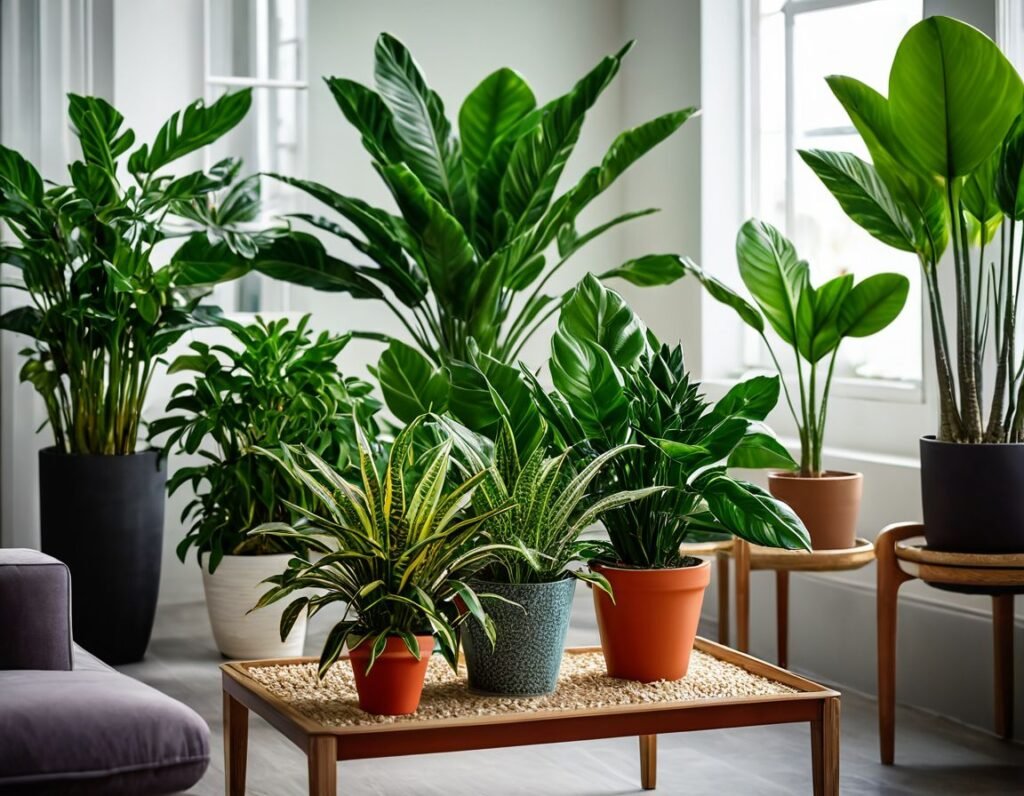
Best Plants for Dark Rooms (Bonus Section)
Some plants tolerate low light better than others.
Low-Light Champions
| Plant | Why It Works |
|---|---|
| Snake Plant | Stores energy efficiently |
| ZZ Plant | Thrives on neglect |
| Pothos | Adapts quickly |
| Peace Lily | Handles shade well |
| Cast Iron Plant | Extremely hardy |
Choose the right plants + the right light fixes = success.
Common Mistakes That Keep Rooms Dark
Avoid these traps:
- Placing plants in room corners
- Using dark furniture near windows
- Closing curtains all day
- Forgetting winter light drops
- Overwatering low-light plants
Light and water must always balance.
Less light = slower growth = less water needed.
Signs Your Fixes Are Working
Watch for:
- New leaf growth
- Brighter leaf color
- Upright stems
- Faster soil drying
- More frequent watering needs
Growth equals success.
The Emotional Side of Indoor Plants
Plants change how rooms feel.
Bright plants create:
- Warmth
- Calm
- Focus
- Comfort
Fixing light doesn’t just save plants.
It changes how your home feels.
Final Thoughts
Dark rooms are not plant enemies.
They simply require smarter light design.
Small changes create massive results:
- Move closer to windows
- Reflect light
- Use white surfaces
- Let sunlight in
- Add targeted grow lights
- Rotate weekly
Consistency beats perfection.
Your plants don’t need a greenhouse.
They just need better light strategy.
FAQs
1. Can plants really survive in rooms without windows?
Yes — but only with grow lights. Plants require light energy to photosynthesize, and artificial lighting can fully replace sunlight when used for 12–14 hours daily.
2. How do I know if my room is too dark for plants?
If you cannot comfortably read a book during the day without turning on lights, the room is likely too dark for most plants.
3. Are grow lights expensive to run?
No. Modern LED grow lights are energy-efficient and cost only a small amount per month when used for plant clusters.
4. Should I water plants less in dark rooms?
Yes. Lower light slows growth, meaning plants use water more slowly. Overwatering is the biggest killer in dark spaces.
5. How far should grow lights be from plants?
Usually 6–18 inches depending on light strength. Always check manufacturer recommendations.
6. What is the easiest plant for dark rooms?
Snake plants and ZZ plants are among the most forgiving and beginner-friendly options for low-light environments.
If you apply even half of these fixes, your dark room can transform into a thriving indoor plant sanctuary. 🌿