11 Essential Indoor Plants Decor Tips for Beginners
A practical, experience-driven guide to turning any home into a calm, green sanctuary
Indoor plants have a quiet way of transforming a home. They soften harsh corners, add personality to empty spaces, and make rooms feel alive. If you’ve ever admired plant-filled homes on Pinterest or Instagram and wondered how to recreate the look without turning your house into a jungle overnight, this guide is for you.
This isn’t about perfection or expensive décor. It’s about learning how plants behave in real homes, how beginners can avoid early mistakes, and how a few thoughtful choices can completely change your living space.
This long-form guide walks through 11 essential indoor plant decor tips designed specifically for beginners—along with tables, charts, and real-world strategies you can start using today.
Why Indoor Plants Matter in Home Decor
Before jumping into styling tips, it helps to understand why plants have such a strong visual impact.
Indoor plants influence a space in three major ways:
| Impact Area | What Plants Do | Result in a Room |
|---|---|---|
| Visual Balance | Break up empty walls & corners | Rooms feel complete |
| Texture | Add softness and depth | Space feels layered |
| Emotional Effect | Bring natural life indoors | Home feels calm & welcoming |
Think of plants as living decor. Unlike furniture, they grow, change, and interact with the environment.
Beginner Reality Check: Start Small, Think Long-Term
Most beginners fail with plants for one simple reason: they try to do too much too quickly.
A realistic plant journey looks like this:
Stage 1 → Buy 1–2 easy plants
Stage 2 → Learn light & watering
Stage 3 → Add variety and styling
Stage 4 → Create plant zones in rooms
Stage 5 → Develop your signature plant style
This guide helps you move through those stages confidently.
Tip 1 — Understand Your Home’s Light First
Lighting determines everything about plant success and styling.
The Three Light Zones Every Home Has
| Light Level | Typical Locations | Beginner-Friendly Plants |
|---|---|---|
| Bright Light | Near south-facing windows | Snake plant, Fiddle leaf fig |
| Medium Light | Near east/west windows | Pothos, Peace lily |
| Low Light | Hallways, corners | ZZ plant, Cast iron plant |
Quick Light Test
Stand in the room at noon:
- Can you read a book comfortably? → Medium light
- Is sunlight directly hitting the floor? → Bright light
- Does the room feel dim? → Low light
Decor Rule:
Always place plants where they naturally thrive first — style second.
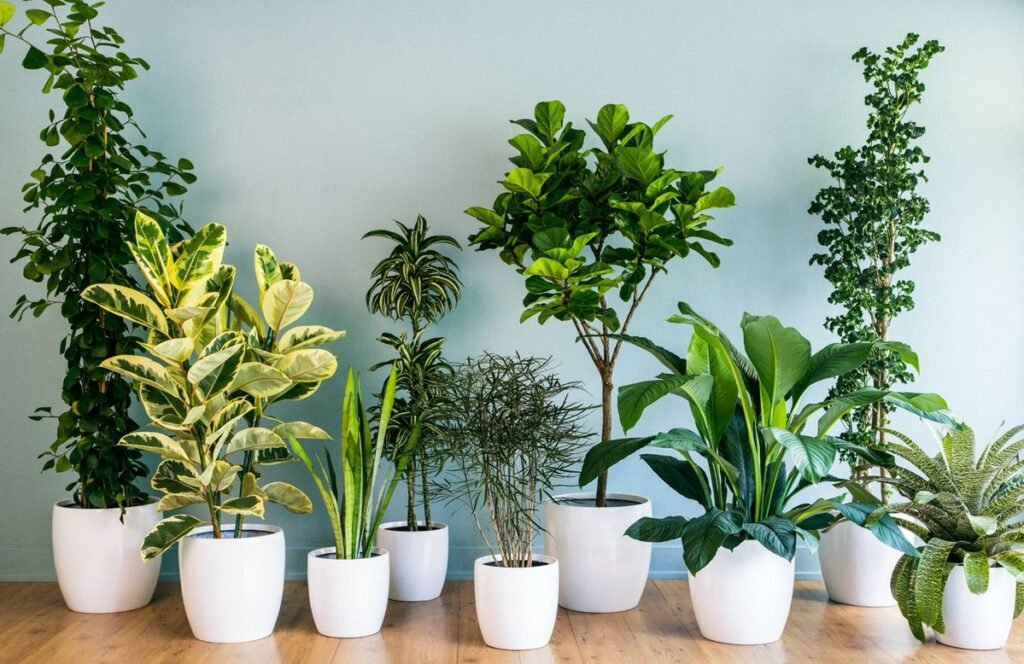
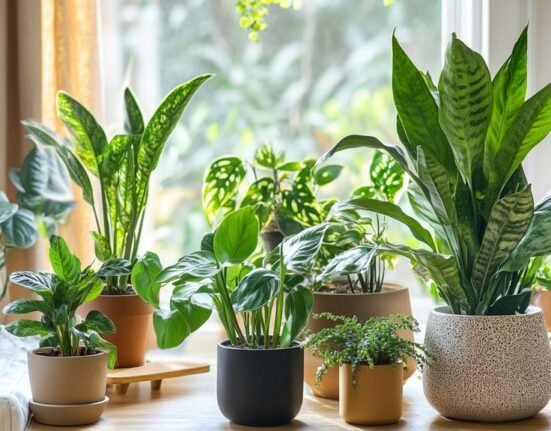
Tip 2 — Start With “Failure-Proof” Plants
Confidence grows when your first plants survive.
Beginner Survival Ranking Chart
Easiest
│ ZZ Plant ██████████
│ Snake Plant █████████
│ Pothos █████████
│ Spider Plant ████████
│ Peace Lily ███████
│ Rubber Plant ██████
Harder
These plants tolerate watering mistakes and lighting inconsistencies.
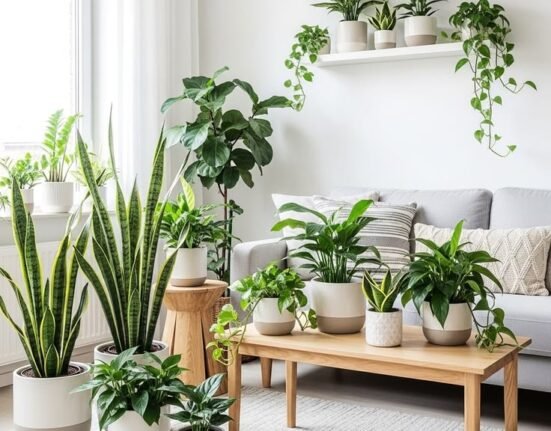
Tip 3 — Use the “Rule of Three” for Plant Grouping
Professional designers rarely place a single plant alone. They group plants in odd numbers.
Why odd numbers work
Odd-number groupings feel natural and balanced.
Grouping Formula
| Plant Role | Size | Example Placement |
|---|---|---|
| Anchor | Tall | Floor plant |
| Support | Medium | Table plant |
| Accent | Small | Mini pot or trailing plant |
Example grouping:
- Tall snake plant
- Medium pothos
- Small succulent
Together, they form a visual triangle.
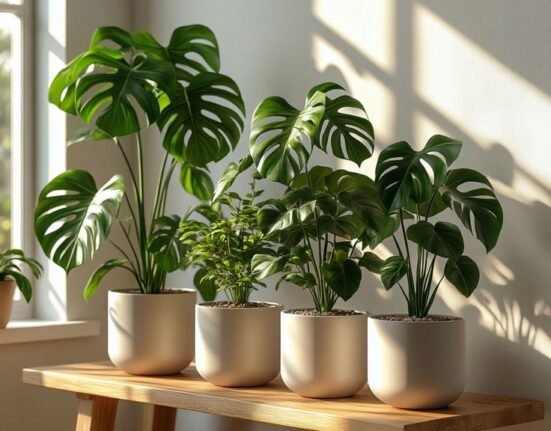
Tip 4 — Match Pots to Your Interior Style
Plants alone don’t create a cohesive look. Pots do half the work.
Pot Style Guide
| Home Style | Best Pot Materials | Colors |
|---|---|---|
| Minimalist | Ceramic, matte clay | White, black, beige |
| Boho | Terracotta, woven baskets | Earth tones |
| Modern | Concrete, metal | Grey, charcoal |
| Scandinavian | Light ceramic | White, soft pastels |
Beginner Tip: Choose one pot color family and stick to it.
Tip 5 — Think in Vertical Layers
Great plant decor uses height variation.
Vertical Styling Layers
Ceiling → Hanging plants
Eye level → Shelf plants
Waist level → Table plants
Floor → Large statement plants
Using all four levels makes a room feel lush without clutter.
Tip 6 — Decorate Corners First
Empty corners are the easiest places to start.
Why corners?
Corners naturally collect visual emptiness. Plants fill them effortlessly.
Perfect Corner Plant Choices
| Plant | Why It Works |
|---|---|
| Fiddle leaf fig | Tall & dramatic |
| Areca palm | Soft and airy |
| Rubber plant | Bold and sculptural |
Corner Rule: Tall plant + basket = instant upgrade.
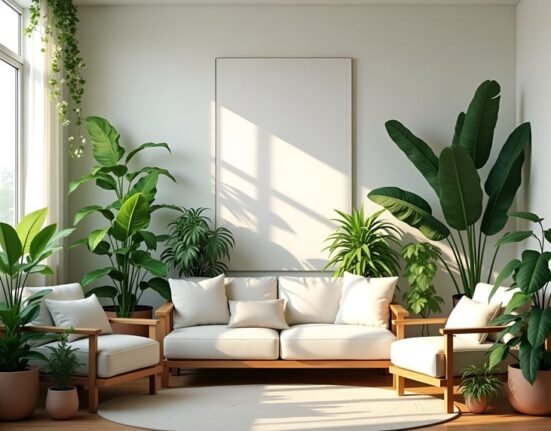
Tip 7 — Use Plants to Frame Furniture
Plants look best when they interact with furniture.
Where to place them:
- Beside sofas
- Next to TV stands
- Near bed corners
- Along dining tables
Before vs After Layout
| Without Plants | With Plants |
|---|---|
| Furniture looks isolated | Furniture feels grounded |
| Empty gaps | Balanced composition |
| Flat appearance | Layered space |
Tip 8 — Add Trailing Plants for Softness
Trailing plants create movement.
Best beginner trailing plants:
- Pothos
- String of hearts
- Philodendron
Ideal Locations
- Bookshelves
- Wall shelves
- Window ledges
Visual Effect Chart
Trailing Plants Effect Score
Softness ██████████
Movement █████████
Cozy Factor ██████████
Tip 9 — Create a Small Plant Shelf
A plant shelf becomes a mini indoor garden.
Shelf Styling Formula
| Shelf Level | Plant Type |
|---|---|
| Top | Hanging plant |
| Middle | Medium leafy plant |
| Bottom | Small pots |
Add books, candles, or frames to avoid clutter.
Tip 10 — Don’t Ignore Plant Spacing
Overcrowding is the most common beginner mistake.
Plant Spacing Guide
| Plant Size | Recommended Space Around |
|---|---|
| Small | 10–15 cm |
| Medium | 20–30 cm |
| Large | 40–60 cm |
Plants need air circulation to look healthy and intentional.
Tip 11 — Build Slowly, Not All at Once
Your home should evolve naturally.
Beginner Growth Timeline
Month 1 → 2 plants
Month 3 → 4–5 plants
Month 6 → 7–9 plants
Month 12 → 10–15 plants
This slow growth prevents overwhelm and keeps styling authentic.
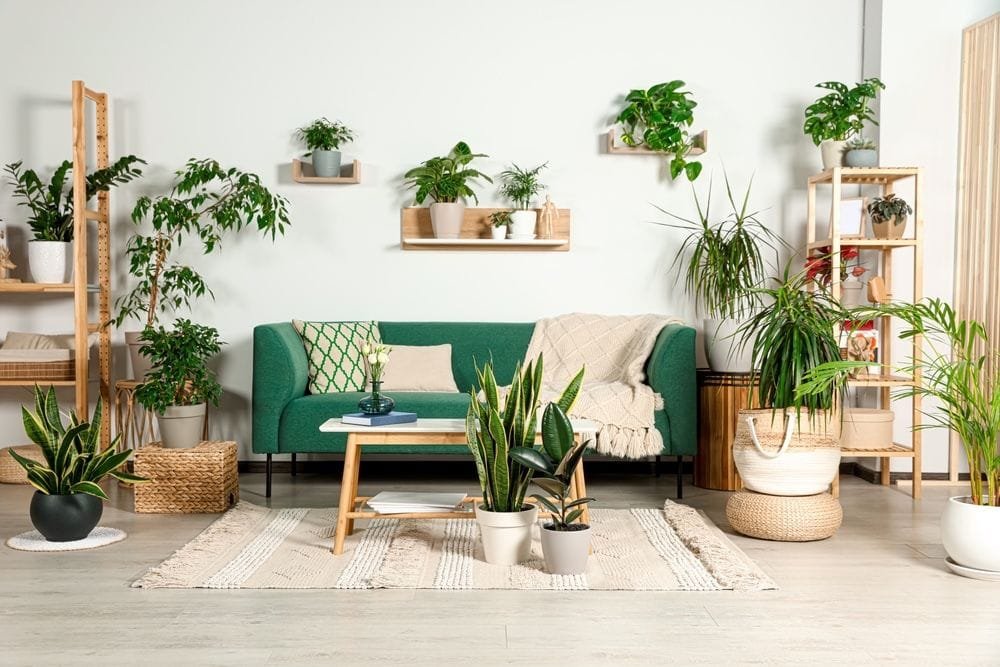
Sample Beginner Plant Layout (Living Room)
| Area | Plant Choice | Decor Role |
|---|---|---|
| Corner | Areca Palm | Height |
| Coffee table | Small succulent | Accent |
| TV unit | Pothos | Softness |
| Shelf | Spider plant | Texture |
| Window | Peace lily | Freshness |
The Beginner Plant Care Cheat Sheet
| Task | Frequency |
|---|---|
| Watering | Every 7–10 days |
| Rotate plants | Every 2 weeks |
| Clean leaves | Monthly |
| Fertilize | Every 2 months |
Common Beginner Mistakes to Avoid
- Overwatering
- Buying too many plants at once
- Ignoring lighting
- Using mismatched pots
- Cluttering shelves
Final Thoughts
Indoor plant decor isn’t about perfection. It’s about learning how plants fit into your lifestyle and letting your home evolve naturally.
Start small. Observe your space. Add greenery slowly. Over time, your home will begin to feel calmer, warmer, and more alive.
FAQs
1. How many indoor plants should a beginner start with?
Start with 2–3 easy plants. This gives you time to learn watering and lighting before expanding.
2. Which room is best to place indoor plants first?
Living rooms are ideal because they usually have better light and more open space for styling.
3. How often should I water indoor plants?
Most beginner plants prefer watering every 7–10 days. Always check soil dryness first.
4. Do indoor plants really improve mood?
Yes. Studies show greenery reduces stress and improves focus and relaxation.
5. Can indoor plants survive in low light?
Yes. Plants like ZZ plant and snake plant thrive in low-light environments.
6. What is the biggest mistake beginners make?
Overwatering is the number one reason indoor plants die.
If you follow these 11 essential tips, you’ll create a home that feels welcoming, balanced, and beautifully green—without stress or overwhelm. 🌿