7 Fast Indoor Plants Styling Fixes for Dull Spaces
A practical, story‑driven guide to transforming lifeless rooms in a single weekend
Introduction: When a Room Feels “Off” but You Don’t Know Why
You walk into your living room and nothing is technically wrong. The furniture is fine. The paint is neutral. The lighting works. Yet the space feels flat — almost like a hotel room you forgot to check out of.
This happens in more homes than people admit. Modern interiors often become too safe. Clean lines, beige palettes, and practical layouts unintentionally remove personality and warmth. That’s where indoor plants quietly step in as one of the fastest design upgrades available.
Plants add:
- Texture
- Color variation
- Height and movement
- Life and seasonal change
And most importantly, they add imperfection, which is exactly what sterile rooms lack.
This guide focuses on fast styling fixes — changes you can implement in hours, not months. These aren’t massive renovations or expensive redesigns. Think of them as visual shortcuts used by stylists to revive dull spaces quickly.
Why Plants Instantly Fix Boring Rooms
Before diving into the seven fixes, it helps to understand why plants work so well.
The Psychology Behind Greenery
Research in environmental psychology consistently shows that indoor greenery:
- Reduces visual fatigue
- Makes rooms feel more welcoming
- Increases perceived air quality
- Adds “biophilic comfort” — our natural attraction to living things
Even a single plant can change how large, bright, or cozy a room feels.
Table 1 – What Plants Add That Decor Often Can’t
| Design Element | Furniture | Wall Art | Plants |
|---|---|---|---|
| Movement | No | No | Yes |
| Natural texture | Rare | Rare | Yes |
| Seasonal variation | No | No | Yes |
| Color without repainting | Limited | Moderate | High |
| Mood boost | Moderate | Moderate | High |
Plants don’t replace décor — they complete it.
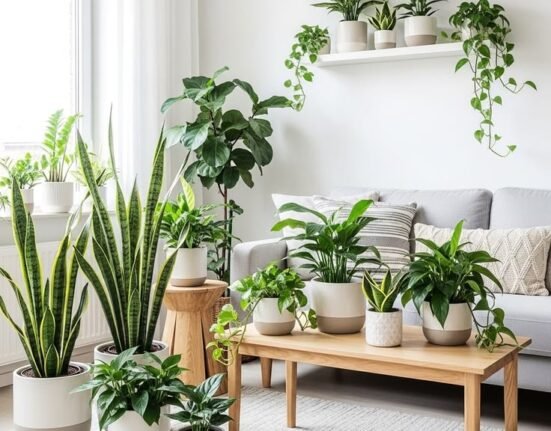
Fix #1 — Add Height Where the Room Feels Flat
The Problem
Many dull rooms suffer from a “horizontal trap.”
Everything sits at the same level: sofa, table, TV, shelves.
The eye travels across the room, not through it.
The Fast Fix
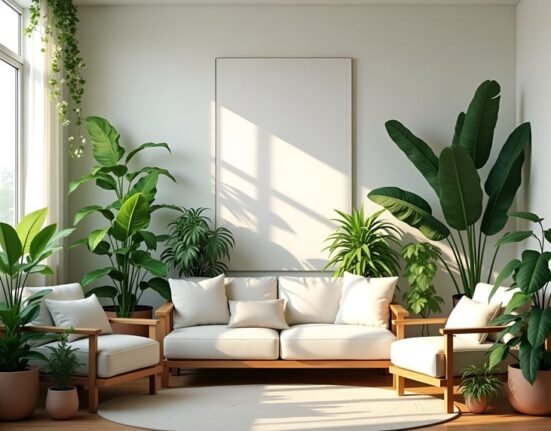
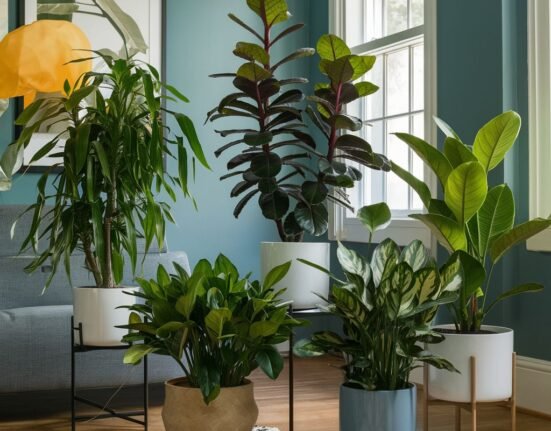
Add vertical plants to create upward movement.
Tall plants instantly:
- Make ceilings appear higher
- Fill empty corners
- Balance low furniture
Best Tall Plant Choices
- Snake plant
- Rubber plant
- Fiddle leaf fig
- Areca palm
Placement Formula
| Ceiling Height | Ideal Plant Height |
|---|---|
| 8 ft | 3–4 ft plant |
| 9–10 ft | 4–6 ft plant |
| 11+ ft | 6–8 ft plant |
Styling Tip
Place tall plants:
- Beside sofas
- Near TV units
- In empty corners
This is the fastest fix designers use during staging.
Fix #2 — Break the “Matching Decor” Problem
The Problem
Many homes accidentally look like catalog pages:
- Matching cushions
- Matching frames
- Matching colors
It’s tidy — but lifeless.
The Fast Fix
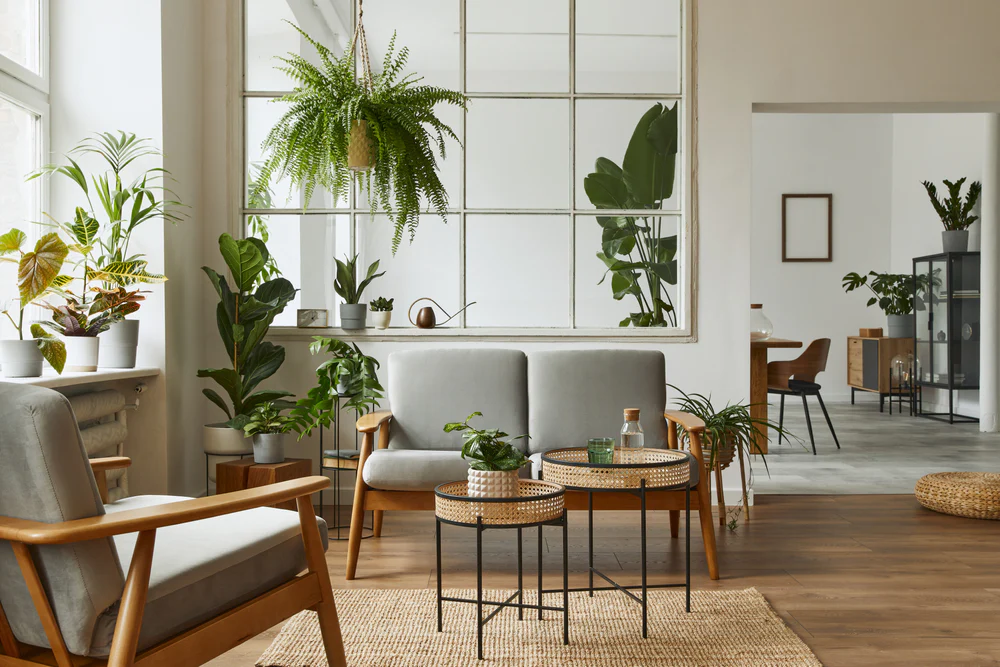
Introduce organic asymmetry with plants.
Plants naturally vary in:
- Shape
- Leaf size
- Direction
- Density
This breaks the artificial “perfect symmetry.”
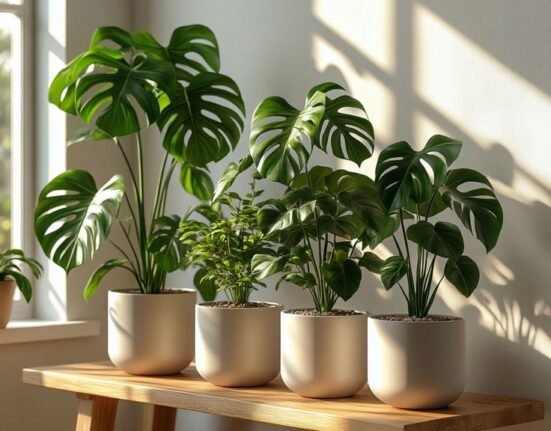
Quick Styling Rule: The Rule of Three
Group plants in odd numbers.
| Arrangement | Visual Impact |
|---|---|
| 1 plant | Minimal |
| 2 plants | Balanced but static |
| 3 plants | Dynamic and natural |
| 5 plants | Lush and layered |
Example Trio Combo
- Tall plant
- Medium bushy plant
- Small trailing plant
This trio alone can revive an entire corner.
Fix #3 — Add Trailing Plants to Soften Hard Edges
The Problem
Modern homes have too many straight lines:
- Square shelves
- Rectangular tables
- Flat screens
These edges make spaces feel rigid.
The Fast Fix
Introduce trailing plants.
They:
- Soften edges
- Add motion
- Make shelves feel styled, not staged
Best Trailing Plants
| Plant | Difficulty | Growth Speed |
|---|---|---|
| Pothos | Very easy | Fast |
| String of hearts | Easy | Medium |
| Philodendron | Easy | Fast |
| Ivy | Moderate | Fast |
Instant Styling Spots
- Bookshelves
- Floating shelves
- Window ledges
- Cabinet tops
Trailing plants create a cascading effect that instantly looks intentional.
Fix #4 — Use Plants to Create Color Without Repainting
The Problem
Neutral rooms often lack contrast.
Everything blends:
- Beige walls
- Grey sofa
- Wooden furniture
Nice, but dull.
The Fast Fix
Use plants as living color accents.
Plants provide:
- Deep green
- Lime green
- Variegated white
- Purple undertones
Color Contrast Chart
| Room Color Palette | Ideal Plant Colors |
|---|---|
| White & Beige | Dark green leaves |
| Grey & Black | Variegated leaves |
| Warm wood tones | Bright green plants |
| Cool minimalist | Deep emerald plants |
Plants provide color without commitment.
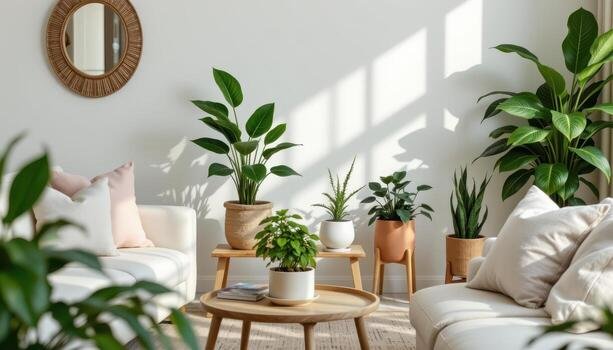
Fix #5 — Create a Mini Plant Corner (The Instant Focal Point)
The Problem
Every room needs a focal point.
Without one, the eye wanders aimlessly.
The Fast Fix
Build a plant corner cluster.
This takes 30 minutes and transforms the room instantly.
How to Build a Plant Corner
Step-by-step:
- Pick an empty corner
- Add a tall plant at the back
- Add medium plant in front
- Add small plant on stool or stand
Height Layering Diagram
Tall Plant      (Back)
Medium Plant    (Middle)
Small Plant     (Front)
Why It Works
Layering creates:
- Depth
- Visual hierarchy
- Cozy atmosphere
This is one of the fastest ways to make a room feel “designed.”
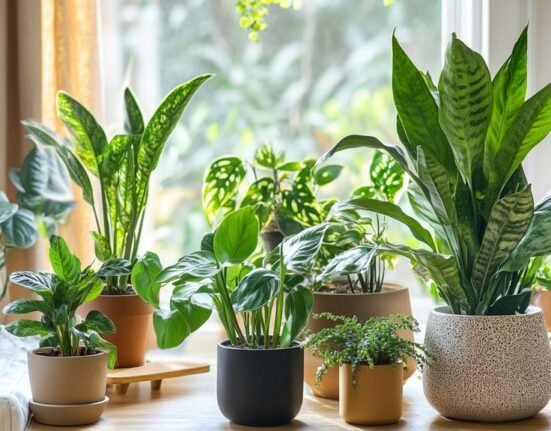
Fix #6 — Upgrade Pots Instead of Buying More Plants
The Problem
Plants often look random because of mismatched pots.
Cheap plastic containers ruin the visual effect.
The Fast Fix
Upgrade planters, not plants.
Stylish pots can:
- Unify a room
- Match decor themes
- Elevate simple plants
Pot Style Guide
| Decor Style | Pot Type |
|---|---|
| Minimalist | White ceramic |
| Boho | Woven baskets |
| Modern | Black matte |
| Rustic | Terracotta |
| Luxury | Stone or marble |
Budget Trick
Use basket covers over plastic pots.
Instant upgrade in seconds.
Fix #7 — Spread Plants Across the Room (The Flow Trick)
The Problem
Many people cluster all plants in one place.
Result: One green corner, rest of room empty.
The Fast Fix
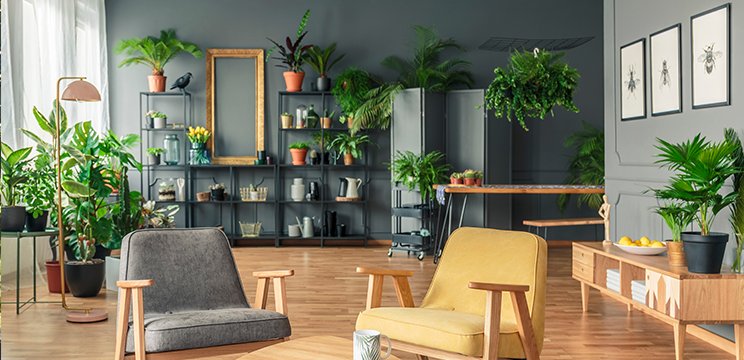
Distribute plants across visual zones.
Room Zoning Chart
| Zone | Plant Type |
|---|---|
| Near sofa | Medium leafy plant |
| Window | Light-loving plants |
| Shelf | Trailing plants |
| Floor corner | Tall plant |
| Desk/table | Small plant |
This creates green flow across the room.
Visual Transformation Timeline
| Time Invested | Visible Impact |
|---|---|
| 30 minutes | Noticeable freshness |
| 2 hours | Room feels styled |
| 1 day | Space feels redesigned |
| 1 week | Plants settle & look natural |
Plants are one of the few décor upgrades that improve with time.
The Beginner Plant Styling Toolkit
You don’t need dozens of plants. Start with:
| Item | Quantity |
|---|---|
| Tall plant | 1 |
| Medium plants | 2 |
| Trailing plants | 2 |
| Small desk plants | 2 |
| Decorative pots | 5–7 |
This small collection can style an entire apartment.
Common Mistakes to Avoid
Mistake 1 — Buying Too Many Plants
Start small. Style first. Expand later.
Mistake 2 — Ignoring Light Conditions
Plants must match window direction.
Mistake 3 — Overwatering
Most indoor plants die from kindness.
Mistake 4 — Uniform Pot Sizes
Mix heights and shapes.
Quick Weekend Makeover Plan
Saturday
- Buy 5–7 plants
- Buy 5 decorative pots
Sunday
- Create plant corner
- Style shelves
- Distribute plants across room
Total time: 3–4 hours.
Result: A completely different atmosphere.
The Long-Term Benefits of Styling with Plants
Beyond aesthetics:
| Benefit | Impact |
|---|---|
| Stress reduction | High |
| Air freshness perception | High |
| Productivity boost | Moderate |
| Creativity boost | High |
| Room satisfaction | Very high |
Plants don’t just change rooms — they change how rooms feel.
Conclusion: Small Changes, Big Transformation
Interior design often feels overwhelming because people imagine huge renovations. In reality, small styling changes can create massive visual shifts.
Indoor plants are powerful because they:
- Add life
- Break symmetry
- Create depth
- Introduce color
- Build focal points
And they do it quickly.
You don’t need a new sofa or fresh paint. Sometimes, a tall plant in the right corner can do what thousands of dollars in décor cannot.
Start small. Style intentionally. Let the room grow with you.
FAQs
1. How many plants should a beginner start with?
Start with 5–7 plants. This is enough to style a room without feeling overwhelming.
2. Which indoor plants are hardest to kill?
Snake plant, pothos, ZZ plant, and philodendron are extremely beginner‑friendly.
3. Can plants really make a room feel bigger?
Yes. Vertical plants draw the eye upward, creating the illusion of height and space.
4. Do I need expensive pots for good styling?
No. Basket covers or simple ceramic pots can instantly elevate plant styling.
5. Where should I place plants in a small room?
Focus on corners, shelves, and windows to avoid using valuable floor space.
6. How fast will the room feel different after styling?
Most people notice a dramatic change within a few hours of rearranging and placing plants.
Your space doesn’t need a renovation — it needs life. 🌿