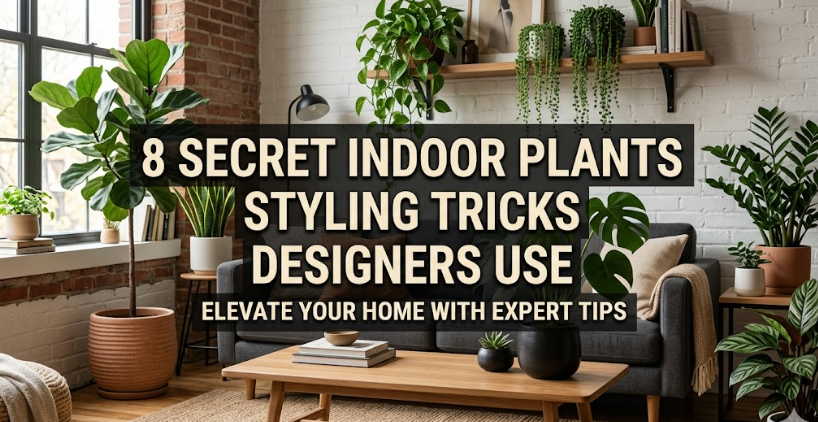
8 Secret Indoor Plants Styling Tricks Designers Use
Indoor plants have quietly evolved from decorative afterthoughts into defining design elements. Walk into any thoughtfully designed home, boutique café, or modern office and you’ll notice something subtle but powerful: plants aren’t simply placed — they’re styled.
Designers rarely rely on random plant placement. Instead, they use deliberate techniques that shape mood, space perception, light flow, and even emotional comfort.
This article reveals the real styling secrets interior designers use — the ones rarely discussed openly — and shows you how to apply them in your own home.
Why Indoor Plant Styling Matters More Than Ever
Before diving into the tricks, it’s important to understand why plant styling has become such a central part of modern interior design.
Modern homes face three common problems:
| Problem | Why It Happens | How Plants Help |
|---|---|---|
| Flat, lifeless interiors | Too many hard surfaces & screens | Add organic texture |
| Small living spaces | Urban housing trends | Create depth & illusion |
| Stressful environments | Fast-paced digital lifestyle | Boost calm & wellbeing |
Research repeatedly shows greenery reduces stress, improves mood, and increases perceived comfort in a space. But how plants are styled determines whether they enhance a room — or make it look cluttered.
Let’s uncover the secrets designers use.
Trick #1 — The Rule of Visual Weight (Not Quantity)
Beginners think styling means adding many plants. Designers know the opposite is true.
They focus on visual weight — how heavy or light an object feels visually.
A tall fiddle leaf fig carries more visual weight than five tiny succulents.
Visual Weight Comparison
| Plant Type | Height | Leaf Size | Visual Weight Score |
|—|—|—|
| Fiddle Leaf Fig | Tall | Large | ★★★★★ |
| Rubber Plant | Tall | Medium | ★★★★ |
| Snake Plant | Upright | Narrow | ★★★ |
| Succulents | Small | Tiny | ★ |
Designer Secret
Instead of filling every corner, designers create one strong plant anchor per zone.
Think of plants as furniture — not accessories.
How to Apply This
Choose ONE statement plant per room:
- Living room → tall tree plant
- Bedroom → mid-size calming plant
- Desk → small sculptural plant
This avoids clutter and creates balance.
Trick #2 — The Triangle Composition Formula
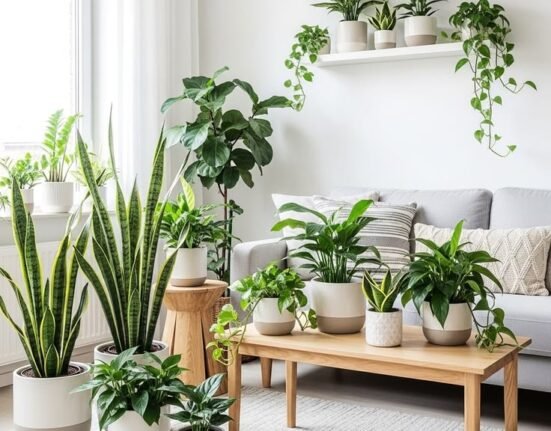
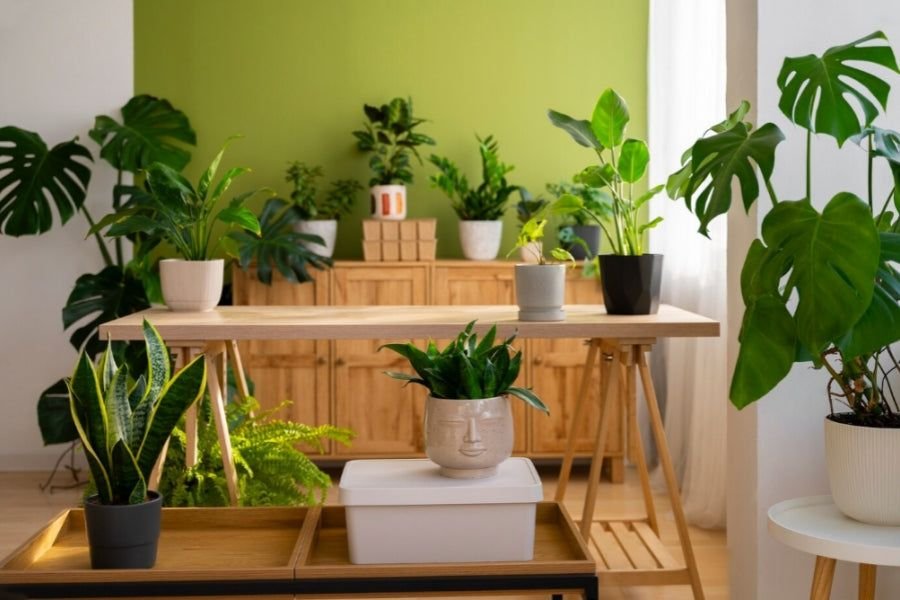
Designers rarely place plants randomly. They build invisible triangles.
The human eye naturally enjoys triangular arrangements because they feel balanced and organic.
Triangle Styling Example
Tall Plant
     ▲
     │
Medium Plant —— Small Plant
This works on:
- Shelves
- Corners
- Coffee tables
- Window sills
Height Triangle Guide
| Position | Ideal Height | Example |
|---|---|---|
| Top | 120–180 cm | Floor plant |
| Middle | 40–80 cm | Side table plant |
| Bottom | 10–25 cm | Small pot plant |
Once you notice this trick, you’ll see it everywhere in magazines and designer homes.
Trick #3 — Layering Like a Forest
Nature never grows plants in single layers. Forests have depth.
Designers mimic this by layering plants in three depth zones.
The 3 Plant Depth Zones
| Zone | Placement | Purpose |
|---|---|---|
| Background | Corners & walls | Height & drama |
| Midground | Tables & stands | Volume |
| Foreground | Coffee tables & shelves | Detail |
This creates a lush, immersive feeling even with only 3–5 plants.
Trick #4 — The Odd Numbers Rule
Even numbers feel rigid. Odd numbers feel natural.
Designers almost always group plants in 3, 5, or 7.
Why Odd Numbers Work
| Even Grouping | Feeling | Odd Grouping | Feeling |
|---|---|---|---|
| 2 plants | Formal | 3 plants | Natural |
| 4 plants | Stiff | 5 plants | Organic |
When grouping plants:
- Vary heights
- Vary leaf shapes
- Keep pot colors cohesive
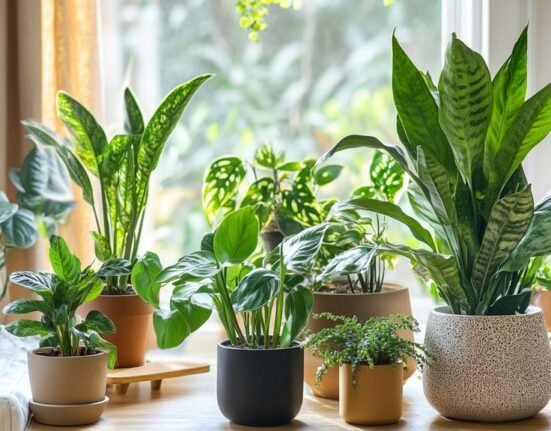
Trick #5 — Mixing Leaf Shapes (The Texture Secret)
This is one of the biggest designer secrets.
Most beginners buy plants that look similar — all pointy or all bushy.
Designers mix leaf shapes like fabrics.
Leaf Texture Categories
| Category | Shape | Examples |
|---|---|---|
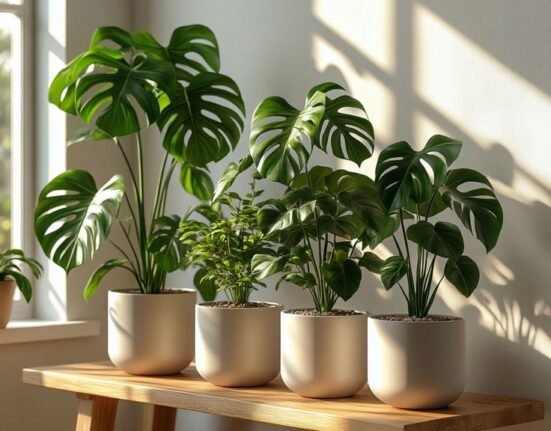
| Bold | Large & wide | Monstera |
| Vertical | Upright & narrow | Snake plant |
| Soft | Flowing & trailing | Pothos |
| Feathery | Delicate | Fern |
Perfect Texture Mix Formula
Use 3 different leaf textures per room.
This instantly makes a space feel styled and intentional.
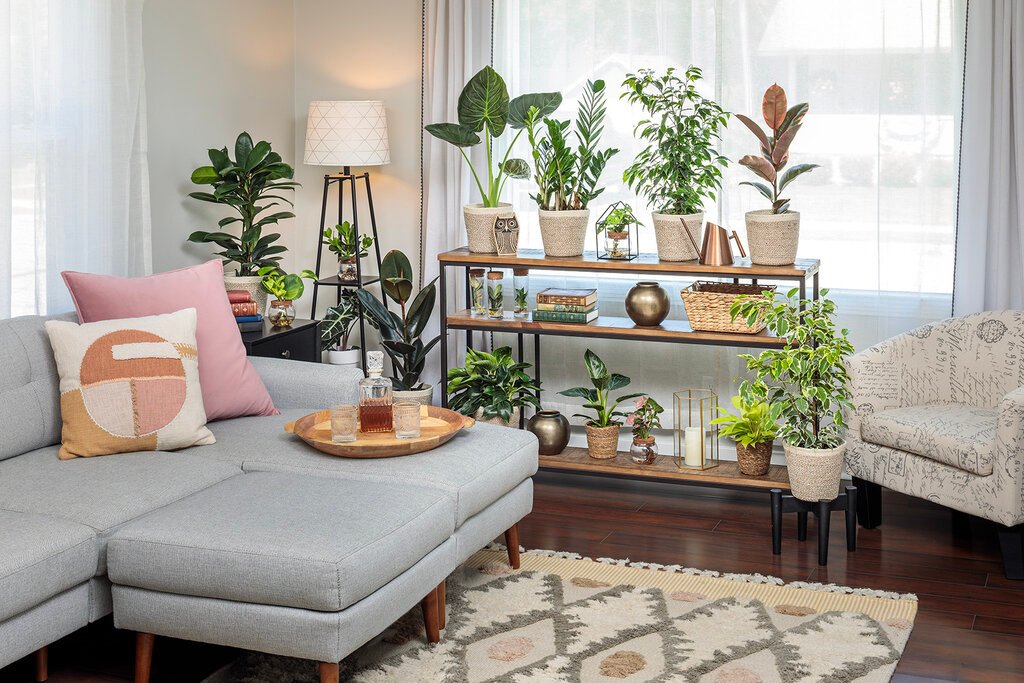
Trick #6 — Elevation Changes Everything
Plants shouldn’t all sit on the floor.
Designers play with height variation.
Elevation Levels Designers Use
| Level | Tools Used |
|---|---|
| Floor | Tall planters |
| Mid height | Plant stands |
| Eye level | Shelves |
| Overhead | Hanging planters |
The more levels you use, the more dynamic the room feels.
Trick #7 — Pot Styling Is 50% of the Look
Designers treat pots like fashion accessories.
A beautiful plant in a bad pot loses impact.
Pot Color Strategy
| Interior Style | Best Pot Colors |
|---|---|
| Minimalist | White / black |
| Boho | Terracotta |
| Luxury | Marble / brass |
| Scandinavian | Neutral matte |
Designer Rule
Match pots to furniture tones, not wall color.
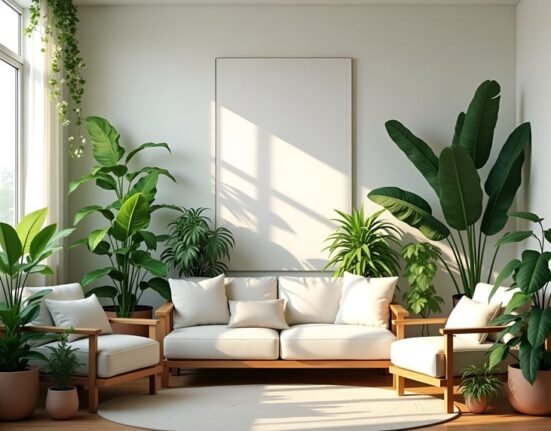
Trick #8 — The Negative Space Secret
This is the most surprising trick.
Designers intentionally leave empty space around plants.
Why?
Because breathing room makes plants look expensive and curated.
Plant Spacing Guide
| Plant Size | Minimum Space Around |
|---|---|
| Small | 10–15 cm |
| Medium | 20–30 cm |
| Large | 50–70 cm |
Crowding destroys elegance.
Indoor Plant Styling Impact Chart
Here’s how styling affects room perception.
| Styling Level | Room Feel Score |
|---|---|
| No plants | 2/10 |
| Random plants | 4/10 |
| Styled plants | 9/10 |
Plants don’t just decorate — they transform.
Room-by-Room Styling Blueprint
Living Room
Use:
- 1 tall statement plant
- 2 medium plants
- 1 trailing plant
Bedroom
Use calming plants:
- Snake plant
- Peace lily
- Small bedside plant
Kitchen
Use small herb plants:
- Basil
- Mint
- Rosemary
Bathroom
Use humidity lovers:
- Ferns
- Pothos
Common Styling Mistakes Designers Avoid
| Mistake | Why It Fails |
|---|---|
| Too many small plants | Looks cluttered |
| Same size plants | Looks flat |
| Ignoring light | Plants struggle |
| Matching everything | Feels boring |
Final Thoughts
Indoor plant styling is less about gardening and more about composition, balance, and storytelling.
Designers don’t fill rooms with plants — they place them with intention.
Once you start using these tricks, your space will feel:
- More alive
- More expensive
- More peaceful
And best of all — uniquely yours.
FAQs
1. How many indoor plants should a beginner start with?
Start with 3–5 plants. Focus on styling rather than quantity.
2. What is the easiest plant to style?
Snake plant, pothos, and rubber plant are beginner-friendly and versatile.
3. Can too many plants make a room look messy?
Yes. Without spacing and height variation, plants can feel cluttered.
4. Do plants really improve mood?
Yes. Studies show indoor greenery reduces stress and boosts productivity.
5. Should all plant pots match?
No. They should coordinate, not match perfectly.
6. What’s the biggest styling secret?
Using negative space and varying plant heights.
If you’d like, I can now create a companion article with visual layout diagrams or a small-space version of this guide 🌿