9 Indoor Plants Styling Secrets for Minimalist Homes
Minimalism isn’t about emptiness. It’s about intention. A minimalist home feels calm, breathable, and purposeful — yet without warmth, it can slip into sterile territory. That’s where indoor plants quietly transform everything. A single well-placed leaf can soften a hard edge, add movement to still rooms, and bring life into spaces defined by simplicity.
This guide dives deep into how to style indoor plants in minimalist homes using practical design logic, visual balance, and spatial psychology. These are not just decorating tips — they’re styling secrets used by designers to create spaces that feel curated rather than cluttered.
Why Plants Belong in Minimalist Interiors
Minimalist design relies on a few core principles:
| Minimalist Principle | Meaning in Interiors | How Plants Enhance It |
|---|---|---|
| Simplicity | Fewer objects, more purpose | Plants replace decor clutter |
| Negative space | Empty space has value | Plants add softness without chaos |
| Natural materials | Wood, stone, linen | Plants amplify natural textures |
| Calm palette | Neutral and muted tones | Green becomes the accent color |
| Functionality | Every item serves a role | Plants improve air, mood, and acoustics |
Plants are unique because they serve three roles simultaneously:
• Decor element
• Living organism
• Emotional comfort tool
Minimalism doesn’t reject decoration — it rejects unnecessary decoration.
Secret 1 — Choose Fewer Plants, But Make Them Larger
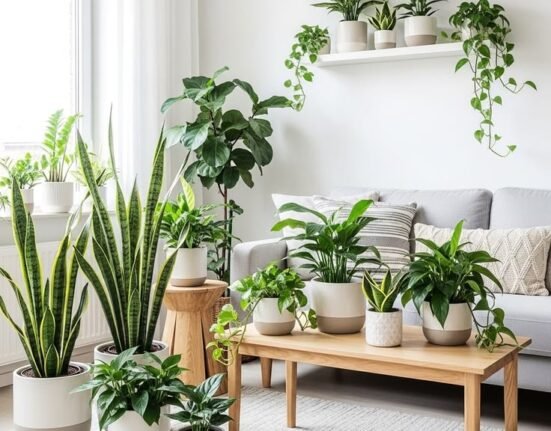
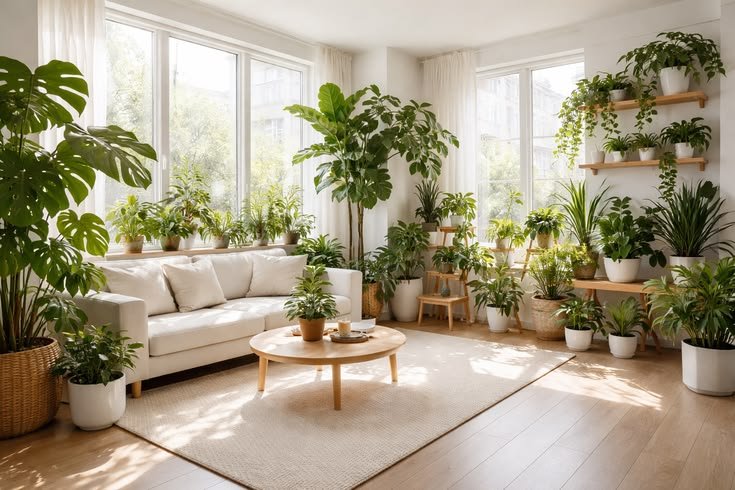
Minimalism is about impact per item. Instead of ten tiny pots scattered everywhere, designers choose 1–3 statement plants per room.
Think of plants as furniture, not accessories.
The Rule of Visual Weight
Every object in a room has visual weight. A large plant balances large furniture. Small plants disappear visually and create clutter when overused.
Size Selection Guide
| Room Size | Ideal Plant Height | Number of Plants |
|---|---|---|
| Small room (≤120 sq ft) | 2–3 ft | 1–2 plants |
| Medium room (120–250 sq ft) | 3–5 ft | 2–3 plants |
| Large room (≥250 sq ft) | 5–8 ft | 3–4 plants |
Why big plants work:
- Fill vertical empty space
- Create focal points
- Reduce need for extra decor
Minimalist Styling Exercise
Remove all small plants from your living room. Replace them with one tall plant near natural light. The room will instantly feel calmer and more intentional.
Secret 2 — Stick to a Limited Plant Color Palette
Minimalist interiors thrive on color discipline.
Plants are already visually busy due to leaf patterns. Too many plant varieties can feel chaotic.
Best Plant Color Palette for Minimalism
| Category | Plant Type Look | Mood Created |
|---|---|---|
| Deep Green | Dark glossy leaves | Sophisticated & calm |
| Soft Sage | Dusty pale greens | Airy & light |
| Blue-Green | Cool toned foliage | Modern & sleek |
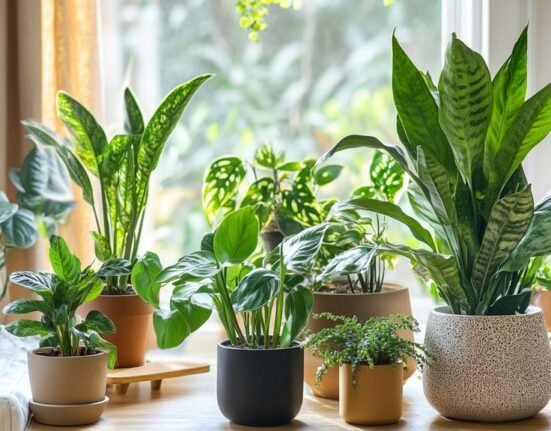
| Variegated (limited) | White/green mix | Gentle contrast |
The 80/20 Rule
- 80% solid green foliage
- 20% variegated plants
This keeps harmony while adding subtle interest.
Secret 3 — Match Pots With Architecture, Not Furniture
One of the biggest styling mistakes is matching pots to furniture. Designers match them to architecture instead.
Why? Architecture changes less often than furniture.
Pot Style Cheat Sheet
| Home Style | Best Pot Materials | Finishes |
|---|---|---|
| Modern minimalist | Ceramic, concrete | Matte, smooth |
| Scandinavian | Clay, terracotta | Soft matte |
| Japandi | Stone, wood, clay | Raw textures |
| Industrial | Cement, metal | Rough, dark |
The Three-Pot Rule
Limit your entire home to three pot finishes max.
Example palette:
- White matte ceramic
- Natural terracotta
- Light concrete
Consistency makes the home feel curated.
Secret 4 — Use Plants to Fill “Negative Corners”
Minimalist homes often have empty corners — intentionally. But completely empty corners can feel cold.
Enter the Corner Plant Technique.
Why Corners Matter
Corners are visually heavy spaces. A plant softens the harsh 90° angle and creates organic flow.
Best Corner Plants
| Plant Shape | Why It Works |
|---|---|
| Tall vertical | Draws eye upward |
| Fountain shape | Softens hard lines |
| Wide leaves | Adds volume |
Corner Placement Formula
Corner Distance = 10–20 cm from wall
Height = At least ½ wall height
Pot Width = ⅓ plant height
This proportion feels naturally balanced.
Secret 5 — Create a Single Plant Focal Point Per Room
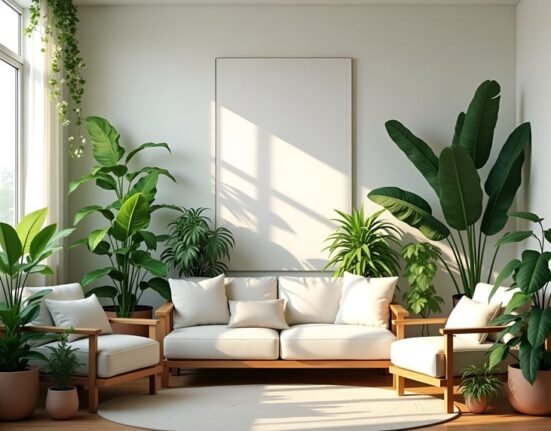
Every minimalist room needs a focal point. Often this is art, lighting, or furniture. A plant can serve this role beautifully.
Focal Point Hierarchy
| Priority | Possible Focal Object |
|---|---|
| 1 | Large plant OR artwork |
| 2 | Sofa or bed |
| 3 | Lighting feature |
Never compete focal points.
If you have bold art, choose subtle plants.
If you lack art, let the plant shine.
Secret 6 — Use Height Layers Instead of Quantity
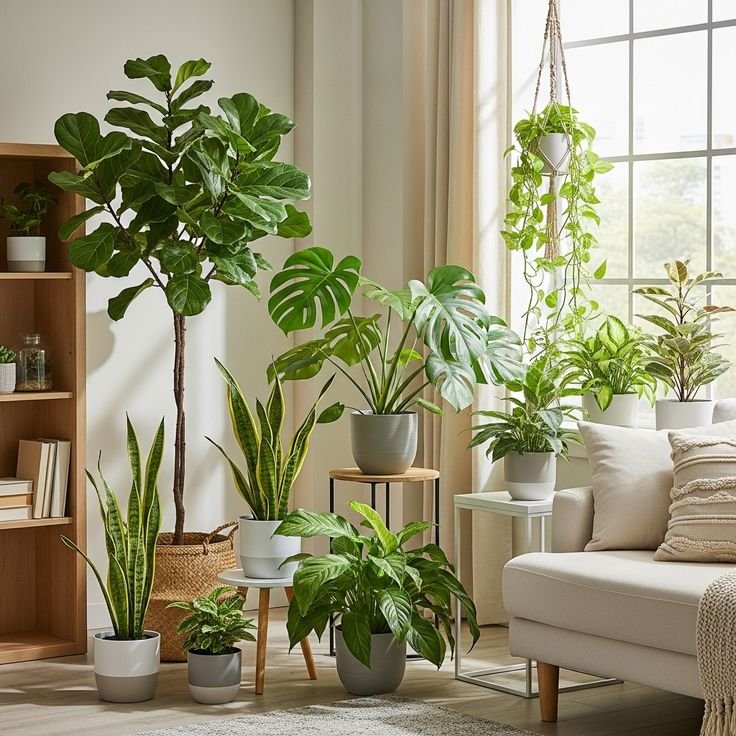
Designers create interest through height variation, not plant quantity.
The Triangle Composition Method
Create a visual triangle using plant heights:
- Tall plant (floor)
- Medium plant (stand)
- Small plant (table)
Tall Plant
     ▲
Medium    Small
This creates visual flow without clutter.
Height Pairing Table
| Tall Plant | Medium Plant | Small Accent |
|---|---|---|
| Fiddle leaf fig | Rubber plant | Snake plant |
| Palm | Monstera | Pothos |
| Olive tree | Dracaena | ZZ plant |
Secret 7 — Let Empty Space Exist Around Plants
Minimalist styling is about breathing room.
Plants look more luxurious when surrounded by space.
Spacing Guide
| Plant Size | Minimum Empty Radius |
|---|---|
| Small | 20 cm |
| Medium | 40 cm |
| Large | 70 cm |
Spacing makes plants feel intentional, not crowded.
Secret 8 — Use Light as Part of Plant Styling
Plants are not static decor — they interact with light.
Sunlight creates:
• Shadows
• Movement
• Texture highlights
Light Direction Impact
| Light Direction | Visual Effect |
|---|---|
| Side light | Dramatic shadows |
| Back light | Leaf glow |
| Top light | Sculptural look |
Designer Trick
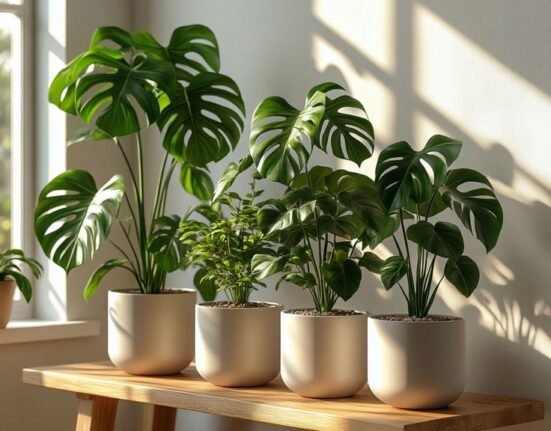
Place plants where shadows fall onto blank walls.
The shadow becomes part of the decor.
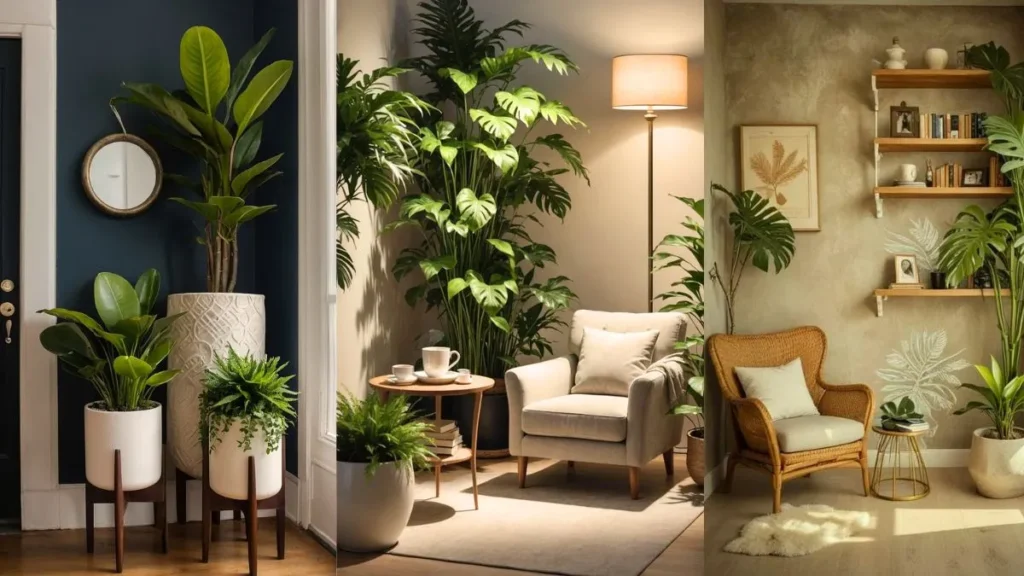
Secret 9 — Treat Plants as Living Sculptures
Minimalist design loves sculpture. Plants are natural sculptures that evolve over time.
Instead of filling shelves with objects, use one sculptural plant.
Sculptural Plant Shapes
| Shape | Visual Role |
|---|---|
| Vertical | Architectural |
| Round | Softening |
| Cascading | Movement |
| Sparse branches | Artistic |
Minimalist Plant Layout Examples
Living Room Layout
| Zone | Plant Strategy |
|---|---|
| Corner | Tall statement plant |
| Window | Medium plant |
| Coffee table | One small plant |
Bedroom Layout
| Zone | Plant Strategy |
|---|---|
| Bedside | One small plant |
| Window corner | Medium plant |
| Dresser | None (leave empty) |
Entryway Layout
| Zone | Plant Strategy |
|---|---|
| Door corner | Tall welcoming plant |
| Console table | None or one small |
Visual Balance Chart
Plant Impact vs Quantity

High Impact |        ●
            |
            |   ●
            |
            | ●
            |
Low Impact  |____________________
            Few Plants    Many Plants
Fewer plants = higher impact.
Common Minimalist Plant Mistakes
| Mistake | Why It Ruins Minimalism | Fix |
|---|---|---|
| Too many small plants | Looks cluttered | Choose fewer large plants |
| Mixing many pot styles | Breaks cohesion | Limit to 3 finishes |
| Ignoring light | Plants look dull | Style near windows |
| Filling every shelf | Removes negative space | Leave emptiness |
| Symmetry overload | Feels staged | Use asymmetry |
Minimalist Plant Care Routine Chart
| Task | Frequency |
|---|---|
| Watering | Weekly |
| Leaf cleaning | Biweekly |
| Rotation | Monthly |
| Repotting | Yearly |
| Pruning | Every 2–3 months |
Healthy plants look better — styling starts with care.
Final Thoughts
Minimalist homes don’t need more decor — they need better choices.
Plants bring warmth, movement, and organic beauty into clean spaces.
When styled intentionally, plants stop being accessories and become architectural elements that shape the room’s emotional tone.
FAQs
1. How many plants should a minimalist home have?
Typically 1–3 per room. The goal is impact, not quantity.
2. What are the best pot colors for minimal homes?
White, beige, terracotta, and concrete tones work best.
3. Can minimalist homes use hanging plants?
Yes, but sparingly. One hanging plant per room is ideal.
4. Are artificial plants okay in minimalist design?
Yes if realistic. Minimalism values aesthetics and maintenance ease.
5. Should every room have plants?
Not necessarily. Some rooms benefit from empty space.
6. What is the easiest plant styling rule to start with?
Replace multiple small plants with one large statement plant.