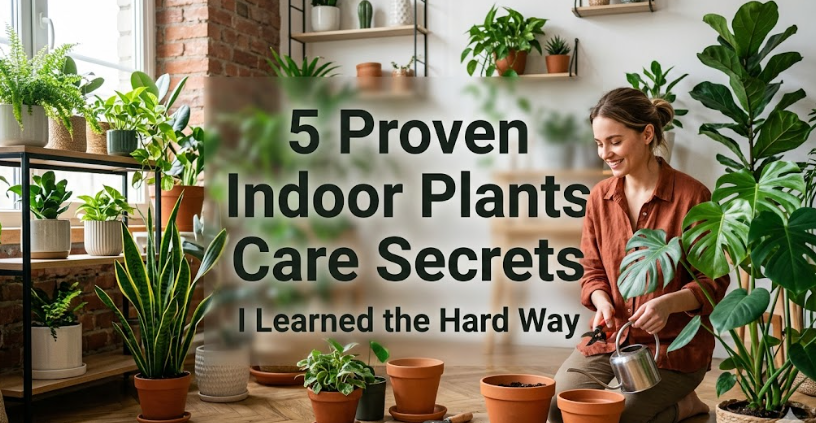
5 Proven Indoor Plants Care Secrets I Learned the Hard Way
Indoor plants have a way of quietly transforming a house into a living, breathing space. They soften harsh corners, purify the air, and somehow make even the busiest days feel a little calmer. But if you’re anything like I was when I first started, you probably assumed that keeping them alive was simple: water them occasionally, give them some sunlight, and let nature take its course.
That illusion doesn’t last long.
I learned—through drooping leaves, yellow patches, stubborn pests, and more than a few plant funerals—that indoor plants have their own language. They whisper their needs, and if you don’t learn how to listen, they slowly fade away.
This article isn’t just a list of tips. It’s a reflection of real mistakes, quiet observations, and the kind of lessons that only come from watching something struggle—and deciding not to give up on it.
Here are the five secrets that changed everything for me.
Secret #1: Watering Isn’t About Routine—It’s About Awareness
When I first brought plants home, I treated watering like a schedule. Every Sunday morning, without fail, I’d walk around with a watering can and give each plant the same amount of water.
It felt responsible. Organized. Efficient.
And completely wrong.
Some plants thrived for a while, but others slowly began to show signs of distress. Leaves turned yellow. Soil stayed damp for days. Roots began to rot beneath the surface—out of sight, but not without consequences.
What I didn’t understand then is that watering is not about time. It’s about need.
What I Learned the Hard Way
Every plant has a different rhythm. Some dry out quickly; others hold onto moisture like a sponge. Environmental factors—like temperature, humidity, pot size, and light exposure—change everything.
Instead of following a fixed schedule, I started doing something much simpler:
- I touched the soil.
- I observed the leaves.
- I lifted the pot to feel its weight.
That small shift—from routine to awareness—made a huge difference.
A Simple Practice That Changed Everything
Before watering, I now ask myself:
- Is the top inch of soil dry?
- Does the plant look thirsty (slightly droopy, dull leaves)?
- Has it been unusually hot or humid lately?
If the answer points toward dryness, I water thoroughly—until water drains out the bottom. If not, I wait.
Waiting, I learned, is often better than acting too soon.
Secret #2: Light Is Not Just Light—It’s Direction, Intensity, and Time
I used to think placing a plant near a window was enough. After all, sunlight is sunlight, right?
Not quite.
One plant I loved—a beautiful leafy one—started leaning dramatically toward one side. Its growth became uneven, and its leaves lost their vibrancy. I kept moving it closer to the window, assuming it needed “more light.”
What it actually needed was better light.
The Truth About Indoor Light
Indoor lighting conditions are far more complex than they appear. Light changes depending on:
- The direction your window faces (north, south, east, west)
- The time of day
- Seasonal shifts
- Obstructions like curtains, buildings, or trees
A bright room doesn’t always mean bright light for a plant.
My Biggest Realization
Plants don’t just need light—they need the right kind of light.
For example:
- Soft, indirect light works well for many indoor plants.
- Direct sunlight can be too harsh for delicate leaves.
- Low light doesn’t mean “no light”—it still needs some brightness.
What I Do Differently Now
- I rotate my plants every couple of weeks so they grow evenly.
- I observe how sunlight moves through my room during the day.
- I place each plant based on its tolerance, not convenience.
Learning how light behaves inside your home is like learning the personality of your space. Once you understand it, everything else becomes easier.
Secret #3: The Pot Matters More Than You Think
For the longest time, I chose pots based on how they looked.
Aesthetic over function.
If it matched my decor, it was good enough.
That mindset cost me several plants.
The Hidden Role of Pots
Pots aren’t just containers—they control how water flows, how roots breathe, and how moisture is retained.
One of my early mistakes was using decorative pots without drainage holes. Water would sit at the bottom, slowly suffocating the roots.
At first, the plant looked fine. Then the leaves began to droop. Eventually, the damage became irreversible.
The Lesson I Learned
Drainage is non-negotiable.
No matter how beautiful a pot is, if excess water can’t escape, the plant is at risk.
My Current Approach
- I always use pots with drainage holes.
- If I want a decorative look, I place a plastic nursery pot inside a decorative outer pot.
- I choose pot sizes carefully—too large, and the soil stays wet for too long; too small, and roots become cramped.
The pot is the plant’s home. And just like us, plants need a space that supports—not restricts—their growth.
Secret #4: Over-Caring Is Often Worse Than Neglect
This one was the hardest lesson to accept.
I thought being attentive meant being a good plant owner. I checked my plants constantly, adjusted their positions, watered them frequently, and tried to “fix” every small imperfection.
But plants don’t thrive under constant interference.
They need stability.
What Over-Caring Looks Like
- Watering too often
- Moving plants around frequently
- Repotting unnecessarily
- Using too many fertilizers or treatments
Each of these actions, done with good intentions, can stress a plant.
The Turning Point
I remember leaving home for a week and worrying about my plants the entire time. When I returned, expecting the worst, I found something surprising:
They looked… fine.
In fact, some looked better than before.
That’s when it clicked—plants don’t need constant attention. They need consistent conditions.
What I Practice Now
- I resist the urge to “fix” things immediately.
- I give plants time to adjust after any change.
- I observe more and interfere less.
There’s a quiet balance between care and control. Once you find it, your plants begin to thrive in a way that feels natural.
Secret #5: Every Plant Has Its Own Personality
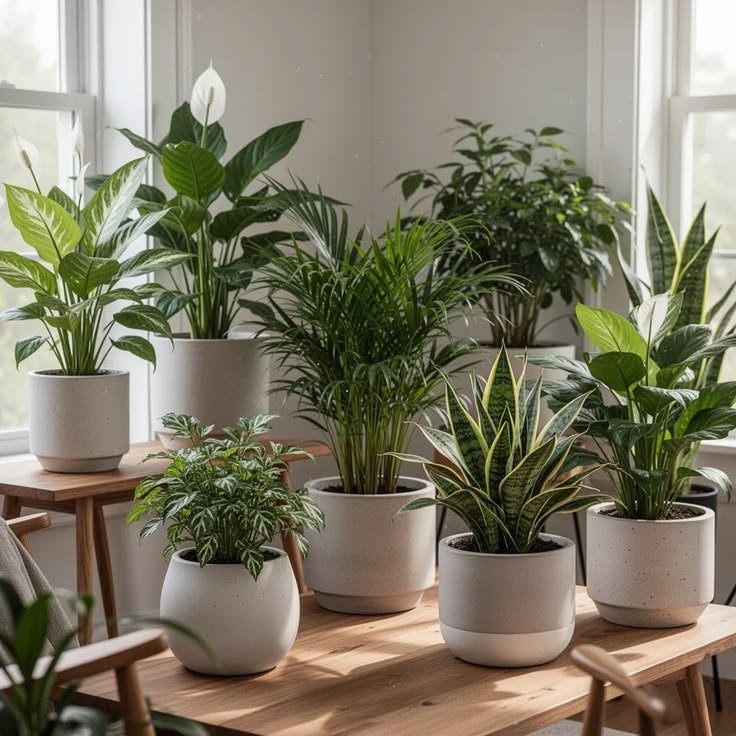
It sounds strange at first, but the more time you spend with plants, the more you notice their individuality.
Two plants of the same type can behave completely differently. One might grow quickly and demand frequent watering, while the other stays compact and needs less attention.
Early on, I treated all my plants the same. Same watering pattern. Same placement logic. Same expectations.
It didn’t work.
The Reality
Plants are influenced by:
- Their specific environment
- The conditions they were grown in before you bought them
- Subtle differences in light and airflow within your home
Even the smallest variation can lead to different needs.
What Changed My Perspective
Instead of trying to control everything, I started observing patterns.
- Which plant dries out faster?
- Which one leans toward light more aggressively?
- Which one reacts quickly to changes?
Over time, I began to understand each plant individually.
A Quiet Shift in Mindset
Caring for plants became less about rules and more about relationships.
And that’s when everything started to feel easier.
Beyond the Secrets: Small Habits That Make a Big Difference
While these five lessons transformed my approach, a few small habits helped reinforce everything:
- Wiping leaves occasionally to remove dust
- Checking for pests early before they spread
- Keeping a simple routine of observation
- Accepting that some plants won’t survive—and learning from it
Plant care is not about perfection. It’s about attention, patience, and a willingness to learn.
Final Thoughts
If there’s one thing I’ve learned, it’s this:
Indoor plants are not just decorative objects. They are living systems that respond to their environment in subtle but meaningful ways.
The more you observe, the more you understand.
The more you understand, the less you struggle.
And eventually, what once felt confusing becomes second nature.
You stop guessing. You start noticing.
And your plants—quietly, steadily—begin to thrive.
Frequently Asked Questions (FAQs)
1. How often should I water my indoor plants?
There’s no universal schedule. Always check the soil first—if the top inch feels dry, it’s usually time to water. Environmental conditions can change this frequency.
2. Why are my plant leaves turning yellow?
Yellow leaves can be caused by overwatering, poor drainage, or lack of light. Check the soil moisture and ensure your pot has proper drainage.
3. Can indoor plants survive in low light?
Yes, some plants tolerate low light, but they still need some brightness. Completely dark spaces are not suitable for most plants.
4. Do I need to fertilize my indoor plants?
Fertilizing helps, but it should be done sparingly. Over-fertilizing can harm plants. A balanced approach during the growing season works best.
5. How do I know if my plant needs repotting?
If roots are growing out of the drainage holes or the plant dries out too quickly, it may be time to repot into a slightly larger container.
6. What’s the biggest mistake beginners make?
Overwatering is by far the most common mistake. It’s better to underwater slightly than to keep the soil constantly wet.
If you take anything away from this, let it be this: slow down, observe, and let your plants guide you. They’re always communicating—you just have to learn how to listen.