10 Easy Indoor Plants Placement Ideas That Actually Work
Indoor plants have quietly become the backbone of modern interiors. They soften hard lines, improve air quality, boost mood, and make a space feel lived-in and welcoming. Yet many people struggle with the placement part. They buy beautiful plants, bring them home, and then wonder why the leaves droop, growth slows, or the room still feels incomplete.
The truth is simple: plant placement is both an art and a science. Light direction, airflow, humidity, room function, and visual balance all play a role. When done right, plants don’t just survive — they thrive and transform your home.
This guide goes far beyond generic tips. You’ll find detailed placement strategies, mini-design lessons, tables, and practical layouts you can apply immediately.
Why Plant Placement Matters More Than Plant Choice
Most plant problems are placement problems. A snake plant dying in a dark hallway? Probably overwatered. A fern crisping on a sunny window? Too much direct sun. A pothos barely growing? Wrong light angle.
Placement determines:
- Light exposure
- Temperature consistency
- Air circulation
- Water evaporation rate
- Visual harmony
Think of placement as giving your plant its own micro-climate.
Quick Indoor Light Guide (Before We Start)
Understanding light is the foundation of smart placement.
| Light Type | Description | Best Locations |
|---|---|---|
| Bright Direct | Strong sun rays hit leaves | South-facing windows |
| Bright Indirect | Bright room, no direct sun | Near windows with curtains |
| Medium Light | Soft daylight | 2–3m from window |
| Low Light | Dim but not dark | Hallways, corners |
Now let’s explore placements that actually work in real homes.
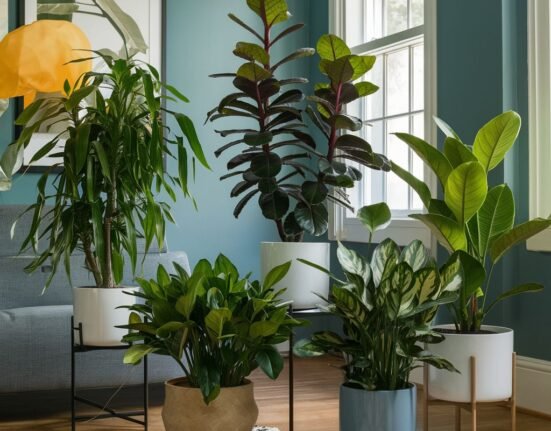
1. The Window Frame Anchor
The simplest placement trick: turn your window into a plant frame.
Instead of randomly scattering plants, use windows as focal points. Light naturally draws the eye, and plants amplify that brightness.
How to do it:
- Place tall plants on one side of the window.
- Add trailing plants on the opposite side.
- Leave the center open for light flow.
Ideal plants:
- Fiddle leaf fig
- Rubber plant
- Snake plant
- Pothos
Why it works:
Windows already act as visual anchors. Plants make them feel intentional and styled.
Mini Layout Example
| Window Side | Plant Type | Height |
|---|---|---|
| Left | Tall tree plant | 4–6 ft |
| Right | Hanging vine | Trailing |
| Sill | Small succulents | Short |
This creates symmetry without blocking light.
2. The Empty Corner Transformer
Every home has that awkward empty corner.
Instead of filling it with furniture, use vertical greenery.
Step-by-step:
- Place a tall plant in the back corner.
- Add a plant stand beside it.
- Place a small floor plant in front.
This creates a layered “plant pyramid”.
Why it works:
Corners often receive soft indirect light — perfect for many houseplants.
Best plants for corners:
- Monstera
- Areca palm
- Dracaena
- ZZ plant
3. The Coffee Table Mini Jungle
Coffee tables are often underused for greenery.
But here’s the trick: small plants only.
Perfect trio formula:
- One small plant
- One book stack
- One candle or decor piece
Table Styling Formula
| Item | Height | Purpose |
|---|---|---|
| Mini plant | Low | Freshness |
| Books | Medium | Structure |
| Decor object | Tall | Balance |
This trio prevents clutter while adding life.
4. The Shelf Cascade Effect
Shelves and plants are a perfect match.
Instead of placing plants randomly, create a cascade effect.
How:
- Top shelf → trailing plants
- Middle shelf → medium upright plants
- Bottom shelf → compact plants
Best cascading plants:
- String of pearls
- Pothos
- Philodendron
This mimics how plants grow in nature — downward and outward.
5. The Bathroom Humidity Haven
Bathrooms are plant heaven — if they have light.
Humidity-loving plants thrive here.
Ideal bathroom placement:
- Windowsill → orchids
- Shelf → ferns
- Counter → peace lily
Plants that LOVE bathrooms:
| Plant | Why |
|---|---|
| Ferns | Love humidity |
| Peace lily | Tolerates low light |
| Bamboo | Thrives in moisture |
Bathrooms instantly feel spa-like with greenery.
6. The Bedside Calm Corner
Plants in bedrooms improve mood and relaxation.
But placement matters: keep them soft and minimal.
Placement tips:
- Small plant on nightstand
- Medium plant near dresser
- Avoid large plants near bed head
Best calming plants:
- Lavender
- Snake plant
- Aloe vera
The bedroom should feel peaceful, not jungle-like.
7. The Kitchen Freshness Zone
Kitchens benefit from edible and aromatic plants.
Perfect kitchen placements:
- Windowsill → herbs
- Hanging rail → small pots
- Counter corner → basil or mint
Ideal herbs for kitchen placement:
| Herb | Light Need |
|---|---|
| Basil | Bright sun |
| Mint | Medium light |
| Rosemary | Bright light |
Fresh herbs + greenery = functional decor.
8. The Entryway First Impression
Your entryway sets the tone for your home.
A single well-placed plant can transform it.
Placement formula:
- Tall plant beside door
- Small plant on console table
- Optional hanging plant near mirror
Entry plants create a welcoming vibe instantly.
9. The Work Desk Productivity Boost
Plants on desks improve focus and reduce stress.
Best desk placement:
- Back corner of desk
- Opposite dominant hand
- Small size only
Best desk plants:
- Succulents
- Pothos
- ZZ plant
Greenery = calmer workdays.
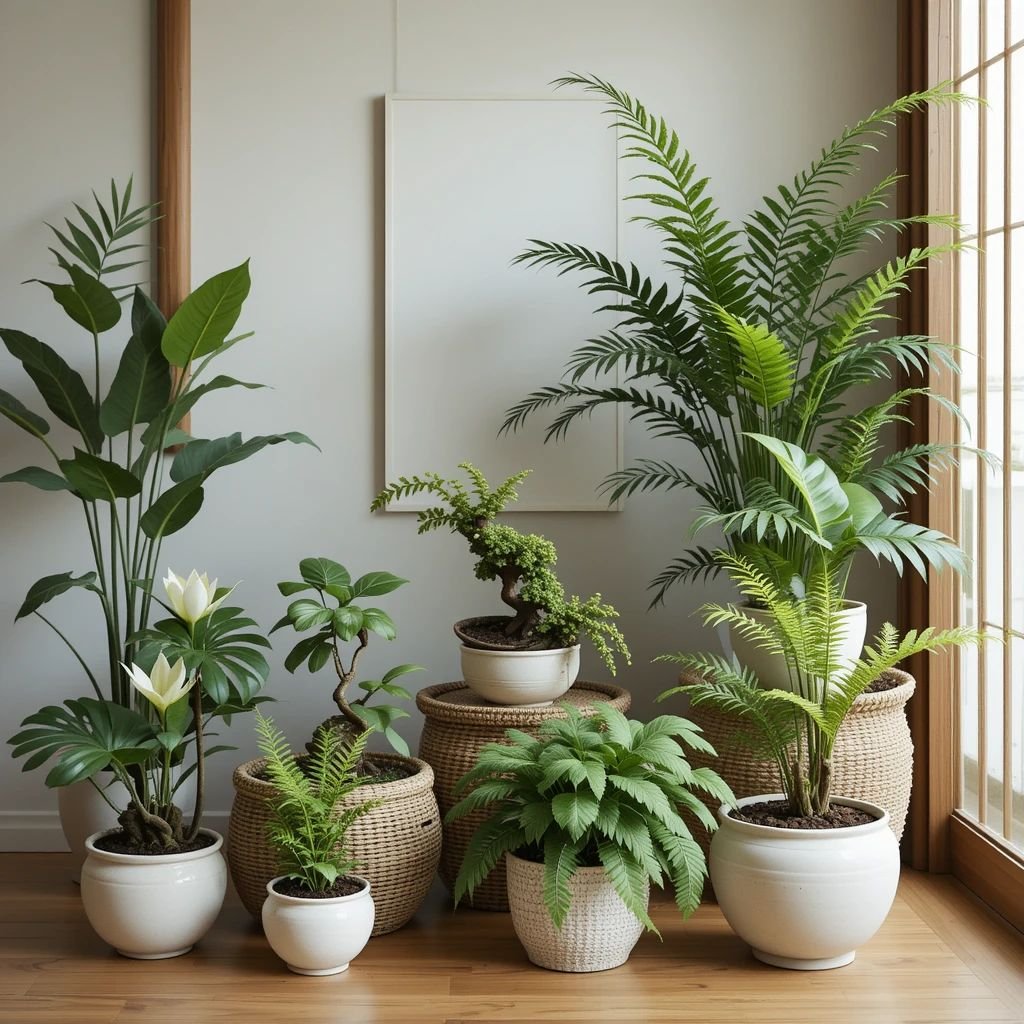
10. The Floor Cluster Statement
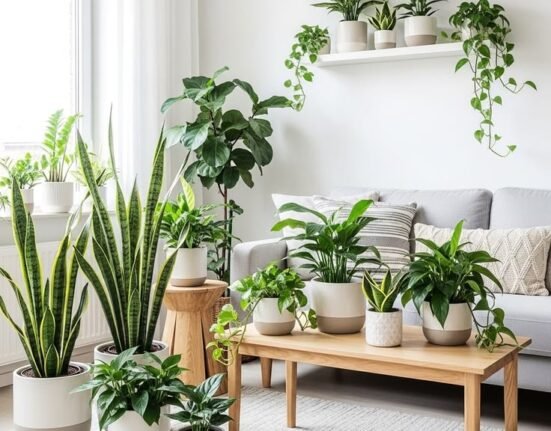
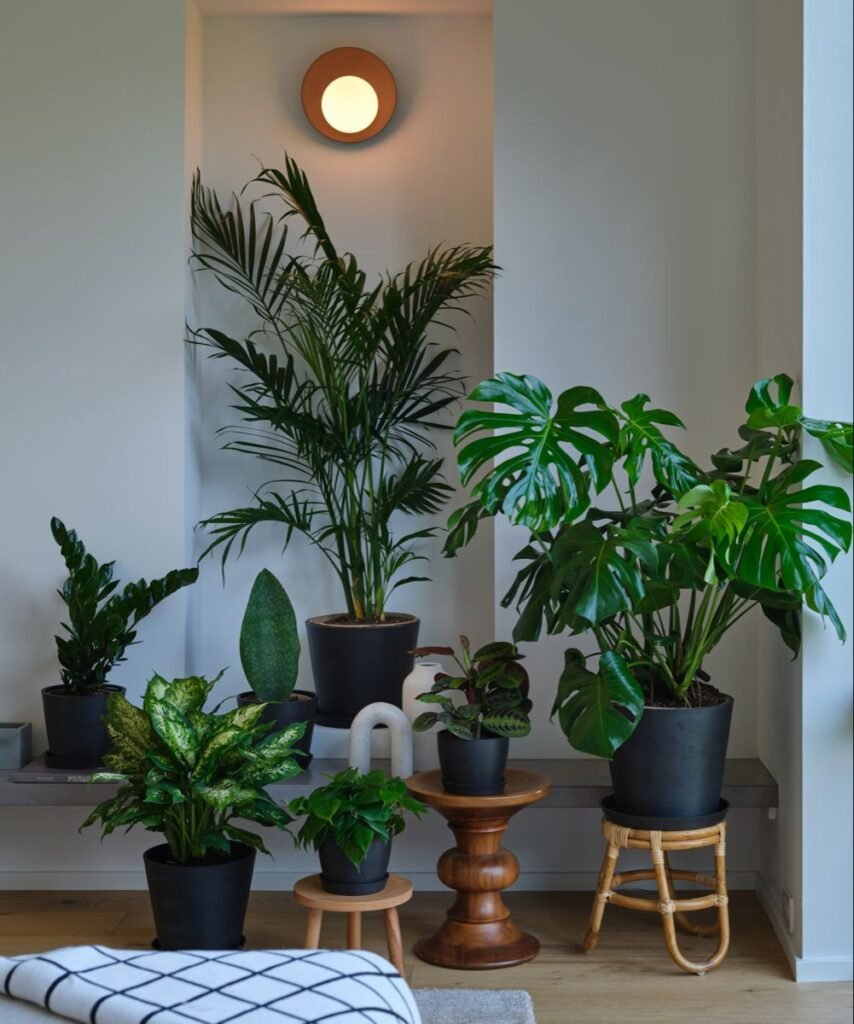
Instead of spreading plants everywhere, create a plant cluster.
Cluster formula:
Use 3 plants of different heights.
| Height | Example Plant |
|---|---|
| Tall | Palm |
| Medium | Monstera |
| Small | Snake plant |
Place near a window or empty wall.
This becomes a living decor statement.
Common Placement Mistakes to Avoid
- Blocking sunlight with large plants
- Placing plants near AC vents
- Overcrowding shelves
- Putting plants in dark corners
- Ignoring plant size growth
Plants need space to grow visually and physically.
Room-by-Room Placement Cheat Sheet
| Room | Best Plant Spot |
|---|---|
| Living Room | Window corners |
| Bedroom | Nightstand or dresser |
| Kitchen | Windowsill |
| Bathroom | Shelves |
| Office | Desk corner |
How to Know If Placement Is Working
Your placement is correct if:
- Leaves face light
- Growth is steady
- Soil dries normally
- Leaves remain vibrant
Plants communicate through growth.
Final Thoughts
Great plant placement is about balance, light, and intention. You don’t need dozens of plants. You need the right plants in the right places.
Start small. Move plants around. Observe how they respond.
Soon, your home won’t just contain plants — it will feel alive.
FAQs
1. How often should I move indoor plants?
Only when needed. Plants prefer stability. Move them if growth slows or leaves yellow.
2. Can plants survive in rooms without windows?
Yes, but you’ll need grow lights. Some low-light plants tolerate dim spaces.
3. Is it okay to keep plants in bedrooms?
Absolutely. Many plants improve air quality and relaxation.
4. How many plants should a room have?
A good rule: 1 large plant or 3 small plants per room.
5. What direction window is best for indoor plants?
South and east windows provide the best light for most plants.
6. Should plants touch the window glass?
Avoid it. Glass gets hot or cold and can damage leaves.