7 Essential Indoor Plants Care Tips for Beginners
Bringing indoor plants into your home often starts with a simple idea: a little greenery to brighten up a dull corner. But what begins as a decorative choice quickly becomes something more meaningful. Plants respond to care, reflect your habits, and—if you pay attention—teach you patience in a way few hobbies can.
If you’re just starting out, it’s easy to feel overwhelmed. Why are the leaves turning yellow? Why does one plant thrive while another struggles in the same room? The truth is, indoor plant care isn’t about perfection—it’s about understanding a few essential principles and learning how to observe.
This guide walks you through seven essential indoor plant care tips for beginners, not as rigid rules, but as practical habits you can build over time.
1. Understand Your Plant Before You Care for It
One of the most common beginner mistakes is treating all plants the same. You water them on the same day, place them in the same light, and expect similar results. But plants, like people, have different needs.
A succulent stores water in its leaves and thrives on neglect, while a fern prefers consistent moisture and humidity. Knowing this difference changes everything.
Before you even water your plant for the first time, take a moment to learn:
- Does it prefer bright or low light?
- How often does it need water?
- Does it like humidity?
Mini Checklist: Plant Awareness
- Name of plant: _______
- Light preference: Low / Medium / Bright
- Watering style: Dry soil / Slightly moist / Consistently moist
- Special needs: Humidity / Temperature sensitivity
This small effort upfront prevents most problems later.
2. Master the Art of Watering (It’s Not About a Schedule)
If there’s one thing that causes more plant deaths than anything else, it’s overwatering.
Beginners often assume plants need water on a fixed schedule—every day or every week. But plants don’t follow calendars. They respond to their environment.
Instead of watering on a schedule, water based on soil condition.
The Finger Test (Simple but Powerful):
Stick your finger about an inch into the soil:
- Dry? Time to water.
- Moist? Wait a day or two.
Signs You’re Overwatering:
- Yellowing leaves
- Mushy stems
- Moldy soil smell
Signs You’re Underwatering:
- Crispy leaf edges
- Drooping leaves
- Dry, pulling-away soil
Think of watering as a conversation, not a routine. Your plant tells you when it’s thirsty—you just need to listen.
3. Light Is Food, Not Decoration
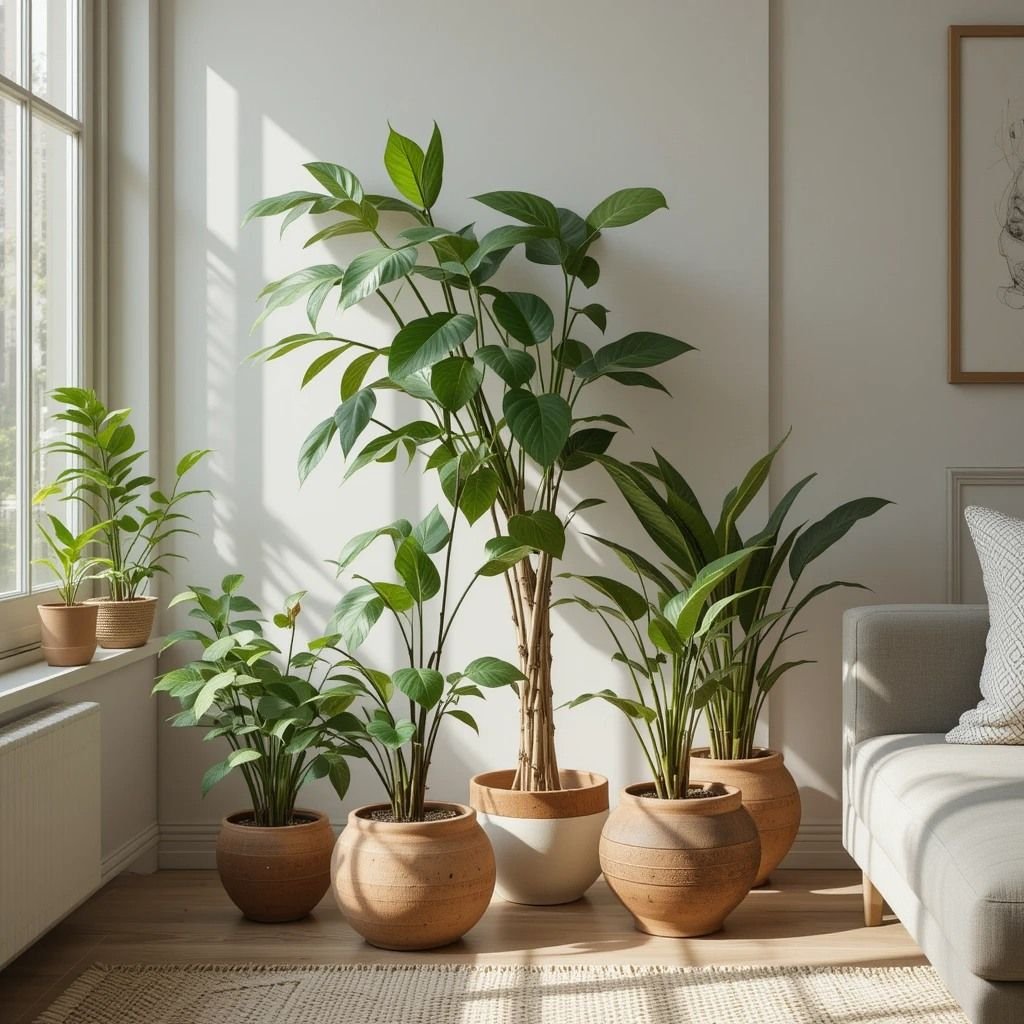
Many people place plants based on aesthetics—what looks good in a room. But plants don’t care about interior design. They care about light.
Light is essentially food for plants. Without enough of it, they can’t photosynthesize properly.
Types of Indoor Light:
- Bright indirect light: Near a window, but not in direct sun
- Direct sunlight: Sunlight hitting leaves directly (can burn some plants)
- Low light: Corners, far from windows
Quick Placement Guide:
- South-facing windows → brightest
- East-facing windows → gentle morning light
- West-facing windows → strong afternoon light
- North-facing windows → low light
If your plant leans toward a window, it’s asking for more light.
Tip: Rotate your plant every few days so it grows evenly.
4. Choose the Right Soil (It Matters More Than You Think)
Soil isn’t just dirt—it’s the foundation of your plant’s health. It controls how water flows, how roots breathe, and how nutrients are delivered.
Using the wrong soil can suffocate roots or cause water to sit too long.
Basic Soil Types:
- Well-draining mix: Ideal for most houseplants
- Cactus/succulent mix: Fast-draining for desert plants
- Moisture-retaining mix: For plants that like damp soil
Simple Soil Test:
After watering, observe:
- Does water drain quickly? Good.
- Does it stay soggy for days? Problem.
If needed, improve drainage by mixing in:
- Perlite
- Sand
- Coco coir
Good soil makes plant care easier—it fixes problems before they start.
5. Don’t Ignore Humidity and Temperature
Indoor environments are comfortable for humans, but not always ideal for plants.
Air conditioners, heaters, and dry indoor air can stress plants, especially tropical ones.
Signs of Low Humidity:
- Brown leaf tips
- Curling leaves
- Slow growth
Easy Ways to Increase Humidity:
- Group plants together
- Place a bowl of water nearby
- Mist lightly (for suitable plants)
- Use a humidity tray (pebbles + water)
Temperature Tips:
- Keep plants away from direct AC or heater airflow
- Avoid sudden temperature changes
- Most plants prefer 18–27°C
Plants may not speak, but they react clearly to discomfort.
6. Learn When (and When Not) to Fertilize
Fertilizer is often misunderstood. More fertilizer doesn’t mean faster growth—it can actually harm your plant.
Plants need nutrients, but only during active growth periods.
Basic Fertilizing Rule:
- Feed during spring and summer
- Reduce or stop in fall and winter
Beginner-Friendly Approach:
- Use a balanced liquid fertilizer
- Dilute it to half strength
- Apply once every 2–4 weeks
Signs of Over-Fertilizing:
- White crust on soil
- Leaf burn
- Weak growth
If in doubt, fertilize less. Plants are surprisingly resilient but sensitive to excess.
7. Observe, Adjust, Repeat (The Real Secret to Success)
No guide can replace observation.
Two identical plants in different homes will behave differently because of light, humidity, and care habits. That’s why the most important skill isn’t watering or fertilizing—it’s noticing.
Create a Simple Plant Journal:
- Watering dates
- Changes in leaves
- Growth patterns
- Environmental changes
Over time, you’ll begin to see patterns:
- “This plant droops every 5 days.”
- “Leaves yellow when I water too often.”
- “Growth improves near the window.”
This feedback loop turns you from a beginner into a confident plant caretaker.
A Beginner’s Weekly Plant Care Routine
To make things practical, here’s a simple weekly rhythm you can follow:
Day 1 (Check & Water)
- Feel soil
- Water only dry plants
Day 2 (Light Check)
- Adjust plant positions if needed
- Rotate pots
Day 3 (Leaf Care)
- Wipe dust from leaves
- Inspect for pests
Day 4 (Observation)
- Note any changes
Day 5 (Humidity Check)
- Mist or adjust environment if needed
Day 6 (Rest Day)
- No interference—let plants be
Day 7 (Review)
- Look at overall health
- Plan next week
Consistency matters more than perfection.
Common Beginner Mistakes (And How to Avoid Them)
Even with the best intentions, beginners make mistakes. Here are a few to watch for:
Mistake 1: Loving Your Plant Too Much
Too much water, too much fertilizer—too much attention can be harmful.
Fix: Step back. Plants need balance, not constant interference.
Mistake 2: Ignoring Early Signs
A small yellow leaf today can become a bigger problem tomorrow.
Fix: Check your plants regularly.
Mistake 3: Choosing Difficult Plants First
Some plants are naturally more demanding.
Fix: Start with beginner-friendly varieties and build confidence.
The Emotional Side of Plant Care
Something interesting happens when you care for plants regularly—you start noticing subtle changes. A new leaf unfurling feels like progress. A drooping stem becomes a puzzle to solve.
Indoor gardening becomes less about decoration and more about connection.
You begin to slow down. You observe. You adjust.
And in that process, you don’t just grow plants—you grow patience.
FAQs About Indoor Plant Care
1. How often should I water my indoor plants?
There’s no fixed schedule. Always check the soil first. Most plants prefer slightly dry soil before watering again.
2. Why are my plant’s leaves turning yellow?
Yellow leaves are often a sign of overwatering, poor drainage, or lack of light. Check these factors first.
3. Can indoor plants survive without sunlight?
All plants need light to survive. Some tolerate low light, but none can grow in complete darkness.
4. Is it necessary to use fertilizer?
Yes, but only in moderation. Fertilizer supports growth, especially during active seasons like spring and summer.
5. How do I know if my plant needs repotting?
If roots are growing out of drainage holes or the plant dries out too quickly, it may need a larger pot.
6. What’s the easiest plant for beginners?
Plants that tolerate irregular watering and varying light conditions are ideal. Start simple and learn as you go.
Indoor plant care doesn’t demand expertise—it rewards attention. You don’t need to get everything right on day one. You just need to start, observe, and adjust.
Over time, what once felt confusing becomes intuitive. And before you know it, your indoor space transforms—not just with greenery, but with a quiet sense of growth that mirrors your own.