7 Smart Indoor Plants Light Tips for Perfect Growth
Indoor plants have quietly become part of modern living. They soften hard interiors, clean the air, improve focus, and bring emotional comfort into our homes. Yet the biggest reason people struggle with houseplants is not watering, fertilizer, or even pests.
It’s light.
Light determines whether your plant thrives, survives, or slowly fades. Many beginners assume “put it near a window” is enough — but indoor lighting is far more complex than that. Window direction, seasons, distance from glass, reflections, artificial lighting, and plant species all change the equation.
This deep-dive guide will teach you how light really works indoors and how to use it intelligently. You’ll learn practical strategies, layouts, measurable guidelines, troubleshooting charts, and realistic setups you can implement immediately.
This is not a generic “put plants in sunlight” article. This is a practical lighting blueprint for indoor plant success.
Why Light Matters More Than Water
Plants make food through photosynthesis. Light acts as energy. Without enough energy, a plant cannot:
• Grow new leaves
• Maintain strong roots
• Produce flowers
• Defend against disease
• Replace aging foliage
When light is insufficient, plants stretch toward windows, lose color, weaken stems, and eventually decline. Overwatering often gets blamed, but weak light is usually the root cause.
Think of light as a plant’s daily calorie intake.
Understanding Indoor Light Levels
Before learning the tips, you need to understand the four indoor light categories.
Light Intensity Chart
| Light Type | Lux Range | Window Distance | Examples |
|---|---|---|---|
| Low Light | 50–250 lux | 3–5 m from window | Hallways, bathrooms |
| Medium Light | 250–1000 lux | 1.5–3 m from window | Living rooms |
| Bright Indirect | 1000–5000 lux | 0.5–1.5 m from window | Near windows |
| Direct Sunlight | 5000+ lux | Window sill | South/West windows |
Key insight:
Most homes provide medium to low light. Very few homes naturally provide strong bright light throughout the day.
This means smart placement matters more than people realize.
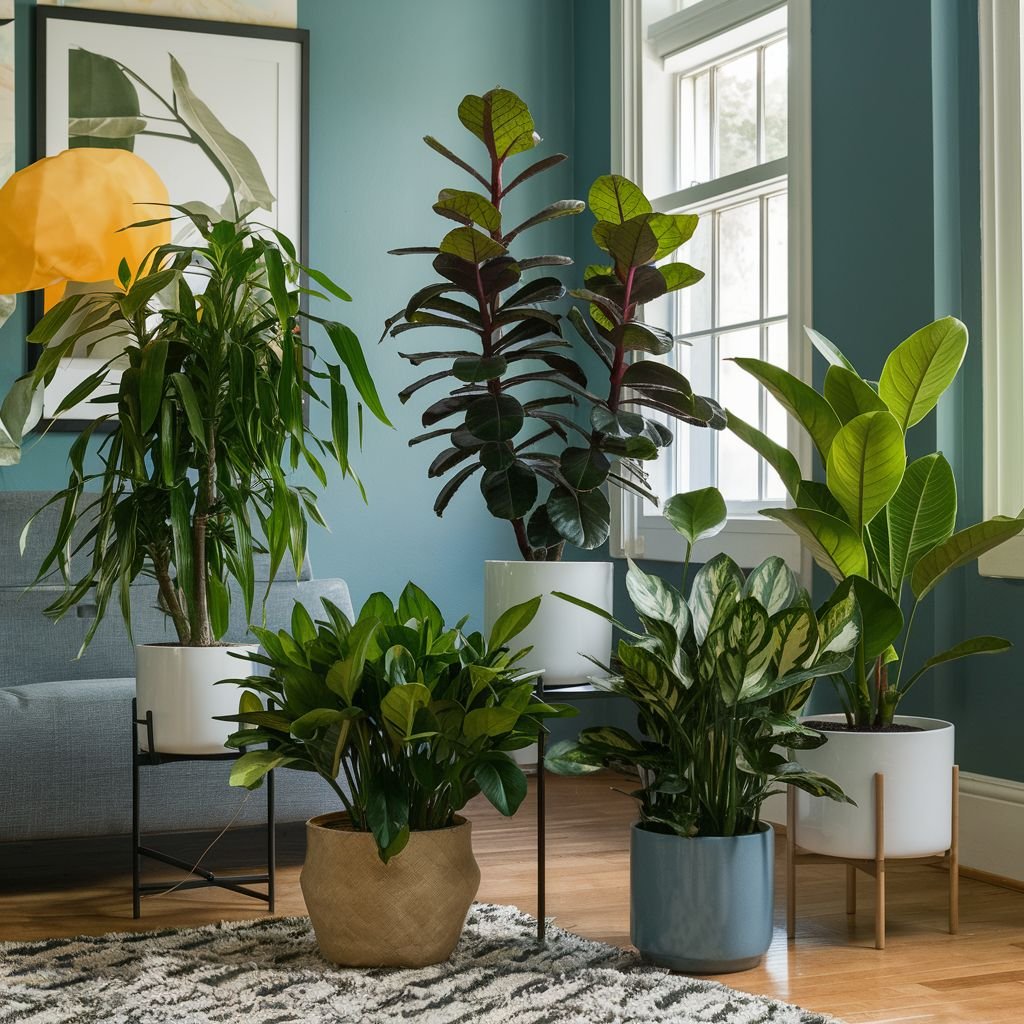
Tip 1 — Decode Your Window Directions
Window direction changes everything. The same plant placed in different windows can behave like it’s in a different climate.
Window Direction Lighting Table
| Direction | Light Quality | Duration | Ideal Plants |
|---|---|---|---|
| North | Soft & consistent | All day weak light | Snake plant, ZZ plant |
| East | Gentle morning sun | 4–6 hours | Peace lily, Pothos |
| South | Strongest light | 8+ hours | Succulents, Fiddle leaf fig |
| West | Hot afternoon sun | 4–6 hours intense | Cacti, Rubber plant |
How to Use This Knowledge
• North windows = survival lighting
• East windows = gentle growth lighting
• South windows = growth powerhouse
• West windows = intense afternoon energy
If your plants struggle, the first question is always: Which direction is the window?
Tip 2 — Master the Distance Rule
Most people think plants need to be on the windowsill. Not true. But distance dramatically changes light strength.
Light intensity drops fast indoors.
Distance vs Light Loss
| Distance from Window | Light Remaining |
|---|---|
| Window sill | 100% |
| 1 meter away | 50% |
| 2 meters away | 25% |
| 3 meters away | 10% |
| 4 meters away | 5% |
This explains why a plant looks fine near the window but declines on a coffee table.
Smart Placement Rule
• Bright plants → within 1 m
• Medium plants → within 2 m
• Low-light plants → within 3–4 m
Anything beyond that? You need artificial lighting.
Tip 3 — Use the Shadow Test
You don’t need expensive equipment. A simple shadow test reveals light intensity instantly.
Hold your hand between the plant and light source.
| Shadow Type | Light Level |
|---|---|
| Sharp shadow | Bright light |
| Soft shadow | Medium light |
| Barely visible shadow | Low light |
| No shadow | Too dark |
This simple trick works anywhere in the house and takes seconds.
Tip 4 — Rotate Plants for Balanced Growth
Plants lean toward light — this is phototropism.
If plants stay facing one direction, they become:
• Lopsided
• Leggy
• Uneven
• Weak
Rotation Schedule
| Plant Type | Rotate Every |
|---|---|
| Fast growers | 7 days |
| Medium growers | 14 days |
| Slow growers | 30 days |
A simple quarter turn prevents uneven growth.
Tip 5 — Use Reflective Surfaces
Indoor light gets absorbed by:
• Dark furniture
• Curtains
• Carpets
• Walls
You can multiply available light using reflection.
Reflective Boosters
| Surface | Light Boost |
|---|---|
| White walls | +30% |
| Mirrors | +50% |
| Gloss furniture | +20% |
| Light curtains | +15% |
A mirror opposite a window can double plant lighting.
This trick alone can revive struggling plants.
Tip 6 — Extend Daylight with Grow Lights
Natural daylight indoors lasts 4–6 hours for many homes. Plants ideally want 10–14 hours.
This is where grow lights change everything.
Grow Light Comparison
| Type | Efficiency | Heat | Best Use |
|---|---|---|---|
| LED | Very high | Low | All plants |
| Fluorescent | Medium | Medium | Small plants |
| Incandescent | Low | High | Not recommended |
Ideal Grow Light Setup
• Distance: 20–40 cm above plants
• Duration: 10–12 hours daily
• Spectrum: Full spectrum or 6500K
Grow lights are not a luxury — they are often the missing puzzle piece.
Tip 7 — Adjust Lighting Seasonally
Light changes dramatically through the year.
Winter can reduce indoor light by 50–70%.
Seasonal Light Changes
| Season | Light Intensity | Plant Action |
|---|---|---|
| Summer | Maximum | Move plants away from window |
| Autumn | Decreasing | Move plants closer |
| Winter | Lowest | Add grow lights |
| Spring | Increasing | Resume normal placement |
Most plant deaths happen in winter because owners don’t adjust.
Room-by-Room Lighting Guide
Living Room
• Medium light zone
• Use plant stands near windows
• Add grow lights in winter
Bedroom
• Low to medium light
• Choose shade-tolerant plants
• Avoid deep corners
Kitchen
• Brightest indoor room
• Excellent for herbs
• Use hanging planters near windows
Bathroom
• Low light + humidity
• Perfect for tropical plants
Common Lighting Mistakes
| Mistake | Result |
|---|---|
| Plant in dark corner | Slow death |
| Direct sun on shade plant | Leaf burn |
| No winter adjustments | Sudden decline |
| Ignoring distance rule | Weak growth |
| No rotation | Leaning plants |
Avoid these and success becomes predictable.
Signs Your Plant Needs More Light
• Yellowing lower leaves
• Long gaps between leaves
• Leaning toward window
• Small new leaves
• Slow or no growth
Signs Your Plant Gets Too Much Light
• Brown leaf edges
• Bleached spots
• Crispy leaves
• Soil drying too fast
Plants always communicate. You just need to learn their language.
Weekly Indoor Plant Lighting Routine
| Day | Task |
|---|---|
| Monday | Shadow test check |
| Wednesday | Rotate plants |
| Friday | Inspect leaf color |
| Sunday | Adjust placement if needed |
This 5-minute routine prevents most issues.
Quick Plant Placement Cheat Sheet
| Plant Type | Best Window |
|---|---|
| Snake plant | North |
| Pothos | East |
| Peace lily | East/North |
| Rubber plant | West |
| Succulents | South |
| Fiddle leaf fig | South |
Final Thoughts
Indoor plant lighting is not guesswork — it’s strategy.
Once you understand window direction, distance, seasonal changes, and artificial lighting, plant care becomes predictable and stress-free.
Healthy plants are not luck. They are placement.
FAQs
1. Can indoor plants survive without sunlight?
Yes, but only with grow lights. Plants need light energy, not necessarily sunlight. Artificial full-spectrum lighting can fully replace sun when used correctly.
2. How many hours of light do indoor plants need daily?
Most houseplants need 10–14 hours of light. Low-light plants can survive on 6–8 hours but grow slowly.
3. Is window glass blocking plant light?
Yes. Glass reduces UV and intensity by 20–50%. That’s why distance from the window matters.
4. Do cloudy days affect indoor plants?
Absolutely. Cloud cover can reduce light by up to 80%. Plants near windows still benefit, but growth slows.
5. Should I move plants outside sometimes?
You can, but transition gradually. Sudden direct sun can burn indoor leaves.
6. What is the best grow light color?
Cool white (6500K) or full spectrum LEDs mimic natural daylight and support strong growth.
If you apply these seven smart lighting strategies, your indoor plants will not just survive — they will thrive, grow faster, look healthier, and become a true part of your living space. 🌿