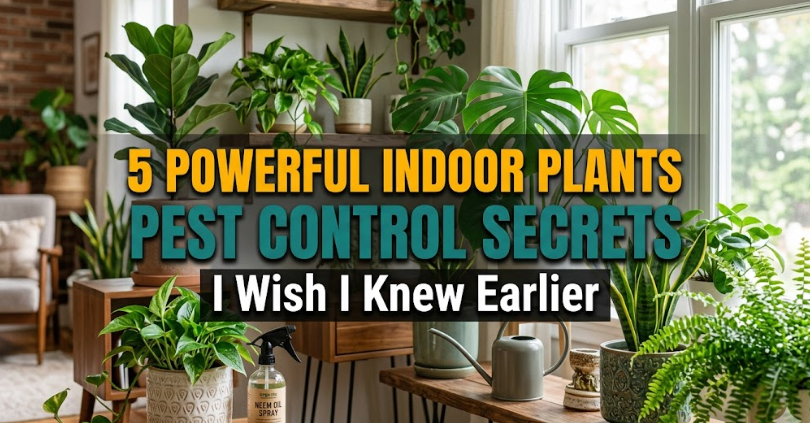
5 Powerful Indoor Plants Pest Control Secrets I Wish I Knew Earlier
I used to believe that keeping indoor plants healthy was simply a matter of watering them on time and placing them near a window. That illusion didn’t last long. The first time I noticed tiny white specks under the leaves of my favorite plant, I ignored them. A week later, the plant looked tired. Two weeks later, it was nearly gone.
That experience changed everything.
Indoor plant pests are quiet invaders. They don’t announce themselves. They multiply in silence, feed slowly, and before you realize it, your thriving indoor jungle starts to decline. Over time, through trial, failure, research, and observation, I discovered a handful of pest control strategies that actually work—not just temporarily, but sustainably.
What follows are five powerful pest control secrets that reshaped the way I care for indoor plants. These are not quick hacks. They are practical systems, habits, and insights that make a real difference.
Secret 1: Prevention Is Not Optional — It’s the Entire Game
If there is one thing I wish I had understood earlier, it’s this: pest control doesn’t start when you see pests. It starts long before that.
Most people treat pests like a problem to solve. In reality, they are a symptom. Weak plants, poor airflow, overwatering, and inconsistent care create the perfect environment for pests to thrive.
I learned this the hard way when I kept battling fungus gnats. I tried sprays, traps, and even replacing the soil. Nothing worked long-term—until I fixed my watering habits.
Overwatering was the root cause.
Moist soil invites gnats. Drying out the top layer between waterings disrupted their life cycle. Suddenly, the problem started disappearing without aggressive treatments.
Prevention includes a few simple but powerful practices:
- Always inspect new plants before bringing them home
- Keep new plants isolated for at least 1–2 weeks
- Avoid overwatering; let soil partially dry
- Clean leaves regularly to remove dust and eggs
- Ensure proper airflow in the room
These steps might sound basic, but they form the foundation of pest-free plant care. Once I adopted them consistently, pest outbreaks became rare instead of routine.
Secret 2: Early Detection Changes Everything
There is a massive difference between dealing with 5 pests and dealing with 500.
The earlier you detect an issue, the easier it is to fix. The challenge is that most pests hide in places we rarely check—under leaves, along stems, or deep in the soil.
I developed a simple habit: once a week, I inspect every plant. Not casually, but intentionally.
I look for:
- Yellowing or curling leaves
- Sticky residue (a sign of aphids or scale)
- Fine webbing (a classic spider mite indicator)
- Tiny moving dots under leaves
- Black flies around soil (fungus gnats)
At first, this felt excessive. Over time, it became second nature.
One evening, while checking a plant, I spotted the earliest signs of spider mites—barely visible webbing near the leaf joints. Because I caught it early, I was able to wipe the leaves and isolate the plant immediately. Within days, the issue was gone.
That moment reinforced something important: pest control is less about reacting and more about observing.
Plants communicate problems through subtle signals. The sooner you notice them, the less damage pests can do.
Secret 3: Natural Remedies Work Better Than Harsh Chemicals (When Used Right)
In the beginning, I made the mistake of reaching for strong chemical sprays. They worked fast—but they also stressed the plants and sometimes caused leaf damage.
Eventually, I shifted toward natural solutions. Not because they are trendy, but because they are sustainable and safer indoors.
One of the most effective mixtures I use is a simple neem oil spray.
A basic formula includes:
- Water
- A few drops of neem oil
- A small amount of mild liquid soap
This mixture disrupts the life cycle of pests rather than just killing them on contact. It works particularly well for aphids, spider mites, and whiteflies.
Another surprisingly effective method is simply wiping leaves with a damp cloth. It sounds too simple, but physically removing pests is often the fastest way to reduce their population.
I also discovered the power of rinsing plants under a gentle stream of water. For certain infestations, especially spider mites, this alone can make a huge difference.
The key is consistency.
Natural remedies don’t always work instantly. But when applied regularly—every few days—they create an environment where pests struggle to survive.
Over time, I noticed that my plants looked healthier, not just pest-free.
Secret 4: Isolation Saves Your Entire Plant Collection
One infected plant can quickly turn into ten infected plants.
I learned this lesson after placing a newly purchased plant directly among my existing ones. Within two weeks, multiple plants showed signs of infestation.
That mistake led me to adopt a strict isolation rule.
Whenever I suspect a plant has pests—or even if I just bought it—I move it away from others immediately. Ideally, to another room.
Isolation does two things:
- It prevents pests from spreading
- It allows focused treatment without affecting other plants
During isolation, I monitor the plant closely and treat it as needed. Only when I’m confident that the pests are gone do I return it to the main group.
This approach has saved me countless times.
It may feel inconvenient, especially if you have limited space. But the alternative—losing multiple plants—is far worse.
Think of isolation as quarantine. It’s not optional; it’s essential.
Secret 5: Healthy Plants Are Naturally More Resistant
This might sound obvious, but it took me a long time to fully understand it.
Pests prefer weak plants.
When a plant is stressed—due to poor lighting, incorrect watering, or lack of nutrients—it becomes an easy target. On the other hand, a strong, healthy plant can resist minor pest attacks more effectively.
I noticed this pattern repeatedly. Some plants in my collection were constantly struggling with pests, while others remained unaffected. The difference wasn’t luck—it was health.
Improving plant health involves several factors:
- Providing adequate light based on the plant type
- Watering correctly (not too much, not too little)
- Using well-draining soil
- Feeding plants with appropriate nutrients
- Repotting when roots outgrow the container
Once I focused on these basics, pest issues reduced significantly.
It’s easy to get caught up in treatments and forget that prevention often comes down to proper care. A thriving plant is far less appealing to pests than a struggling one.
The Turning Point: When Everything Started Working Together
For a long time, I treated each pest problem as a separate battle. I tried different sprays, techniques, and advice, hoping something would work.
The real shift happened when I stopped looking for quick fixes and started building a system.
Prevention, early detection, natural treatment, isolation, and plant health—all working together.
That’s when pest control stopped feeling like a constant struggle.
Instead of reacting to problems, I was managing an environment where problems rarely occurred.
Indoor plant care became enjoyable again.
Common Indoor Plant Pests and What They Teach You
Each pest has its own behavior, and understanding them can help you respond more effectively.
Fungus gnats taught me about overwatering.
Spider mites taught me the importance of humidity and regular inspection.
Aphids showed me how quickly infestations can spread.
Mealybugs reminded me that some pests hide in plain sight, blending into plant structures.
Instead of seeing pests as enemies, I started viewing them as feedback.
They reveal what might be off in your plant care routine.
Small Habits That Make a Big Difference
Over time, I realized that pest control isn’t about big actions. It’s about small, consistent habits.
Wiping leaves once a week.
Checking under leaves regularly.
Letting soil dry slightly before watering.
Rotating plants for better airflow and light.
These actions take minutes, but they prevent problems that could take weeks to fix.
A More Realistic Perspective on Pest Control
One of the biggest mindset shifts I had was accepting that pests are part of the process.
Even experienced plant owners deal with them.
The goal isn’t to eliminate pests forever. The goal is to manage them effectively so they never get out of control.
Once I accepted this, I stopped feeling frustrated every time I saw a bug.
Instead, I treated it as a signal to take action early.
Conclusion: What I Wish I Had Known From the Start
If I could go back and give my past self advice, it would be simple:
Don’t wait for pests to appear.
Focus on prevention.
Pay attention to your plants.
Act early.
And most importantly, build habits—not just solutions.
Indoor plants are resilient, but they rely on consistent care. When you create the right environment, pest control becomes less about fighting and more about maintaining balance.
That’s the real secret.
Frequently Asked Questions (FAQs)
1. How often should I check my indoor plants for pests?
Ideally, you should inspect your plants at least once a week. Regular checks help you catch problems early before they become severe infestations.
2. Are natural pest control methods really effective?
Yes, natural methods like neem oil, water rinsing, and manual cleaning can be highly effective when used consistently over time.
3. What is the most common cause of indoor plant pests?
Overwatering is one of the most common causes, especially for pests like fungus gnats. Poor airflow and weak plant health also contribute significantly.
4. Should I isolate a plant even if I’m not sure it has pests?
If you suspect a problem or recently purchased the plant, it’s best to isolate it as a precaution. This helps prevent potential spread.
5. Can pests completely kill indoor plants?
Yes, severe infestations can weaken and eventually kill plants if not treated in time. Early detection is key to prevention.
6. Is it possible to have completely pest-free indoor plants?
While it’s difficult to guarantee zero pests, proper care and preventive habits can keep infestations minimal and manageable.