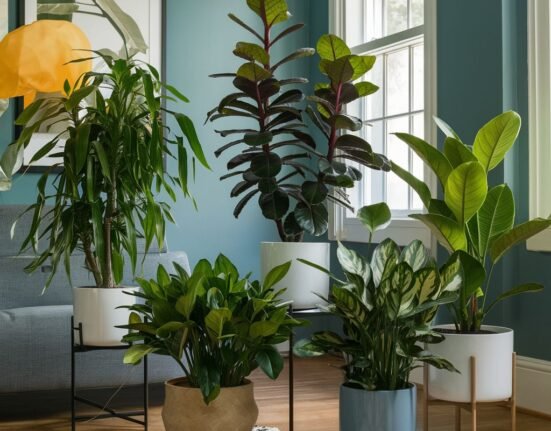
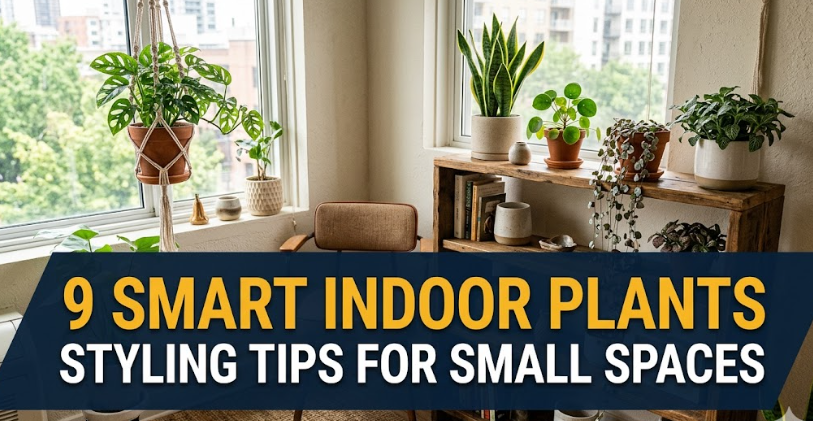
9 Smart Indoor Plants Styling Tips for Small Spaces
A practical, story-driven guide to turning tiny rooms into lush, breathable sanctuaries
Small homes carry a quiet charm. They ask you to be intentional, to choose carefully, and to live with only what matters. Yet when it comes to decorating with plants, small spaces can feel limiting. Where do you put greenery when every shelf is already busy? How do you avoid turning your room into a jungle that feels cluttered instead of calming?
The truth is: small spaces and indoor plants are perfect partners. Plants soften tight corners, clean visual noise, add height, bring movement, and create depth. When styled thoughtfully, even a studio apartment can feel expansive, airy, and deeply cozy.
This long-form guide walks you through nine smart styling tips designed specifically for compact homes. You’ll find practical strategies, real-life styling ideas, tables, visual planning charts, and step-by-step guidance you can follow today.
Why Plants Transform Small Spaces More Than Large Ones
Before we dive into styling, it helps to understand why plants feel especially powerful in compact homes.
Small rooms often struggle with:
- Flat walls and tight corners
- Limited natural textures
- Lack of vertical depth
- Artificial lighting dominance
- Visual clutter from functional furniture
Plants solve all five problems at once.
Plants add:
- Organic shapes (contrast to boxy furniture)
- Height variation (draws eyes upward)
- Movement (leaves shift subtly)
- Softness (reduces harsh edges)
- Micro-zones (divides spaces visually)
Think of plants as living furniture — decorative elements that also breathe, grow, and change with you.
TIP 1 — Think Vertical, Not Horizontal
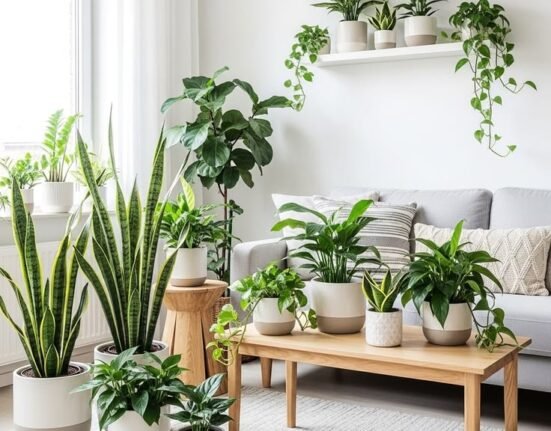
In small homes, floor space is sacred territory. The biggest mistake beginners make is placing plants only on surfaces: tables, counters, floors. Soon every flat area feels crowded.
The solution: move upward.
Vertical styling creates the illusion of height and frees valuable surfaces.
Vertical Styling Options
| Vertical Method | Best For | Difficulty | Space Saved |
|---|---|---|---|
| Hanging planters | Windows & corners | Easy | High |
| Wall shelves | Blank walls | Medium | Very High |
| Ladder plant stand | Living rooms | Easy | Medium |
| Tall plant stands | Corners | Easy | Medium |
| Pegboard plant wall | Creative setups | Medium | Very High |
Mini Height Planning Chart
Eye Level Zone        → Trailing plants & leafy plants
Upper Wall Zone       → Hanging planters & shelves
Floor Corner Zone     → Tall statement plants
Styling Example
Instead of placing five plants on a coffee table:
- Hang two near the window
- Place two on wall shelves
- Keep one centerpiece plant on the table
You instantly free space while increasing visual interest.
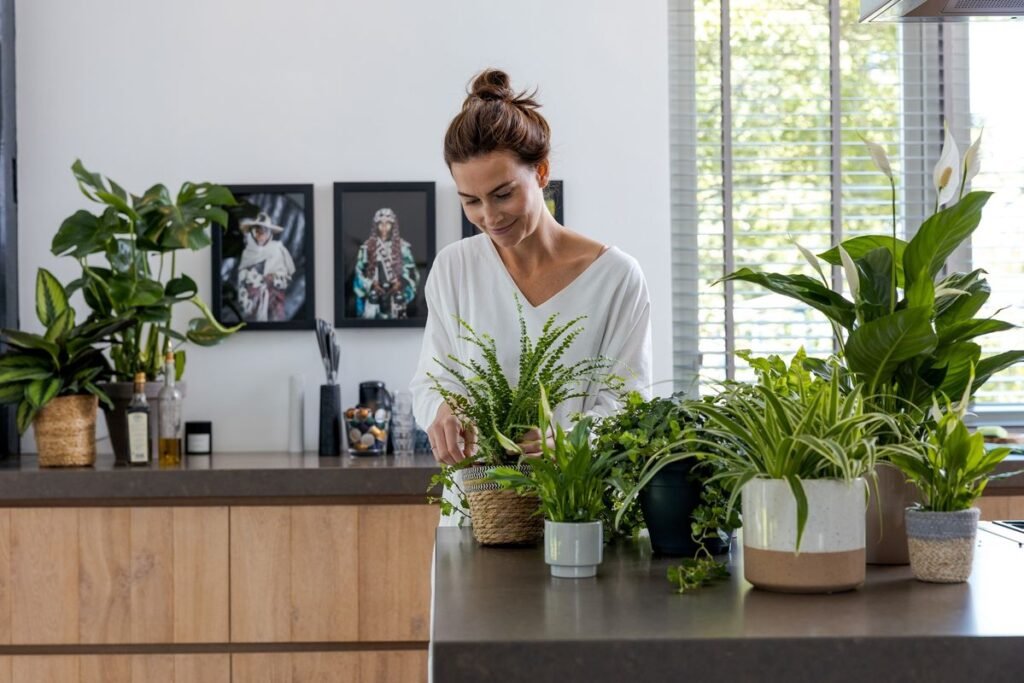
TIP 2 — Choose the “Right Size” Plant Ratio
A tiny plant in a tiny room often disappears.
A giant plant in a tiny room overwhelms.
Small spaces thrive on balanced proportions.
Golden Size Ratio Rule
Use the 60–30–10 rule for plant sizes:
| Size Category | Plant Height | Percentage |
|---|---|---|
| Medium plants | 30–70 cm | 60% |
| Small plants | under 30 cm | 30% |
| Large statement plant | 80–150 cm | 10% |
This mix creates harmony without overcrowding.
Why One Big Plant Works Wonders
One tall plant can replace multiple small plants.
It fills vertical space and becomes a focal point.
A single tall plant in a corner:
- Reduces clutter
- Anchors the room
- Adds instant depth
TIP 3 — Use Corners Like a Designer
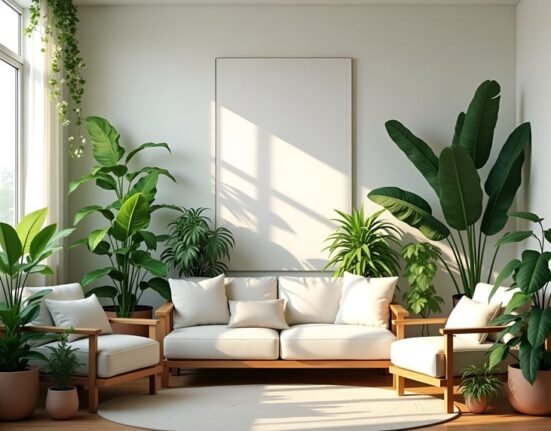
Corners are the most underused real estate in small homes.
Designers love corners because they:
- Don’t interrupt movement
- Don’t block furniture
- Naturally frame tall objects
Corner Styling Blueprint
Empty corner → Tall plant → Floor lamp → Accent chair
Plants turn awkward corners into cozy zones.
Corner Layering Formula
| Layer | Item | Height Range |
|---|---|---|
| Base layer | Large plant | 90–150 cm |
| Middle layer | Medium plant stand | 40–60 cm |
| Top layer | Hanging plant | Ceiling |
This creates a three-tier green corner.
TIP 4 — Create Plant “Clusters” Instead of Scattered Plants
Scattered plants = clutter
Clustered plants = intentional design
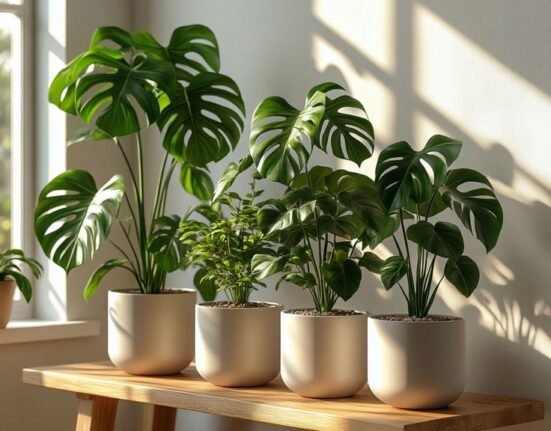
Grouping plants makes your room look curated rather than chaotic.
The Triangle Clustering Rule
Always group plants in odd numbers (3 or 5).
Arrange heights in a triangle shape:
     Tall plant
   Medium plant
Small plant
Perfect Cluster Combinations
| Cluster Type | Ideal Location |
|---|---|
| 3 plant cluster | Desk or shelf |
| 5 plant cluster | Window sill |
| 7 plant cluster | Plant corner |
Clusters trick the eye into seeing one decorative feature instead of many objects.
TIP 5 — Use Multi-Functional Furniture
In tiny homes, every item should serve multiple purposes.
Furniture that doubles as plant display saves space beautifully.
Smart Furniture Ideas
| Furniture Piece | Plant Styling Idea |
|---|---|
| Bar cart | Mobile plant station |
| Bookshelf | Plant + book mix |
| Window bench | Plant ledge |
| Bedside table | Mini plant display |
| TV console | Plant styling strip |
Example Layout Plan
Bookshelf
Top shelf → trailing plants
Middle shelf → books + small plants
Bottom shelf → storage baskets
Plants soften functional furniture and prevent a “storage heavy” feel.
TIP 6 — Use Mirrors to Double the Greenery
Mirrors are secret weapons in plant styling.
They reflect plants, making your room feel:
- Larger
- Brighter
- Fuller
Mirror + Plant Placement Chart
| Mirror Position | Plant Placement |
|---|---|
| Opposite window | Hanging plants |
| Behind plant shelf | Medium plants |
| Behind floor plant | Tall plant |
One plant + one mirror = visual effect of two plants.
TIP 7 — Stick to a Limited Pot Color Palette
Too many pot colors create chaos quickly.
Small spaces need visual consistency.
Best Pot Color Schemes
| Palette Style | Colors |
|---|---|
| Minimal | White + Beige + Clay |
| Modern | Black + White |
| Cozy | Terracotta + Cream |
| Scandinavian | White + Wood tones |
Why Matching Pots Matter
Consistent pots:
- Make plants look like a collection
- Reduce visual noise
- Make the room feel bigger
Think of pots as the frames of your living art.
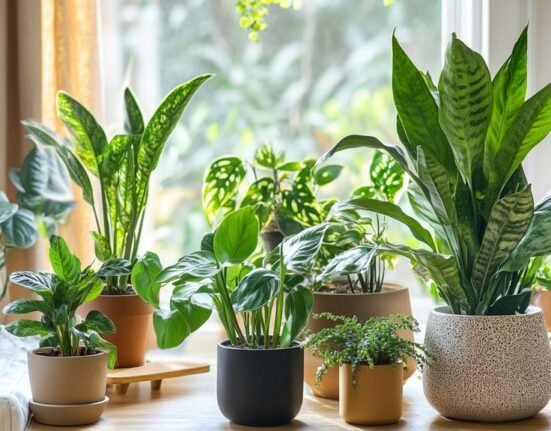
TIP 8 — Turn Windows into Plant Displays
Windows are natural plant homes.
Yet most people place only one plant on the sill.
Big missed opportunity.
Window Styling Layers
Top → Hanging plants
Middle → Window shelf plants
Bottom → Tall floor plants
Window Lighting Chart
| Window Direction | Best Plant Types |
|---|---|
| North | Low-light plants |
| South | Sun-loving plants |
| East | Gentle light plants |
| West | Bright indirect plants |
Your window can become a vertical plant wall.
TIP 9 — Embrace Negative Space
This is the most underrated tip.
Small spaces need breathing room.
Not every corner must contain a plant.
The 70% Rule
Only style 70% of available plant spots.
Leave 30% empty.
This keeps your room:
- Calm
- Spacious
- Intentional
Minimalism makes greenery stand out more.
Putting It All Together — A Small Room Plant Layout
Example Studio Layout Plan
| Zone | Plant Strategy |
|---|---|
| Entrance | Small shelf cluster |
| Living corner | Tall statement plant |
| Window area | Hanging + sill plants |
| Desk | Mini 3-plant cluster |
| Bedside | Single calming plant |
Visual Layout Map
[ Window ]
 Hanging plants
    |
Desk --- Corner Tall Plant
    |
Bedside Small Plant
Weekly Maintenance Schedule Chart
| Day | Task |
|---|---|
| Monday | Check soil moisture |
| Wednesday | Rotate plants |
| Friday | Wipe leaves |
| Sunday | Water deeply |
Simple routines keep your mini jungle thriving.
Cost Planning Table
| Budget Level | Number of Plants | Estimated Cost |
|---|---|---|
| Low budget | 5 plants | $25–40 |
| Medium budget | 10 plants | $60–100 |
| Premium | 15 plants | $150+ |
Plants don’t need to be expensive to transform your home.
Final Thoughts
Small spaces don’t limit plant styling — they refine it.
They teach intention, balance, and creativity.
When used wisely, plants:
- Expand visual space
- Add calm and warmth
- Improve air and mood
- Turn tiny homes into living sanctuaries
Start small. Grow slowly. Let your home evolve alongside your plants.
Frequently Asked Questions
1. How many plants are ideal for a small room?
A good starting point is 5–10 plants per room, depending on size. Focus on vertical placement to avoid clutter.
2. Which plants are best for small apartments?
Low-maintenance and compact plants are ideal. Look for slow growers and plants that thrive in indirect light.
3. Can too many plants make a room feel smaller?
Yes. Overcrowding surfaces creates visual clutter. Follow the 70% rule and leave empty space.
4. How do I style plants without drilling walls?
Use ladder shelves, hanging rods, tension rods, and tall plant stands.
5. What is the easiest plant setup for beginners?
Start with:
- One tall corner plant
- Three shelf plants
- One hanging plant
This simple setup already transforms a room.
6. How do I keep plant styling looking neat?
Stick to a limited pot color palette, group plants in clusters, and avoid spreading plants randomly around the room.
Your small space doesn’t need more square footage — it needs smarter greenery. 🌿