7 Stunning Indoor Plants Styling Ideas That Transformed My Room
There was a time when my room felt like a waiting area rather than a living space. Neutral walls, functional furniture, and a few decorative items that never quite felt alive. Everything changed when I began experimenting with indoor plants—not just as décor, but as part of the room’s design language.
What surprised me most wasn’t simply how plants looked; it was how they reshaped the atmosphere. Light behaved differently. Corners felt intentional. Even my productivity shifted.
This guide is a deep dive into the seven styling ideas that completely transformed my room. Along the way, you’ll find tables, mini-guides, layout diagrams, and practical tips so you can recreate (or improve upon) these ideas in your own space.
Why Indoor Plants Change a Room So Dramatically
Before diving into styling, it’s worth understanding why plants have such a powerful effect indoors.
Psychological benefits
- Reduces visual fatigue
- Increases perceived comfort
- Creates a connection to nature (biophilic design)
- Adds organic contrast to straight lines and hard materials
Design benefits
- Introduces height variation
- Softens sharp corners
- Adds color without overwhelming the palette
- Creates natural focal points
Quick Overview Table: What Each Styling Idea Achieves
| Styling Idea | Best For | Difficulty | Visual Impact | Maintenance Level |
|---|---|---|---|---|
| Plant Corners | Filling empty spaces | Easy | High | Medium |
| Floating Shelves Garden | Small rooms | Medium | High | Medium |
| Window Jungle | Bright rooms | Easy | Very High | Medium |
| Plant Ladder Display | Vertical styling | Medium | High | Low |
| Bedside Green Zone | Relaxation vibes | Easy | Medium | Low |
| Statement Floor Plant | Minimal rooms | Easy | Very High | Medium |
| Mixed Texture Plant Wall | Bold interiors | Advanced | Extreme | High |
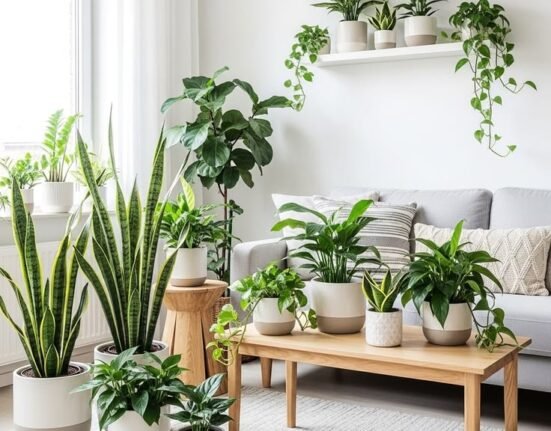
1. The “Plant Corner” That Replaced Dead Space
Every room has that awkward corner that collects dust and guilt. Mine was next to my desk — too empty to ignore, too small for furniture.
The transformation idea
Instead of forcing furniture, I created a layered plant corner with three height levels.
The formula for a perfect plant corner
| Height Level | Plant Type | Purpose |
|---|---|---|
| Tall (floor) | Large leafy plant | Anchor + focal point |
| Medium (stand) | Bushy plant | Fill mid-space |
| Low (floor pot) | Trailing plant | Soft finishing layer |
Example layout diagram
Wall Corner View:

      Tall Plant
         🌿
        / \
       /   \
   🪴         🌱
Medium      Trailing
Why it works
Corners create natural shadows. Plants thrive visually in shadow gradients, giving depth and drama.
Pro tip:
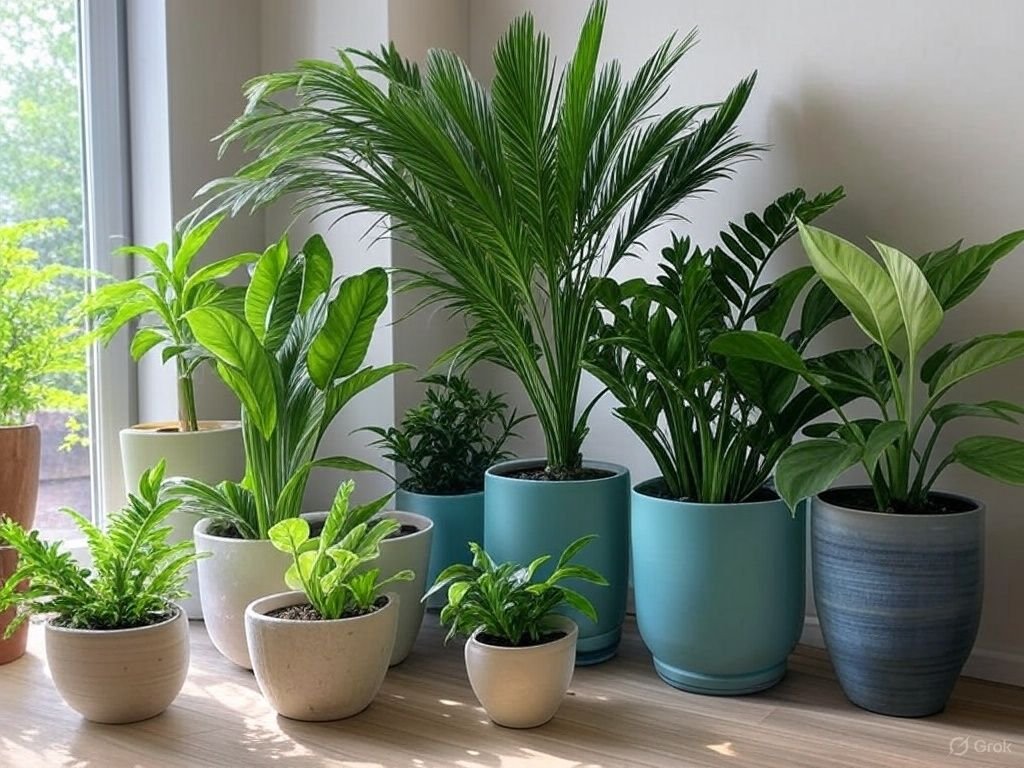
Use pots in the same color family but different textures.
2. Floating Shelf Mini Jungle
When floor space is limited, walls become your garden.
Installing floating shelves turned a plain wall into a living feature.
Shelf styling rule: The Triangle Principle
Each shelf should contain:
- One plant
- One decorative object
- One empty space
This prevents visual clutter.
Ideal plants for shelves
| Plant Type | Light Needs | Why It Works |
|---|---|---|
| Pothos | Low–medium | Trails beautifully |
| Spider plant | Bright indirect | Adds volume |
| String of pearls | Bright | Eye-catching drape |
| Small ferns | Medium | Soft texture |
Visual balance guide
Shelf Layout:

[ Plant ]   [ Object ]   [ Space ]
[ Object ]  [ Plant ]    [ Space ]
[ Space ]   [ Object ]   [ Plant ]
The alternating pattern prevents symmetry fatigue.
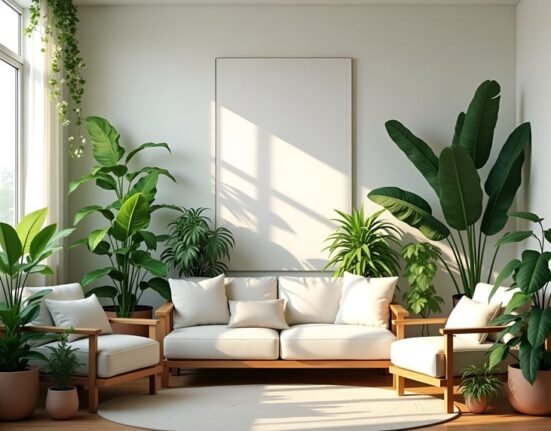
3. Creating a Window Jungle
This single idea changed my room more than any other.
Windows provide natural backlighting, which makes leaves glow.
Window plant layering strategy
| Position | Plant Type | Role |
|---|---|---|
| Window sill | Small plants | Frame the glass |
| Hanging | Trailing plants | Create canopy |
| Floor | Large plant | Ground the space |
Light layering diagram
Sunlight →
 ☀️   🌿🌿🌿 (hanging)
 ───────── window ───────
 🪴 🪴 🪴 (sill plants)
     🌴 (floor plant)
Result
The room shifts from “decorated” to “alive.”
4. The Plant Ladder Display
A wooden ladder became my favorite plant stand.
It creates vertical movement — a key principle in interior design.
Ladder styling rule
Plants should decrease in size as they go higher.
| Ladder Step | Plant Size | Effect |
|---|---|---|
| Bottom | Large | Stability |
| Middle | Medium | Balance |
| Top | Small | Lightness |
Visual flow chart
Top → small 🌱
Mid → medium 🌿
Bottom → large 🌴
This mimics natural growth patterns, making the display feel organic.
5. The Bedside Green Zone
This idea changed how my bedroom felt.
Plants near the bed create calm and softness.
Ideal bedside plants
| Plant | Why Good for Bedroom |
|---|---|
| Snake plant | Low maintenance |
| Lavender | Relaxing scent |
| Aloe vera | Clean aesthetic |
| Peace lily | Soft leaves |
Placement tips
- One plant on bedside table
- One hanging plant near window
- One floor plant opposite bed
The goal: gentle enclosure without clutter.
6. Statement Floor Plant (The Room Anchor)
Minimal rooms benefit most from one bold plant.
Think of it as the “sofa” of plant styling.
Choosing the right statement plant
| Room Size | Ideal Plant Height |
|---|---|
| Small | 90–120 cm |
| Medium | 120–160 cm |
| Large | 160–200 cm |
Positioning rule
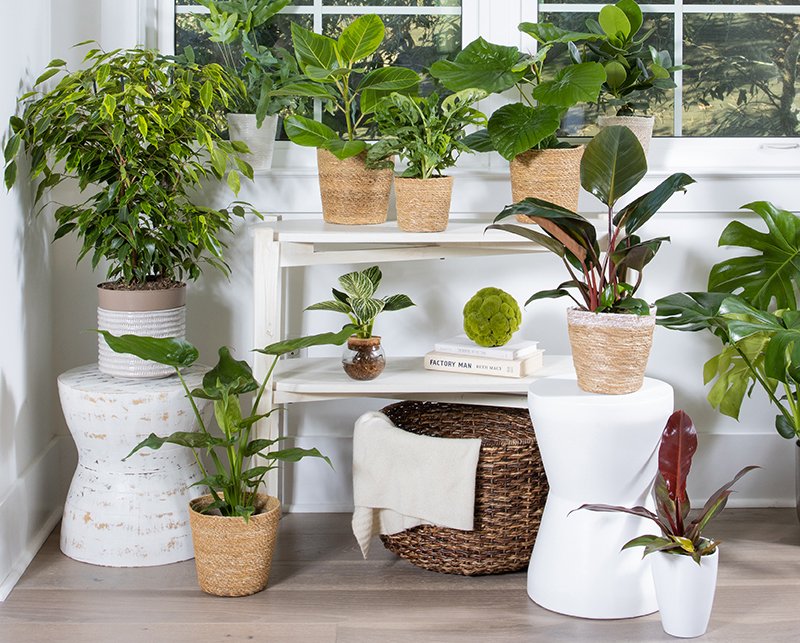
Place the plant where your eye naturally lands when entering the room.
This creates a focal point instantly.
7. The Mixed Texture Plant Wall
This is the boldest transformation.
Instead of a gallery wall of frames, I created a gallery wall of plants.
Texture combination guide
| Texture | Example Plants | Visual Role |
|---|---|---|
| Glossy | Rubber plant | Reflect light |
| Matte | Fern | Soft contrast |
| Spiky | Dracaena | Sharp accents |
| Trailing | Ivy | Movement |
Texture balance chart
Glossy: 25%
Matte: 35%
Spiky: 15%
Trailing: 25%
Balancing textures prevents chaos.
The Science of Plant Placement
Ideal room distribution
| Room Area | Plant Density |
|---|---|
| Corners | High |
| Near windows | High |
| Desk area | Medium |
| Bed area | Low–Medium |
| Walkways | Low |
Heat map example
Window area: 🔵🔵🔵🔵🔵
Corners: 🔵🔵🔵🔵
Desk: 🔵🔵🔵
Bed: 🔵🔵
Walkway: 🔵
Maintenance Planning Table
| Plant Group | Watering | Light | Care Difficulty |
|---|---|---|---|
| Succulents | Every 2–3 weeks | Bright | Easy |
| Tropical | Weekly | Medium | Medium |
| Ferns | 3–4 days | Indirect | Hard |
| Trailing | Weekly | Medium | Medium |
Before vs After Transformation
| Aspect | Before Plants | After Plants |
|---|---|---|
| Mood | Neutral | Cozy |
| Light reflection | Flat | Dynamic |
| Focal points | None | Multiple |
| Depth | Shallow | Layered |
| Comfort | Functional | Inviting |
Common Mistakes to Avoid
- Too many small plants at once
- Ignoring height variation
- Matching pots too perfectly
- Placing plants randomly
- Overwatering
Final Thoughts
Indoor plants don’t just decorate a room — they reshape how it feels.
The secret isn’t owning many plants. It’s styling them intentionally.
Even one corner can start a transformation.
FAQs
1. How many plants should a beginner start with?
Start with 3–5 plants. Focus on placement and styling before expanding your collection.
2. What is the easiest indoor plant to maintain?
Snake plants, pothos, and ZZ plants are among the easiest because they tolerate low light and infrequent watering.
3. Can indoor plants really improve mood?
Yes. Studies show greenery reduces stress, improves focus, and enhances perceived comfort.
4. How do I prevent my room from looking cluttered?
Follow the rule of odd numbers and vary heights. Leave intentional empty spaces.
5. Do plants work in small rooms?
Absolutely. Use vertical space, shelves, and hanging planters.
6. How often should indoor plants be rearranged?
Every 3–6 months. Seasonal light changes can affect plant health and room aesthetics.
If there’s one lesson from this transformation, it’s simple:
A room becomes alive when something living grows inside it. 🌿