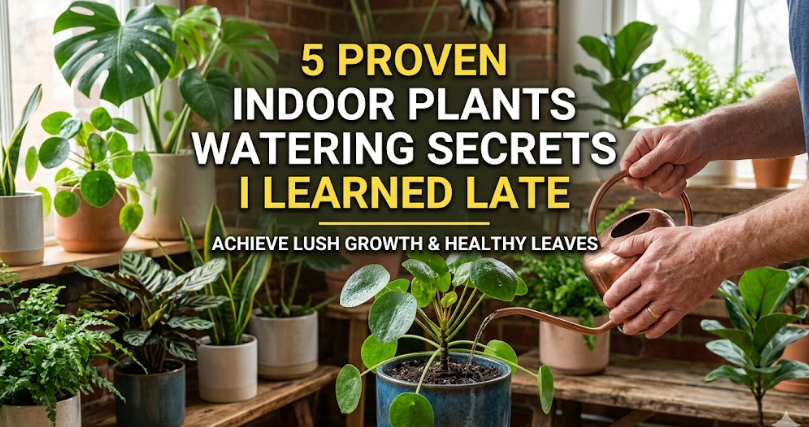
5 Proven Indoor Plants Watering Secrets I Learned Late
If there’s one thing I wish someone had told me earlier in my plant journey, it’s this: most indoor plants don’t die from neglect — they die from too much love, especially in the form of water.
For years, I believed watering was the simplest part of plant care. You pour water, the plant drinks, and everything thrives. But reality humbled me quickly. Yellowing leaves, mushy stems, and the heartbreak of watching a once-beautiful plant slowly collapse taught me that watering is less about routine and more about understanding.
This article isn’t just a guide — it’s a reflection of lessons learned the hard way. These five watering secrets transformed how I care for plants, and they might just change everything for you too.
Secret #1: Stop Watering on a Schedule — Start Watering Based on Need
This was the biggest mindset shift for me.
Like many beginners, I followed a strict schedule: water every Sunday, no exceptions. It felt organized and responsible. But plants don’t live by calendars — they respond to their environment.
Why schedules fail
Indoor conditions are never constant. Light changes. Temperature fluctuates. Humidity rises and falls. A plant that needed water every 5 days in summer might only need it every 12 days in winter.
When you water on a fixed schedule, you ignore these variables — and that’s where problems begin.
What to do instead
Start observing your plant, not your calendar.
- Stick your finger 1–2 inches into the soil
- Lift the pot to feel its weight
- Look at the leaves for subtle changes
Dry soil? Water.
Still moist? Wait.
The turning point
I remember overwatering a snake plant because “it was Sunday.” That plant didn’t need water — it needed patience. Once I stopped forcing a schedule, my plants stopped declining.
Secret #2: The Soil Matters More Than the Water
For the longest time, I thought watering was all about how often and how much. I didn’t realize the type of soil was controlling everything behind the scenes.
The hidden truth
Watering problems are often soil problems in disguise.
If your soil holds too much water, roots suffocate. If it drains too quickly, roots dry out.
Signs your soil is wrong
- Water sits on top instead of soaking in
- Soil stays wet for days
- Roots smell bad or appear mushy
- Plant dries out within a day or two
Fixing the problem
Different plants need different soil:
- Succulents → fast-draining, sandy mix
- Tropical plants → airy, moisture-retaining soil
- Ferns → rich, slightly dense soil
Adding materials like perlite, coco coir, or bark can dramatically improve drainage and aeration.
My lesson
I once watered a plant perfectly — but it still died. Why? The soil was compacted and suffocating the roots. Changing the soil revived not just that plant, but my understanding of plant care.
Secret #3: Water Deeply, Not Frequently
This is where most people get it wrong.
Light watering feels safe. You think you’re avoiding overwatering by giving “just a little.” But in reality, you’re doing more harm than good.
The problem with shallow watering
When you water lightly:
- Only the top soil gets wet
- Roots stay dry deeper down
- Roots grow upward instead of downward
- Plants become weak and unstable
The right way to water
Water thoroughly until:
- Water drains out of the bottom
- The entire root system is hydrated
Then — and this is crucial — let the soil dry before watering again.
Why this works
Deep watering encourages roots to grow deeper, making the plant stronger and more resilient.
What changed for me
Once I switched from “little sips” to deep watering, I noticed fuller growth, stronger stems, and healthier leaves. It felt counterintuitive at first — but it worked.
Secret #4: Drainage Is Not Optional — It’s Everything
If there’s one non-negotiable rule, it’s this: never ignore drainage.
The silent killer
Water that sits at the bottom of a pot has nowhere to go. Over time, it leads to root rot — one of the most common reasons indoor plants die.
Warning signs of poor drainage
- Yellowing leaves
- Mushy stems
- Foul smell from soil
- Fungus or mold growth
What proper drainage looks like
- Pots with drainage holes
- Well-draining soil mix
- Excess water freely escaping
Decorative pots trap
I used to love decorative pots — but many don’t have drainage holes. Water would collect at the bottom, slowly damaging roots without me realizing.
The solution?
- Use a nursery pot inside a decorative pot
- Or drill holes if possible
Hard lesson learned
I lost a beautiful plant simply because the pot had no drainage. It wasn’t my watering — it was the water’s inability to leave.
Secret #5: Your Environment Controls Everything
This is the secret that ties everything together.
Watering isn’t just about the plant — it’s about where the plant lives.
Factors that affect watering needs
- Light: More light = faster drying
- Temperature: Warmer air increases evaporation
- Humidity: Dry air means plants lose water faster
- Airflow: Circulation speeds up soil drying
Same plant, different needs
Two identical plants can require completely different watering schedules depending on their placement in your home.
Example
A plant near a sunny window might need water twice as often as one in a shaded corner.
My realization
I used to blame myself when plants struggled. But the real issue was placement. Once I adjusted for light and airflow, watering became easier and more predictable.
Putting It All Together
These five secrets aren’t separate — they work together.
- You observe the plant instead of following a schedule
- You use the right soil to control moisture
- You water deeply but less often
- You ensure proper drainage
- You adjust based on environment
Once you understand this system, watering stops being confusing and starts becoming intuitive.
Common Mistakes I Made (So You Don’t Have To)
Looking back, my biggest mistakes were rooted in assumptions:
- Assuming more water equals more care
- Assuming all plants have the same needs
- Assuming routines work better than observation
- Ignoring the role of soil and drainage
Every mistake taught me something — but you don’t have to learn the hard way.
FAQs About Watering Indoor Plants
1. How do I know if I am overwatering my plant?
Overwatering usually shows up as yellow leaves, soft stems, and consistently wet soil. If the soil never dries out and the plant looks droopy despite being watered, you’re likely overwatering.
2. How often should I water indoor plants?
There is no universal schedule. Some plants need water weekly, others every few weeks. Always check the soil before watering rather than relying on a fixed routine.
3. Is tap water safe for indoor plants?
In most cases, yes. However, if your tap water is heavily chlorinated or hard, it may cause issues over time. Letting water sit overnight or using filtered water can help.
4. Should I mist my plants instead of watering them?
Misting does not replace watering. It can slightly increase humidity, but plants still need proper soil watering to survive.
5. What is the best time of day to water plants?
Morning is ideal. It allows excess moisture to evaporate during the day, reducing the risk of fungal issues.
6. Can I save a plant that has been overwatered?
Yes, but timing is critical. Remove the plant from wet soil, trim any rotten roots, repot in fresh, well-draining soil, and adjust your watering habits moving forward.
Final Thoughts
If I could go back and give my younger self one piece of advice, it would be this:
Pay attention, not just effort.
Plants don’t need more water — they need the right water, at the right time, in the right conditions.
Once you understand that, everything changes.
And the best part?
You’ll stop guessing… and start growing. 🌱