7 Essential Indoor Plant Care Secrets I Wish I Knew Earlier
Bringing indoor plants into my home started as a simple decor decision. I wanted a little more color, a little more life. What I didn’t expect was how quickly a small collection could turn into a full-blown obsession — and how many mistakes I’d make along the way.
If you’ve ever watched a once-thriving plant slowly droop and wondered what went wrong, you’re not alone. I’ve overwatered succulents, underwatered ferns, placed sun-lovers in dark corners, and learned the hard way that “low-maintenance” doesn’t mean “no-maintenance.”
Over time, I discovered that successful indoor plant care isn’t about luck or a “green thumb.” It’s about understanding a few core principles — and applying them consistently.
Here are the 7 essential indoor plant care secrets I wish I knew earlier, complete with practical tables, care charts, and real-world guidance to help your plants thrive.
Secret #1: Light Is Everything (But It’s Not What You Think)
When I first started, I assumed placing plants near a window was enough. What I didn’t understand was that light intensity varies dramatically, even within the same room.
Understanding Indoor Light Types
| Light Type | Description | Best Placement | Suitable Plant Examples |
|---|---|---|---|
| Bright Direct | Sun rays directly hit the plant for several hours | South/West-facing windows | Succulents, Cacti |
| Bright Indirect | Bright room, but no harsh direct rays | Near sunny window with curtain | Monstera, Fiddle Leaf Fig |
| Medium Light | Well-lit room but away from windows | 6–10 feet from window | Pothos, Philodendron |
| Low Light | Dim corners, no direct sunlight | North-facing rooms | Snake Plant, ZZ Plant |
Key Lesson:
It’s not about whether a room feels bright to you — it’s about how much usable light the plant receives.
Quick Light Test
Stand in the spot where your plant will live:
- If you can comfortably read a book without turning on a lamp during the day, it’s at least medium light.
- If the area feels gloomy, stick to low-light plants.
What I Wish I Knew:
Plants in insufficient light won’t die immediately — they’ll just slowly decline. Smaller leaves, stretched stems, and dull color are early warning signs.
Secret #2: Watering Is a Skill — Not a Schedule
I used to water every Sunday. Consistently. Religiously.
And I killed more plants that way than I care to admit.
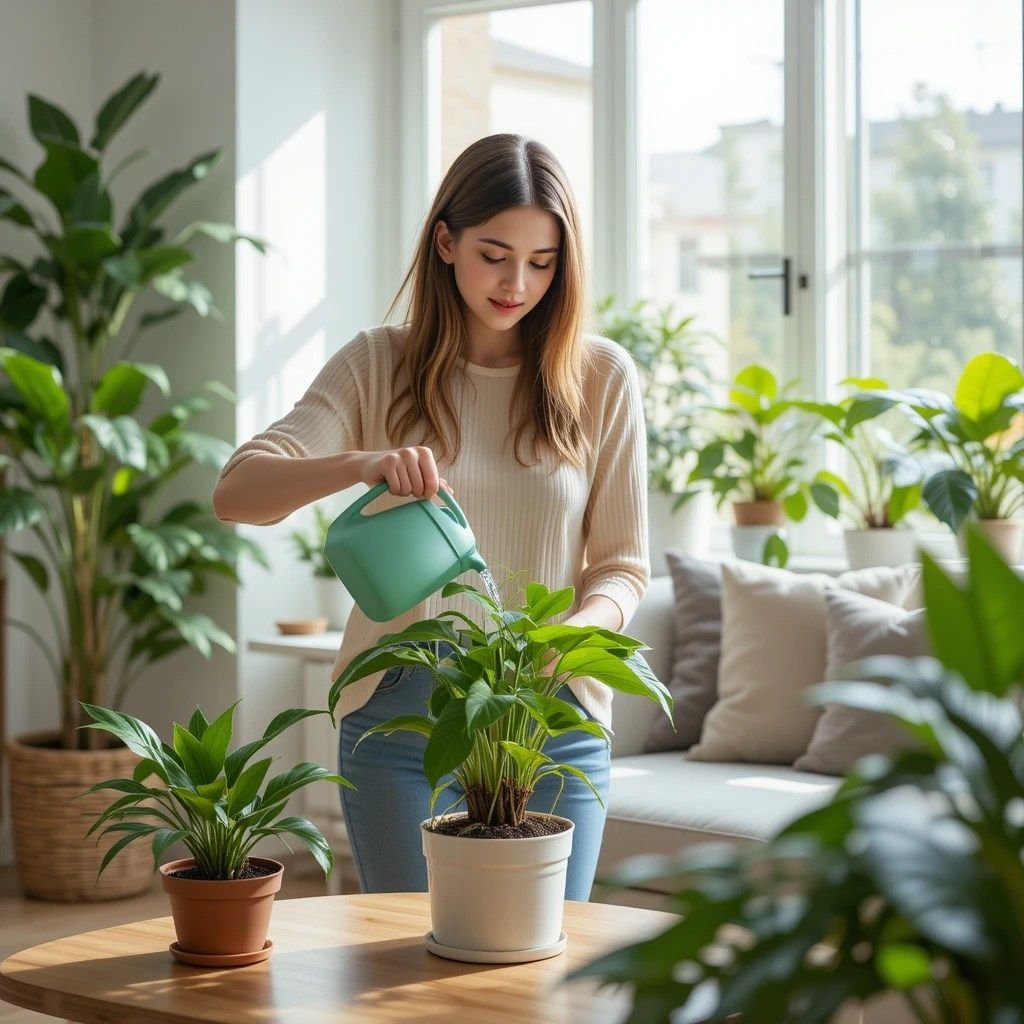
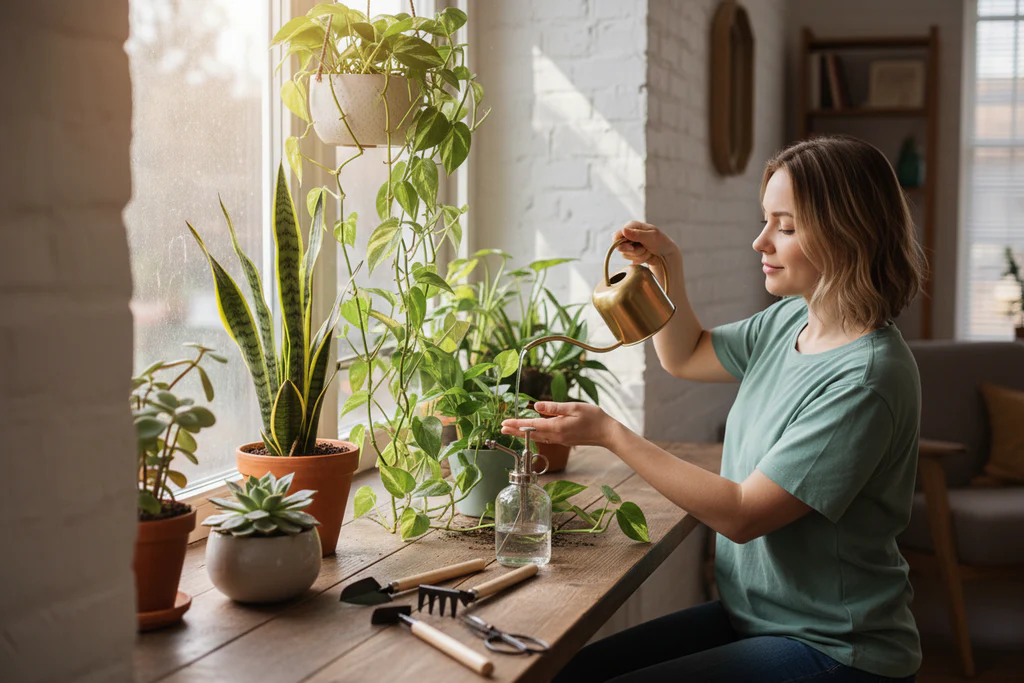
Plants don’t follow calendars — they follow soil moisture levels.
Overwatering vs Underwatering Symptoms
| Symptom | Overwatering | Underwatering |
|---|---|---|
| Yellow Leaves | Yes | Sometimes |
| Brown Crispy Edges | Rare | Common |
| Soft/Mushy Stems | Common | Rare |
| Wilting | Yes | Yes |
| Soil Smell | Musty | Dry/Dusty |
The Finger Test Method
- Insert your finger 1–2 inches into the soil.
- If it feels dry → Water.
- If moist → Wait.
General Watering Frequency Guide
| Plant Type | Typical Frequency | Notes |
|---|---|---|
| Succulents | Every 2–4 weeks | Let soil fully dry |
| Tropical Plants | Every 7–10 days | Keep slightly moist |
| Ferns | Every 4–7 days | Prefer consistently moist soil |
| Snake Plant | Every 2–3 weeks | Very drought tolerant |
What I Wish I Knew:
Overwatering kills more indoor plants than underwatering. When unsure, wait a day.
Secret #3: Drainage Isn’t Optional
Early on, I bought decorative pots without drainage holes. They looked beautiful — until the roots started rotting.
Why Drainage Matters
Roots need oxygen. When water pools at the bottom:
- Oxygen flow stops.
- Roots suffocate.
- Fungal rot begins.
Pot Comparison Chart
| Pot Type | Drainage Hole | Risk Level | Recommendation |
|---|---|---|---|
| Nursery Pot | Yes | Low | Ideal |
| Ceramic Pot (no hole) | No | High | Use as cover pot |
| Plastic Pot | Usually | Low | Lightweight option |
| Self-Watering Pot | Yes | Moderate | Monitor moisture carefully |
Pro Tip:
Use decorative pots as outer “cachepots.” Keep the plant inside a nursery pot with drainage.
Secret #4: Humidity Is a Hidden Game-Changer
Indoor air, especially in winter, is often too dry for tropical plants.
Signs of Low Humidity
- Brown leaf tips
- Curling leaves
- Drooping despite moist soil
Ideal Humidity Levels
| Plant Category | Ideal Humidity |
|---|---|
| Tropical Plants | 50–70% |
| Ferns | 60–80% |
| Succulents | 30–50% |
| Snake Plants | 30–50% |
Ways to Increase Humidity
- Group plants together
- Use a pebble tray
- Run a humidifier
- Place plants in bathrooms (if light allows)
What I Wish I Knew:
Misting is temporary and doesn’t significantly raise humidity long-term.
Secret #5: Soil Quality Makes a Bigger Difference Than You Think
I once assumed “potting soil is potting soil.” Not true.
Soil Type Comparison
| Soil Type | Drainage | Best For |
|---|---|---|
| All-Purpose Mix | Moderate | Most tropical plants |
| Cactus Mix | Fast-draining | Succulents |
| Orchid Bark Mix | Very fast | Orchids |
| Peat-Based Mix | Moisture-retentive | Ferns |
Simple Soil Upgrade Tip
Add:
- Perlite for drainage
- Orchid bark for airflow
- Coco coir for moisture balance
Healthy soil = healthy roots = healthy plant.
Secret #6: Fertilizer Is Food — But Timing Matters
Plants exhaust nutrients in pots.
Fertilizing Schedule Chart
| Season | Frequency | Notes |
|---|---|---|
| Spring | Every 2–4 weeks | Active growth |
| Summer | Every 2–4 weeks | Continue feeding |
| Fall | Reduce | Slower growth |
| Winter | Minimal/None | Dormant period |
Common Fertilizer Mistakes
- Over-fertilizing
- Fertilizing dry soil
- Using wrong formula
Golden Rule:
Dilute fertilizer to half-strength unless instructed otherwise.
Secret #7: Repotting Isn’t Just About Bigger Pots
I avoided repotting because I thought it was risky. Turns out, it’s essential.
Signs Your Plant Needs Repotting
- Roots growing out drainage holes
- Soil dries out very quickly
- Stunted growth
- Plant top-heavy
Repotting Size Guide
| Current Pot Size | New Pot Size |
|---|---|
| 4 inch | 6 inch |
| 6 inch | 8 inch |
| 8 inch | 10 inch |
Only increase by 1–2 inches in diameter.
Indoor Plant Care At-a-Glance Summary
| Factor | Most Common Mistake | Correct Approach |
|---|---|---|
| Light | Guessing | Observe light intensity |
| Water | Fixed schedule | Check soil moisture |
| Drainage | Decorative pots only | Ensure drainage holes |
| Humidity | Ignoring air dryness | Monitor levels |
| Soil | Cheap mix | Customize soil |
| Fertilizer | Overfeeding | Seasonal feeding |
| Repotting | Avoiding it | Upgrade gradually |
Visual Growth Cycle Overview (Simplified)
Spring → Growth Surge → Summer Stability → Fall Slowdown → Winter Rest → Repeat
Understanding this cycle prevents unnecessary panic when plants slow down in winter.
Final Thoughts
If I could go back and give myself advice when I bought my first plant, it would be this:
- Observe more.
- React less.
- Don’t panic over one yellow leaf.
- Understand that plant care is about patterns, not perfection.
Indoor plants aren’t fragile decorations — they’re living organisms adapting to your home environment. Once you understand their basic needs, they become surprisingly resilient.
Frequently Asked Questions (FAQs)
1. How do I know if my plant is getting too much light?
If leaves look scorched, faded, or develop crispy brown patches (especially on sun-facing sides), it may be getting too much direct sunlight.
2. Can I use tap water for indoor plants?
Yes, in most areas. However, if you notice leaf tip burn or mineral buildup on soil, let water sit overnight or use filtered water.
3. How often should I rotate my plants?
Rotate every 1–2 weeks to promote even growth and prevent leaning toward light.
4. Is misting beneficial for indoor plants?
Misting offers temporary moisture but does not significantly increase humidity. It can help clean leaves but shouldn’t replace proper humidity control.
5. Why are my plant’s leaves turning yellow?
Common causes include overwatering, poor drainage, nutrient deficiency, or natural aging. Check soil moisture first.
6. When is the best time to repot?
Early spring is ideal, just before the plant enters active growth.
With these seven secrets, your indoor garden can transform from unpredictable to thriving. The key isn’t magic — it’s mindful care, consistency, and a little patience.