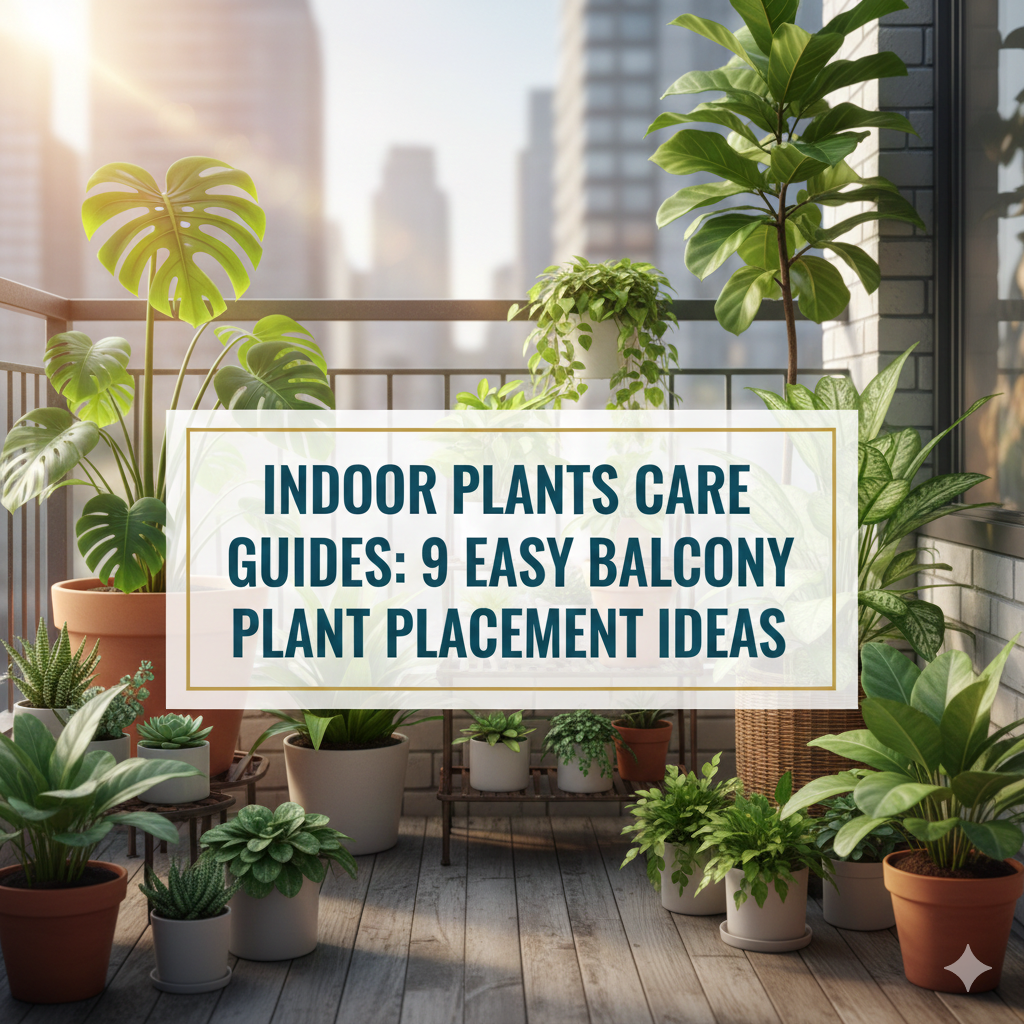
Indoor Plants Care Guides: 9 Simple Balcony Plant Placement Ideas
Have you ever looked at your balcony and thought, “This space could be so much better”?
You’re not alone. Millions of people have a balcony they hardly use — or that seems to be empty and boring. The good news? A few plants in the right places can change that entirely.
This guide talks you through 9 simple and creative ways to put plants on your balcony. Whether your balcony is small or large, sunny or shady, there’s something here for you.
Let’s make that blank outdoor space something you will actually want to spend time in.
Why The Placement of Plants On a Balcony Actually Matters
Before we dive into the ideas though, let’s talk about why placement is important.
It’s not just about looks.
Where you put a plant makes a difference in how much sunshine it receives, how easily air circulates around it, and how easy it is for you to water. A plant in the wrong location can receive too much sun, dry out too quickly, or even obstruct your view.
Good placement means:
- Healthier plants
- A better-looking space
- Easier maintenance
- More room to move around
Think of your balcony as a little room. You wouldn’t put a couch in the middle of the doorway. Same idea here — every plant needs the right spot.
Know Your Balcony Before You Buy One Plant
This step is huge, and most people skip it.
Before you go out and purchase anything, take a few minutes to study your balcony. Ask yourself the following questions:
How much sunlight does it get? Does your balcony get the sun in the morning or afternoon? Or is it mostly shaded? This one thing will determine which plants will survive and which ones struggle.
How windy is it? High-rise balconies can receive quite strong winds. Tall, skinny plants may blow over, or they may dry out quickly.
How big is the space? Measure it. Even a rough idea helps you figure out how many pots you can fit without it looking cluttered.
What’s the floor made of? Heavy pots on a wood deck require different support than those on concrete or tile.
Once you know these basics, you’re ready to pick your plants and place them like a pro.
9 Simple Balcony Plant Placement Ideas
Here are 9 easy, practical ways to put plants on your balcony. Each one is simple, affordable, and works for the majority of balcony sizes.
1. Line the Railing With Hanging Rail Planters
This is one of the most popular ideas for plants on the balcony — and for good reason.
Rail planters attach right to your balcony railing. They hang off the edge or clip onto the top. You can fill them with colorful flowers, herbs, or trailing vines.
Best plants for railing planters:
- Petunias
- Ivy
- Basil and mint
- Sweet potato vine
Why it works: It utilizes vertical space rather than floor space. Your balcony floor stays clear and the plants get full sun since they’re up high and out in the open.
Quick tip: Opt for lightweight plastic or fabric planters for railings. Heavy pots can over the years place stress on the railing.
2. Build a Vertical Plant Wall on One Side
A vertical plant wall is just what it sounds like — plants growing up and along a wall or fence instead of spread across the floor.
You can purchase wall-mounted pocket planters, ladder shelves, or build your own using wooden pallets.
Best plants for vertical walls:
- Succulents
- Ferns
- Small flowering plants
- Herbs like thyme and oregano
Why it works: Vertical walls are ideal for small balconies. You get a lot of green in a little space. It also adds privacy if your balcony faces neighbors.
Quick tip: Water drips down in wall planters. Put plants that require more water at the top, and drought-tolerant plants at the bottom.
| Layer | Best Type of Plant | Watering Requirement |
|---|---|---|
| Top | Herbs, Petunias | Moderate |
| Middle | Ferns, Ivy | Low–Moderate |
| Bottom | Succulents, Cacti | Low |
3. Design a Corner Plant Cluster
Got an empty corner on your balcony? Fill it.
A corner cluster refers to grouping several plants of varying heights together in one corner. Think of it like a mini jungle in the corner of your space.
How to do it:
- Put the tallest plant at the back
- Medium plants in the middle
- Small or trailing plants at the front
Best plants for corner clusters:
- Bird of Paradise (tall)
- Peace Lily or Snake Plant (medium)
- String of Pearls or Creeping Jenny (trailing)
Why it works: Corners are usually wasted space. Clustering plants there creates a focal point. It also makes the balcony appear to be a designed space and not merely a storage area.
Quick tip: Group plants that have similar sunlight and water requirements together. It makes watering day a lot faster.
4. Use a Plant Ladder Shelf for Layered Display
A plant ladder shelf is a leaning shelf that gets narrower towards the top — like a ladder. You put it against a wall and place pots on each of the steps.
They look great, they’re inexpensive, and they’re easy to move around.
Best plants for ladder shelves:
- Cacti
- Small succulents
- Trailing pothos
- Mini ferns
Why it works: Ladder shelves display several plants without consuming a great deal of floor space. The tiered design also allows each plant a little sunlight.
Quick tip: Keep the heavier pots on the lower steps for stability. A top-heavy ladder shelf can topple over on a windy day.
5. Hang Ceiling Planters for a Floating Garden Look
If your balcony has an overhead structure — a roof, pergola, or ceiling — you can hang planters from it.
Hanging planters create a “floating garden” effect that looks amazing. They also free up every inch of floor and railing space.
Best plants for hanging planters:
- Spider plants
- Boston ferns
- Trailing succulents
- String of hearts
Why it works: Hanging plants add dimension. Instead of everything being at eye level or below, you’ve got greenery at different heights. It feels lush and layered.
Quick tip: Use swivel hooks so you can easily rotate the plants toward the sun. Also, hanging plants dry out more quickly — check moisture more often.
6. Place a Statement Plant in a Decorative Pot as the Centerpiece
Every great space has a focal point. On a balcony, that focal point can be one bold plant in a beautiful pot.
Pick a plant that grows big, has interesting leaves, or flowers brightly. Put it in a decorative ceramic or painted pot. Then arrange everything else around it.
Best statement plants:
- Elephant Ear
- Monstera
- Bougainvillea
- Canna Lily
Why it works: It gives your balcony a design anchor. Everything else — chairs, smaller plants, lights — organizes itself around that one bold piece.
Quick tip: The pot matters just as much as the plant. A large, lovely pot with a medium plant can look more impressive than a plastic bucket with a large plant.
7. Grow a Mini Herb Garden Near the Kitchen Door
If your balcony connects to your kitchen or living space, this idea is a game-changer.
Place a row of small herb pots right near the door. Terracotta pots on a small table or shelf work perfectly. You can step outside, snip what you need, and head back to cooking.
For more expert tips on growing herbs and other plants indoors and outdoors, visit Indoor Plants Guide — a great resource for beginners and seasoned plant lovers alike.
Best herbs to grow on a balcony:
- Basil
- Rosemary
- Mint
- Parsley
- Chives
Why it works: It’s functional and beautiful. Fresh herbs taste better than store-bought ones, and the plants are generally easy to maintain.
| Herb | Sunlight Required | Watering Frequency | Difficulty |
|---|---|---|---|
| Basil | Full sun | Every 2 days | Easy |
| Rosemary | Full sun | Once a week | Easy |
| Mint | Partial sun | Every 2 days | Very Easy |
| Parsley | Partial sun | Every 2–3 days | Easy |
| Chives | Full sun | Every 2–3 days | Easy |
Quick tip: Keep mint in its own pot. It spreads aggressively and will overpower the other herbs if they share a container.
8. Line the Balcony Edges With Low Potted Plants for a Border Effect
This idea is simple but very effective. Place a row of matching or coordinated pots along the edges of your balcony floor.
Use low-growing plants so the border doesn’t obstruct your view. The effect is clean, structured, and surprisingly elegant.
Best plants for edge borders:
- Marigolds
- Dwarf lavender
- Alyssum
- Compact ornamental grasses
Why it works: It defines the space. Just like a rug defines a living room, a plant border frames your balcony and makes it feel intentional.
Quick tip: Use pots of the same color or material for a clean, organized look. Mixing too many styles can feel messy.
9. Set Up a Cozy Plant Nook Around Your Seating Area
This last idea is about making your balcony feel like a real outdoor room.
Arrange plants around your chairs or outdoor sofa to create a cozy, enclosed nook. Taller plants behind and on the sides. Smaller pots on a table or stool nearby. Maybe a hanging plant overhead.
Best plants for a seating nook:
- Tall ornamental grasses (for privacy)
- Jasmine or honeysuckle (for fragrance)
- Pothos or philodendron (for lush green backdrop)
- Small flowering plants on the table
Why it works: When plants surround your seating area, it feels like sitting inside a garden. It also adds natural privacy from neighbors.
Quick tip: Add fragrant plants like jasmine near where you sit. The scent makes the whole experience more relaxing.
Common Mistakes in Balcony Plant Placement
Even with great ideas, small mistakes can cause problems. Here are the most common ones:
Overcrowding plants Too many plants crammed together means poor airflow and more disease risk. Give each plant a little breathing room.
Ignoring weight limits Balconies have weight limits. Large pots filled with wet soil are heavy. Check your building’s guidelines before going overboard.
Placing shade plants in full sun A fern in direct afternoon sun will crisp up fast. Always match the plant to the light conditions.
Forgetting about drainage Every pot needs drainage holes. Water that sits at the bottom leads to root rot.
Not securing tall plants Wind can knock over tall plants. Use heavier pots, stakes, or wall brackets to keep them steady.
Seasonal Care Tips for Balcony Plants
Your balcony plants need different care depending on the season.
Spring: Start fresh. Clean old pots, add new soil, and introduce new plants. This is the best time to set up your vertical walls and ladder shelves.
Summer: Water more often. The heat dries out soil faster. Move heat-sensitive plants to a shadier spot.
Fall: Start preparing plants for cooler weather. Bring tropical plants indoors before the first frost.
Winter: Most balcony plants go dormant. Reduce watering. Consider using cold-hardy plants like ornamental kale or pansies for winter color.
Best Low-Maintenance Plants for Balcony Beginners
If you’re new to balcony gardening, start with plants that are forgiving and easy to care for. According to the Royal Horticultural Society, choosing the right plant for your conditions is the single most important factor in keeping plants alive and healthy.
| Plant | Light | Water | Why It’s Great for Beginners |
|---|---|---|---|
| Pothos | Low to bright | Once a week | Nearly impossible to kill |
| Snake Plant | Low to bright | Every 2 weeks | Loves to be neglected |
| Succulents | Bright | Every 1–2 weeks | Drought-tolerant |
| Marigold | Full sun | Every 2 days | Bright, cheerful, and tough |
| Spider Plant | Indirect light | Once a week | Grows fast, very forgiving |
| Lavender | Full sun | Once a week | Fragrant and easy to care for |
Start with two or three of these and build from there as your confidence grows.
Frequently Asked Questions About Balcony Plant Placement
Q: How do I know how much sunlight my balcony gets? Stand on your balcony at different times of day — morning, noon, and afternoon. Notice where the sun hits directly. Full sun means 6+ hours of direct sunlight. Partial sun is 3–6 hours. Shade is less than 3 hours.
Q: Can I grow vegetables on a balcony? Yes! Many vegetables do well in containers. Tomatoes, peppers, lettuce, radishes, and green onions are all great choices. You’ll need pots at least 12 inches deep for most vegetables.
Q: What’s the best way to water balcony plants? Stick your finger about an inch into the soil. If it feels dry, water thoroughly until it drains from the bottom. If it’s still moist, wait another day. This simple test works for most plants.
Q: How do I keep plants from blowing over in the wind? Use heavier ceramic pots instead of light plastic ones. For tall plants, use a stake or tie them loosely to the railing. Grouping plants together also helps — they protect each other from wind.
Q: Is it okay to put indoor plants outside on the balcony? Some indoor plants enjoy a summer outdoors, but move them gradually. A sudden change from indoors to full sun can shock them. Start with a few hours outside in a shaded spot and increase slowly over a week or two.
Q: How many plants are too many for a small balcony? There’s no exact number, but leave enough room to walk comfortably and for air to circulate. A good rule: if you have to squeeze past plants to get through the door, you’ve probably gone too far.
Q: Do balcony plants attract insects? Some do. Flowers attract pollinators like bees and butterflies, which is actually beneficial. To minimize pests, avoid overwatering, keep dead leaves cleaned up, and occasionally check the undersides of leaves for bugs.