Indoor Plants Care Guides: 7 Great Plants for Dark Corners
Does your home have that one sad, dark corner where nothing seems to live? You’re not alone. Most homes have areas that barely receive any light at all — behind a door, underneath a staircase, or that far end of a room that sunlight simply never reaches.
The good news? Some plants actually love the dark.
This guide takes you through the 7 best indoor plants that grow in low-light conditions. Whether you’re a complete novice or someone who’s killed every plant they’ve ever owned, these options are forgiving, beautiful, and surprisingly tough.
Let’s turn that gloomy corner into a green paradise.
Why Some Plants Thrive Without Bright Light
Not all plants come from sun-filled fields and open meadows. Many of the world’s most popular houseplants once grew on the forest floor — under thick tree canopies where sunlight was filtered, dim, and inconsistent.
These plants had to evolve over thousands of years to take advantage of very little light. Their leaves are often wider, darker, and more efficient at capturing whatever light is available.
That’s precisely why they fit so well in the dark corners of your house.
A “dark corner” doesn’t mean no light. It typically means low or indirect light — no direct sun, but sufficient ambient light to read a book without switching on a lamp. Most of the plants on this list will do just fine in those conditions.
What “Low Light” Really Means for Your Plant
Before diving into the list, it helps to know what light levels really mean in plant terms.
| Light Level | Description | Example Spots |
|---|---|---|
| Bright Direct | Sun shines directly on the plant | South-facing windowsill |
| Bright Indirect | Lots of light, no direct sun | Near a window but off to the side |
| Medium Light | Comfortable reading light | A few feet away from a window |
| Low Light | Dim but visible | Far corners, hallways, north-facing rooms |
| No Light | Pitch dark | No plant survives here |
Most “dark corners” fall into the low to medium light category. The 7 plants below are all suited to those conditions.
The 7 Best Plants for Dark Corners
1. Pothos (Epipremnum aureum) — The Unkillable Vine
If there’s one plant that belongs in every dark corner, it’s the pothos.
This trailing vine grows quickly, forgives neglect, and thrives in conditions that would kill most other plants. Its heart-shaped leaves come in shades of green, yellow, and even variegated white — giving any corner a lush, jungle-like feel.
Why it works in dark spaces: Pothos can handle very low light better than almost any other houseplant. It slows down its growth in dim spots but keeps on living.
How to care for it:
- Water: Allow the soil to dry out completely between waterings. Once every 1–2 weeks is usually fine.
- Soil: Any normal potting mix works fine.
- Pot: Make sure it has drainage holes.
- Feeding: A little liquid fertilizer once a month in spring and summer is sufficient.
Pro Tip: If you notice the leaves losing their variegation (color patterns) and turning all green, it means the plant is reaching for more light. Move it slightly closer to a window.
Toxic Warning: Pothos is toxic to cats and dogs. Keep it out of reach if you have pets.
2. ZZ Plant (Zamioculcas zamiifolia) — The Drought-Proof Dark Dweller
The ZZ plant looks like something from a designer magazine — tall, glossy, architectural, and effortlessly cool.
But here’s what makes it really special: it stores water in its thick rhizomes (underground stems). That means it can go weeks without water and still look perfect.
It’s one of the best choices for dark offices, hallways, or corners that are easy to forget about.
Why it works in dark spaces: ZZ plants are extremely adaptable. They slow their metabolism in low light and survive on very little energy. They won’t grow fast in the dark, but they won’t die either.
How to care for it:
- Water: Every 2–3 weeks in summer. Once a month in winter is plenty.
- Soil: Well-draining mix. Add some perlite to regular potting soil.
- Light: Low to medium indirect light. Never direct sun — it scorches the leaves.
- Feeding: Once every 2 months during the growing season.
Fun Fact: The ZZ plant was once rumored to cause cancer. That myth has been completely debunked. It is mildly toxic if eaten, so keep it away from pets and young children.
3. Snake Plant (Dracaena trifasciata) — The Air-Cleaning Champion
The snake plant — also known as mother-in-law’s tongue — is a classic for a reason.
Its stiff, upright leaves with yellow edges look bold and modern. It fits into tight corners without sprawling out. And it purifies the air while you sleep by releasing oxygen at night.
It’s practically indestructible.
Why it works in dark spaces: Snake plants are among the most light-tolerant houseplants available. They grow slowly in low light but stay healthy and upright.
How to care for it:
- Water: This is the most important part — don’t overwater. Every 2–4 weeks is usually enough. In winter, once a month or even less.
- Soil: A cactus or succulent mix works best. Regular soil can lead to root rot.
- Temperature: Keeps well between 60–80°F (15–27°C). Don’t let it sit near cold drafts.
- Feeding: Light fertilizer once in spring and once in summer.
Common Mistake: Most snake plants die from overwatering, not lack of light. When in doubt, don’t water it.
4. Cast Iron Plant (Aspidistra elatior) — Built for the Shadows
The name says it all. This plant is tough as cast iron.
It can handle low light, temperature fluctuations, dust, and irregular watering. It doesn’t produce flashy flowers or dramatic trailing vines — but its wide, dark green leaves have a quiet elegance that works beautifully in corners.
Why it works in dark spaces: The cast iron plant was literally built for shady spots. In the wild, it grows under dense forest cover in Japan and China. Dim indoor corners feel like home to it.
How to care for it:
- Water: Keep the soil lightly moist. Water when the top inch of soil feels dry.
- Light: The darker the better. It can tolerate very low light for extended periods of time.
- Growth: It’s a slow grower. Be patient — it won’t shoot up overnight.
- Feeding: Feed once in spring with a balanced liquid fertilizer.
Design Tip: The cast iron plant’s large, paddle-shaped leaves look stunning in simple, minimalist pots. Let the leaves do the talking.
5. Peace Lily (Spathiphyllum) — The Blooming Shadow-Lover
Want a plant that actually flowers in a dark corner? The peace lily is your answer.
It produces stunning white blooms even in low-light conditions — something very few plants can pull off. The flowers are elegant and simple, and the dark green leaves are beautiful on their own when the plant isn’t blooming.
Why it works in dark spaces: Peace lilies are native to tropical forest floors, where light is scarce and humidity is high. They are naturally adapted to exactly the kind of environment your shaded corner offers.
How to care for it:
- Water: Keep the soil consistently moist but never soggy. Water when the top inch has dried out.
- Humidity: Peace lilies love humidity. Mist the leaves occasionally or place a tray of water nearby.
- Feeding: Balanced fertilizer every 6 weeks during spring and summer.
- Blooming Tip: If your peace lily stops blooming, move it slightly closer to a light source.
Air Quality Bonus: According to NASA’s Clean Air Study, peace lilies help remove harmful toxins such as ammonia, benzene, and formaldehyde from indoor air.
Warning: Peace lilies are toxic to cats, dogs, and humans if eaten. Handle with care.
6. Chinese Evergreen (Aglaonema) — Color in the Dark
Who says dark corners have to be boring?
The Chinese evergreen comes in an incredible range of leaf colors — deep green, silver, red, pink, and everything in between. It’s one of the most visually striking low-light plants you can find.
And it’s just as tough as it is beautiful.
Why it works in dark spaces: Darker-colored varieties of aglaonema (the greens and silvers) handle low light extremely well. The brighter-colored ones (reds and pinks) prefer a bit more light, so stick to the darker varieties for your shadowy corners.
How to care for it:
- Water: Water when the top 1–2 inches of soil feel dry. Don’t let it sit in water.
- Soil: Well-draining potting mix. Add perlite for extra drainage.
- Temperature: Prefers warmth. Keep it away from cold windows and drafts.
- Feeding: Light fertilizer once a month in spring and summer.
Color Guide for Dark Corners:
| Variety | Light Needed | Best For |
|---|---|---|
| Silver Bay | Low light | Dark hallways |
| Maria | Very low light | Deep corners |
| Emerald Beauty | Low-medium light | Living rooms |
| Red Siam | Medium light | Brighter spots |
7. Parlor Palm (Chamaedorea elegans) — Tropical Vibes, Zero Sun Required
If you want to add height, drama, and a real tropical feel to a dark corner, the parlor palm delivers all of that without needing a single ray of direct sunlight.
It has been a popular houseplant since the Victorian era — and for good reason. Its graceful, arching fronds fill empty vertical space beautifully.
Why it works in dark spaces: Parlor palms grow naturally in the shaded understory of Mexican rainforests. They’re built for low light. Unlike most palms, they do not need sunshine to thrive indoors.
How to care for it:
- Water: Water when the top inch of soil is dry. Overwatering causes root rot.
- Humidity: They like humidity. Grouping plants together or using a pebble tray helps.
- Feeding: Light fertilizer every 2 months during the growing season.
- Repotting: Only repot when the roots are visibly crowded. Parlor palms like being slightly root-bound.
Fun Fact: Parlor palms are non-toxic to both cats and dogs — making them one of the safest large houseplants for pet owners.
Side-by-Side Comparison: All 7 Plants at a Glance
| Plant | Light Needs | Watering | Difficulty | Pet Safe? | Best Feature |
|---|---|---|---|---|---|
| Pothos | Very Low | Every 1–2 weeks | Easy | No | Fast-growing, trailing |
| ZZ Plant | Low | Every 2–3 weeks | Very Easy | No | Drought-tolerant |
| Snake Plant | Very Low | Every 2–4 weeks | Very Easy | No | Air purifying |
| Cast Iron Plant | Very Low | When top inch dries | Easy | Yes | Ultra-hardy |
| Peace Lily | Low | When top inch dries | Easy | No | Blooms in low light |
| Chinese Evergreen | Low | Every 1–2 weeks | Easy | No | Colorful leaves |
| Parlor Palm | Low-Medium | When top inch dries | Moderate | Yes | Height and drama |
Mistakes That Kill Low-Light Plants Faster Than the Dark Will
Even the toughest plants on this list can struggle if a few basic mistakes are made.
Overwatering Is the #1 Killer
In low light, plants use less water because they’re photosynthesizing less. If you water on the same schedule as a sunny windowsill plant, you’ll drown the roots.
Always check the soil before you water. Use your finger — push it an inch into the soil. If it still feels damp, wait.
Neglecting to Clean the Leaves
Dust settles on leaves over time and actually blocks the tiny bit of light your plant is trying to absorb. Wipe leaves with a damp cloth every couple of weeks to keep them clean and efficient.
Using the Wrong Pot
A pot without drainage holes is a death trap for most houseplants. Water sits at the bottom with no escape, roots rot, and the plant slowly dies. Always use pots with holes, or place a nursery pot inside a decorative one.
Placing Plants in Zero-Light Spots
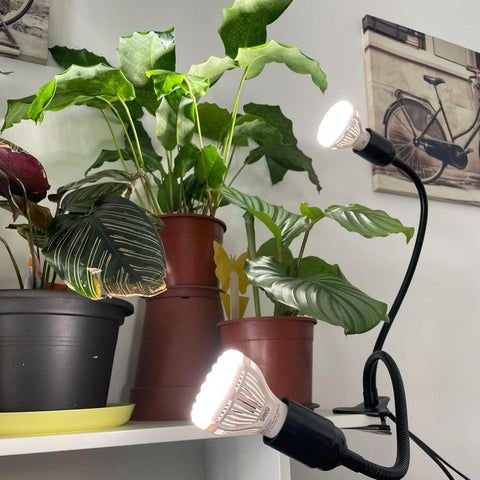
“Low light” doesn’t mean no light. If you can’t comfortably read a book in a spot during the day, it’s too dark for even these plants. A simple grow light can solve this problem inexpensively.
Simple Low-Light Plant Care Routine
Here’s a straightforward weekly and monthly care routine for keeping your dark-corner plants healthy. For even more plant care tips and guides, explore Indoor Plants Guide — a great resource for both beginners and experienced plant parents.
Every Week:
- Check soil moisture with your finger
- Look for any yellowing or browning leaves
- Remove dead leaves if you spot any
Every 2 Weeks:
- Water plants that need it (pothos, Chinese evergreen)
- Mist peace lilies if the air is dry
Every Month:
- Wipe leaves clean with a damp cloth
- Rotate pots slightly so all sides get equal light exposure
- Fertilize during growing season (spring/summer)
Every Few Months:
- Check roots to see if repotting is needed
- Inspect for pests (spider mites, fungus gnats)
- Trim any leggy or overgrown stems
FAQs on Growing Indoor Plants in Dark Corners
Q: Can any plant survive in a room with no windows? A: Not naturally. Every plant needs at least some light to survive. If your room has no windows, a full-spectrum grow light set to run 12–14 hours a day can replace natural sunlight effectively.
Q: How do I know if my plant is getting too little light? A: Watch for these signs — yellowing leaves, leggy stems stretching toward the light, smaller new leaves, and very slow or no growth. These are all signals that your plant needs more light.
Q: Should I fertilize low-light plants less often? A: Yes. Plants growing in low light photosynthesize less and grow more slowly. They need fewer nutrients. Fertilizing too often can actually damage the roots. Stick to once every 6–8 weeks during the growing season.
Q: Are grow lights a good substitute for natural light? A: Absolutely. Full-spectrum LED grow lights are affordable, energy-efficient, and work really well for low-light plants. According to the University of Missouri Extension, placing grow lights 6–12 inches above the plant and running them for 12 hours a day produces the best results for most low-light houseplants.
Q: Why are my pothos leaves turning yellow? A: Usually overwatering. Let the soil dry out completely between waterings. Yellow leaves can also mean the plant needs more light or that it has been sitting in drafts.
Q: Which dark-corner plant is safest for homes with cats? A: The parlor palm and cast iron plant are both non-toxic to cats and dogs, making them the top choices for pet-friendly households.
Q: How often should I repot these plants? A: Most low-light plants are slow growers and only need repotting every 2–3 years. Signs it’s time: roots poking out of drainage holes, soil drying out too fast, or the plant tipping over from being top-heavy.
Wrapping It All Up
Dark corners don’t have to stay empty or depressing.
The right plant can completely transform a dim, forgotten spot into something vibrant, calming, and alive. Whether you go for the nearly indestructible ZZ plant, the elegant peace lily, or the dramatic parlor palm — there’s a perfect match for every dark corner in your home.
Start with one plant. See how it does. Then add another.
The best indoor plants care guide isn’t about memorizing every rule — it’s about paying attention to your plant, learning what it needs, and adjusting from there. Low-light plants are forgiving teachers. They’ll show you what they need before they give up on you.
Go find that sad corner. It’s about to get a lot greener.