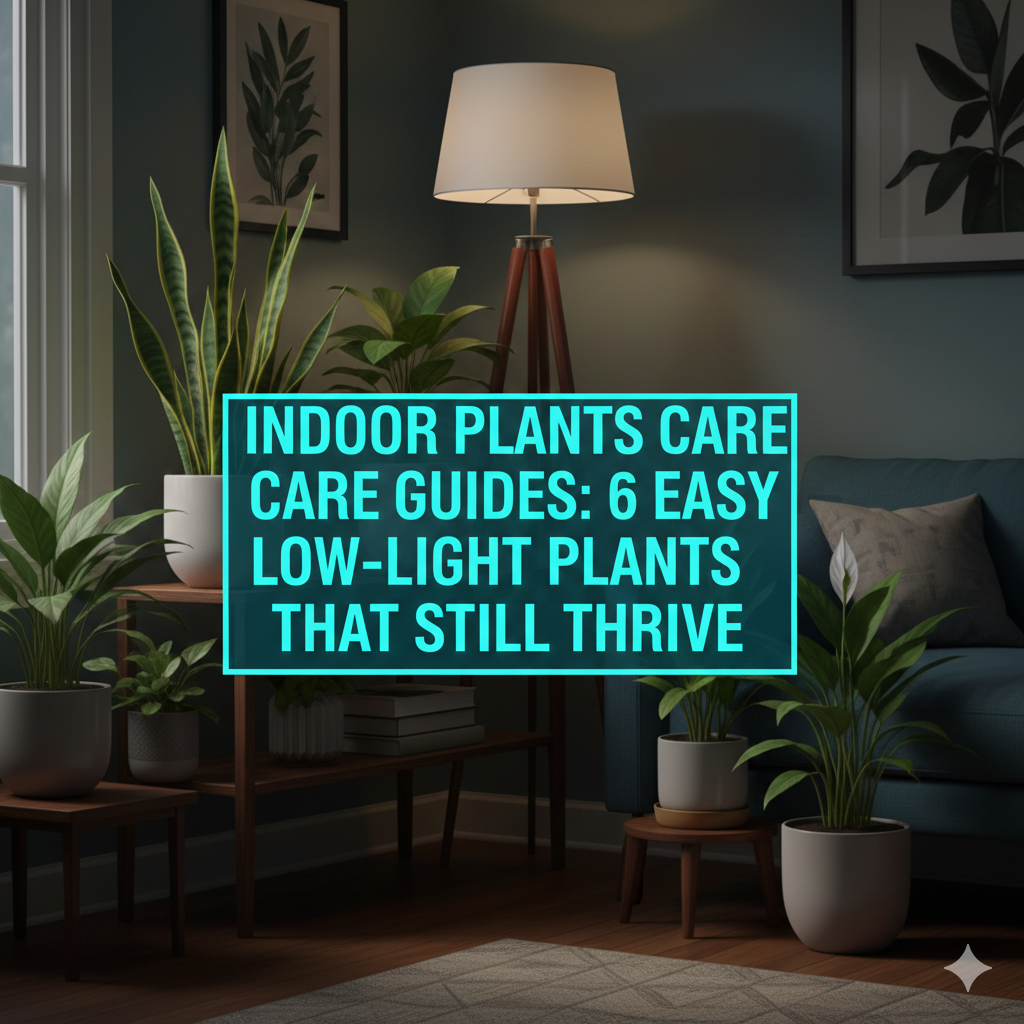
Indoor Plants Care Guides: 6 Easy Plants to Grow in Low Light That Still Look Good
You love the idea of having plants inside the house. But your apartment hardly gets any sunlight. Maybe your office has one little window. Or your bedroom faces a wall.
The good news is that not all plants require a sunny windowsill to survive. Some plants actually prefer lower light. And many of them are almost impossible to kill.
This indoor plants care guide will take you through six of the best low light indoor plants, how to care for each plant, and what exactly you need to do to keep them healthy. Whether you’re a complete beginner, or have accidentally killed a cactus in your day, this is for you.
Let’s get into it.
What Does “Low Light” Mean for Your Indoor Plants?
Before you dive into the list of plants, it’s important to get something straight. “Low light” doesn’t mean no light. Plants still require some light to make food by means of photosynthesis.
Low light usually means:
- No direct sunlight strikes the plant
- The room has windows but the plant is far from them
- Light comes in for only a few hours of the day
- The room is dim but you are able to read a book without switching on a lamp
If a room is totally dark, even the hardiest low light plants will struggle eventually. But most rooms — hallways, offices, bedrooms — have enough ambient light for the plants on this list.
Why Low Light Plants Are Ideal for Most Homes
Most homes are not designed to optimally let sunlight in for plants. Walls, furniture, adjacent buildings, and small windows all obstruct the light. That’s just reality.
Low light plants solve this problem. They’ve evolved over thousands of years to grow on forest floors under heavy tree canopies. In the wild they are seldom exposed to direct sun. They’ve learned to do a lot with a little.
This also means that they grow slowly. Slow growth = less maintenance. Less pruning, less repotting, less watering. That’s a major win for busy people.
The 6 Best Plants for a Low-Light Indoor Space (And How to Care For Them)
Here’s a quick overview before we go into depth about each one:
| Plant Name | Watering Frequency | Light Needed | Best For |
|---|---|---|---|
| Pothos | Every 1–2 weeks | Low to medium | Beginners, hanging baskets |
| Snake Plant | Every 2–6 weeks | Very low | Forgetful waterers |
| ZZ Plant | Every 2–3 weeks | Low to medium | Offices, low-humidity areas |
| Peace Lily | Every 1–2 weeks | Low | Flowering, humid rooms |
| Chinese Evergreen | Every 1–2 weeks | Very low | Colorful foliage, low light |
| Cast Iron Plant | Every 2–3 weeks | Very low | Extreme neglect survivors |
Pothos — The Beginner’s Best Friend
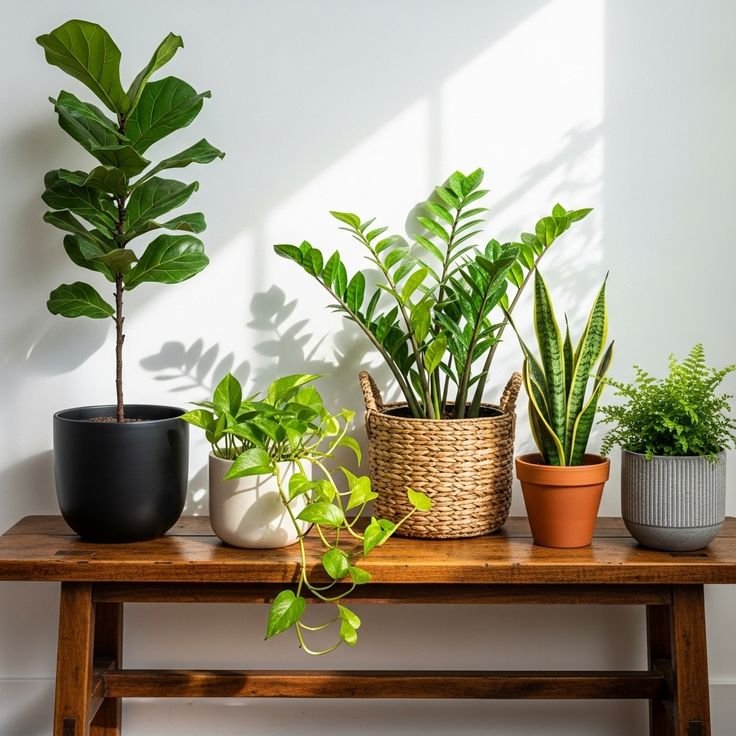
The pothos is probably the most popular houseplant in the world. And for good reason. It’s tough, it grows quickly, and it looks great trailing from a shelf or hanging basket.
What it looks like: Pothos has heart-shaped leaves that are either green, golden yellow, marble white, or neon green depending on the variety. The vines can grow several feet long indoors.
Light requirements: Pothos is more tolerant of low light than almost any other plant. It is easily kept alive in dim rooms, though the leaves may lose some of their color variation in very dark spots. A brighter spot brings out more contrast in variegated varieties.
Watering tips: Water your pothos when the top inch of soil is dry. That’s usually every 1–2 weeks in the warmer months and every 2–3 weeks in winter. If leaves are beginning to yellow, you are likely overwatering. If they appear wilted and dry, it is in need of more water.
Soil and pot: Use regular potting mix. Make sure the pot has drainage holes. Pothos roots dislike sitting in water.
Common problems and fixes:
| Problem | Likely Cause | Fix |
|---|---|---|
| Yellow leaves | Overwatering | Let soil dry out more between waterings |
| Brown leaf tips | Low humidity or fluoride in water | Use filtered water or allow tap water to sit overnight |
| Leggy vines with small leaves | Too little light | Move closer to a window |
| Wilting | Underwatering or root rot | Check roots and adjust watering |
Pro tip: Pothos is one of the easiest plants to propagate. Cut a stem just below a leaf node, drop it in water, and watch roots grow in a week or two. Free plants forever.
Snake Plant — The “Set It and Forget It” Plant
If you have ever killed a plant from loving it too much, the snake plant is your answer. It thrives on neglect. It goes weeks without water. It handles dim corners. It doesn’t complain.
What it looks like: Snake plants have tall, upright leaves that are typically dark green with banding of light green or yellow along the edges. Some varieties only grow to 6 inches in height. Others reach 4 feet or more.
Light requirements: Snake plants are among the most low light tolerant plants on the planet. They’ll survive in places where other plants would give up. However, they grow fastest in indirect bright light. Very dark spots slow growth down to almost nothing.
Watering tips: This is where most people go wrong — they water snake plants too often. Water only when soil is totally dry. That may be every 2–3 weeks in summer. In winter, once a month (or even less) is sufficient. Root rot due to overwatering is the number one killer of snake plants.
Temperature and humidity: Snake plants like normal room temperatures (60–80°F). They don’t need humidity. They handle air conditioning and heating well — making them perfect for offices.
Soil tip: Use a well-draining cactus or succulent mix. This prevents water from sitting around the roots.
Fun fact: Snake plants were listed among the top air-purifying houseplants according to NASA’s Clean Air Study. While more recent research has found the effect to be modest in real-world conditions, they still help in the reduction of some indoor toxins.
ZZ Plant — The Glossy, Drought-Resistant Wonder
The ZZ plant (short for Zamioculcas zamiifolia) looks like it has been designed by an artist. Its waxy, dark green leaves catch the light in such a way as to almost make the plant appear fake. But it’s very real — and very tough.
What it looks like: ZZ plants grow in an arching style with thick stems lined with oval, shiny leaves. They’re elegant without being fussy.
Light requirements: ZZ plants thrive in low to medium indirect light. They can even handle fluorescent office lighting. Direct sun will scorch the leaves, so stay away from south-facing windows.
Watering tips: ZZ plants store water in their thick rhizomes (underground root-like structures). This means they can survive weeks without water. Water every 2–3 weeks during spring and summer. In fall and winter, stretch it out to once a month. Let the soil dry out completely between waterings.
Toxicity note: ZZ plants are toxic to pets and humans if eaten. Keep them away from cats, dogs, and small children. Wash your hands after handling, as the sap can irritate the skin.
Growth rate: ZZ plants are slow growing. Don’t expect dramatic changes each week. But over months and years, they become gorgeous, full plants.
Best spots in your home:
- Office desk or shelf
- Bathroom (as long as there’s some light)
- Living room corner away from direct sun
- Entryway with ambient light
Peace Lily — The Only Low Light Plant That Flowers
Most low light plants are grown for their leaves. The peace lily is different. It actually blooms indoors — even in lower light conditions — producing elegant white flowers that can last for weeks.
What it looks like: Peace lilies have dark green, glossy foliage and white flowers (called spathes) that rise above the foliage. They have a clean, classic appearance that works in virtually any space.
Light requirements: Peace lilies prefer low to medium indirect light. They’ll survive in dim rooms, although they may not flower as often without more light. If you want blooms, place them closer to a window — but never in direct sun.
Watering tips: Peace lilies enjoy steady moisture, but not soggy soil. Water when the top inch of soil becomes dry. A great trick: peace lilies will actually droop a bit when they’re thirsty. They rebound quite rapidly after watering, so this drooping is a helpful indicator rather than a cause for panic.
Humidity: Peace lilies enjoy humidity. If the air in your home is dry, mist the leaves occasionally or set the pot on a tray of pebbles filled with water (just don’t let the pot sit directly in water).
Toxicity: Similar to ZZ plants, peace lilies are toxic to pets and children if eaten.
Why people love them:
- They flower without too much fuss
- They look tropical and lush
- They visually signal when they are thirsty
- They do well in bathrooms or kitchens where there is some natural light
Chinese Evergreen — The Low-Light Showstopper
Chinese evergreens (Aglaonema) are one of the most colorful plants on this list. They come in shades of deep green, silver, red, pink, and orange. And they cope with low light quite well.
What it looks like: Chinese evergreens are bushy plants with large, patterned leaves. Depending on the variety, the leaves may be dark green with silver streaks, bright red with green edges, or deep pink with yellow spots.
Light requirements: Here’s an important rule with Chinese evergreens: darker-leaved varieties tolerate lower light better. Bright, colorful varieties (pink, red, orange) require more indirect light to maintain their color. If you have a very dark spot, go with a green or silver variety.
Watering tips: Water when the top 1–2 inches of soil have dried out. Chinese evergreens don’t like to sit in wet soil, but also don’t want to dry out completely. Aim for consistently moist — not wet, not bone dry.
Temperature: Chinese evergreens do not like cold. Keep them away from drafts, air conditioning vents, and cold windows. They prefer temperatures above 60°F.
Quick Care Summary:
| Factor | Ideal Condition |
|---|---|
| Light | Low to medium indirect |
| Water | Every 1–2 weeks |
| Humidity | Moderate to high |
| Temperature | 65–80°F |
| Toxicity | Toxic to pets |
Why it stands out: Most low-light plants are purely green. Chinese evergreens add color and visual interest to dim corners without needing to be in the sun to look beautiful.
Cast Iron Plant — The Toughest Plant You’ll Ever Own
The cast iron plant (Aspidistra elatior) earned its name honestly. This plant can survive circumstances that would kill just about everything else. Low light, irregular watering, temperature fluctuations, dust, and neglect — it handles all of it.
What it looks like: Cast iron plants have long, dark green, leathery leaves that grow upright in a clump. They don’t produce showy flowers indoors, but the bold foliage makes a strong statement.
Light requirements: Cast iron plants may be the single most low-light tolerant houseplant available. They’ve been used in Victorian-era houses where smoky air and dim gaslight was the norm. They handle deep shade better than almost any other plant.
Watering tips: Water when the soil is almost completely dry. Every 2–3 weeks in summer, less in winter. They’re very forgiving of an occasional missed watering.
Growth rate: Cast iron plants grow very slowly. Don’t expect fast results. But they are essentially immortal if given basic care. Some cast iron plants have been passed down in the same family for generations.
Ideal conditions:
- Hallways with no windows
- Offices with only fluorescent lighting
- Shady indoor corners
- Spaces that are often forgotten
Maintenance: Almost none. Wipe the leaves with a damp cloth from time to time to remove dust. That’s about it.
How to Keep Any Low Light Plant Healthy — 5 Simple Rules
No matter what plant you choose, these five rules apply to all of them.
1. Don’t overwater. More houseplants die from too much water than too little. When in doubt, wait another few days before watering. Check the soil with your finger — if it’s still damp an inch down, hold off.
2. Use pots with drainage holes. Standing water at the bottom of a pot causes root rot. Always use pots that allow excess water to escape.
3. Wipe the leaves. Dust blocks the light reaching the leaves. Wipe leaves gently with a damp cloth every few weeks. This also helps you catch pests early.
4. Don’t rush repotting. Most low light plants enjoy being slightly root bound. Repot only when roots begin to grow out of the drainage holes or the plant stops growing altogether.
5. Feed lightly. A diluted liquid fertilizer once a month during spring and summer is sufficient. Skip fertilizer in fall and winter — the plant isn’t actively growing and doesn’t need it.
Choosing the Right Plant for Your Space
Not sure which one is right for you? Use this quick guide:
| Your Situation | Best Plant Pick |
|---|---|
| Complete beginner | Pothos |
| You forget to water often | Snake Plant or Cast Iron Plant |
| Want color in a dim room | Chinese Evergreen |
| Want flowers indoors | Peace Lily |
| Stylish, modern look | ZZ Plant |
| Absolute worst light conditions | Cast Iron Plant |
FAQs: Indoor Plants Care Guides for Low Light Spaces
Q: Can I grow low light plants in a room with no windows? Not for long. Even hardy plants such as snake plants and cast iron plants require some ambient light. Completely dark rooms will slowly weaken any plant. If your room has no windows, consider a simple grow light on a timer — even a few hours a day makes a big difference.
Q: How do I know if my plant is getting too little light? Watch for these signs: leggy stems reaching toward the light source, smaller-than-normal new leaves, pale or yellowing leaves, and very slow or no growth at all. These are all signs that your plant wants more light.
Q: Can I put these plants near a north-facing window? Yes, absolutely. North-facing windows provide steady, gentle indirect light — ideal for all six plants on this list. Just don’t place them in a spot where direct afternoon sun strikes the leaves.
Q: Can low light plants purify the air? They do remove some toxins, but the effect in a normal-sized room is modest. You’d need dozens of plants to have any noticeable improvement in air quality. That said, plants do add humidity and a sense of calm to a space, which is reason enough to have them.
Q: Why are my low light plant’s leaves turning yellow? Yellow leaves are typically a sign of overwatering, poor drainage, or insufficient light. Start by checking how wet the soil is. If it’s soggy, hold off on watering and make sure your pot drains properly.
Q: How often should I fertilize low light plants? Once a month during spring and summer with a balanced, diluted liquid fertilizer is plenty. Skip it in fall and winter. Low-light plants are slow growing and do not require heavy feeding.
Q: Can I grow these plants in the bathroom? Yes! Bathrooms often have great humidity and some indirect light from frosted windows. Pothos, peace lilies, and Chinese evergreens particularly enjoy humid bathroom conditions.
Final Thoughts: Start With One Plant and Go From There
You don’t need a sun-drenched greenhouse or gardening experience to have beautiful plants in your home. The six plants in this indoor plants care guide — pothos, snake plant, ZZ plant, peace lily, Chinese evergreen, and cast iron plant — were practically born for indoor living.
Start with one. Learn its rhythms. Notice when it looks happy and when it doesn’t. Once you’ve had the experience of keeping one plant healthy for a couple of months, adding a second (or a tenth) seems completely natural.
Low light is not a limitation. For these six plants, it’s simply home.