Indoor Plants Care Guides: 5 Watering Rules That You Are Supposed to Adhere to
You bought a beautiful plant. You watered it every day. And then… it died.
Sound familiar? You are not alone. Houseplants are most likely to die due to overwatering. Majority believe that the way to love a plant is to give it much water. That is one of the greatest errors in taking care of plants, however.
The good news? Watering does not need to be baffling. And after you master some clever principles, it is so much easier to keep your houseplants alive. This guide is designed either in case you are a complete novice or in case you have lost a couple of plants in the process.
It is a very useful indoor plants care guide — no complicated science or terms that you find hard to understand. Only five facts, proved watering rules that really work.
Let’s get into it.
Reasons Why Watering Is the Number 1 Skill Every Plant Parent Should Have
Considering that there are five rules that will be discussed later, it is worth speaking about the importance of watering first.
Plants need water to survive. That part is obvious. Yet it is a big deal which, when, and how. Excess water, and the roots decay. Water that is insufficient and the plant dries up and withers.
The first thing that most people are not aware of is that water requirements of different plants are totally different. Once every few weeks you have to water a cactus on your windowsill. Your bathroom fern may require watering twice a week. Treating them the same is a disaster waiting to happen.
And that is precisely the reason why there are indoor plants care guides such as this one — to ensure that you no longer need to guess and start growing without any doubts.
What Happens When You Water Wrong
Now we will examine the two most common watering errors and what they are doing to your plants.
Too Much Water — The Slow Killer
Overwatering does not imply that your plant will drown overnight. It happens slowly. When soils stay wet for too long, there is an inadequate supply of oxygen to the roots. They start to rot. The plant appears drooping, yellow, or mushy — in spite of the fact that it is not deprived of water.
Signs of overwatering:
- Yellow or brown leaves
- Soggy, smelly soil
- Wilting even when the soil is moist
- Mold growing on the soil surface
Too Little Water — The Slow Drought
Less frequent but it still occurs is underwatering. A plant that is not receiving adequate water is unable to transfer nutrients in the soil to its leaves. It begins to wither at the ends.
Signs of underwatering:
- Dry, crispy leaf edges
- Soil pulling away at the sides of the pot
- Leaves that curl inward
- Lightweight pot when lifted
| Problem | Cause | Common Signs |
|---|---|---|
| Overwatering | Excess water, too frequently | Yellow leaves, root rot, saturated soil |
| Underwatering | Lack of water | Crispy tips, dry soil, wilting |
| Wrong water type | Tap water containing chemicals | Brown tips, slow growth |
| Bad timing | Watering at the wrong time of day | Evaporation, sunburn on wet leaves |
| Poor drainage | No holes in pot | Standing water, root rot |
The 5 Smart Watering Rules for Indoor Plants
At this point we will move on to the core of this indoor plants care guide. These five rules will alter the way you think about watering — and how your plants react to it.
Rule #1 — Always Check the Soil Before You Water
This is the golden rule. Never water on a regular schedule without checking the soil first.
The majority of individuals choose a day — such as every Sunday — and water all their plants. The thing is, plants do not follow a calendar. Their water requirements vary with the season, the humidity in your house, the amount of light they are receiving, and the size of the pot.
The Finger Test — Simple and Reliable
Put your finger approximately one inch into the soil. Here is what to do based on what you feel:
- Wet or damp — Do not water yet. Come back in a few days.
- Slightly moist — Most plants may be deferred one or two days.
- Dry — Time to water.
- Bone dry and shrinking away from pot — Water immediately.
This trick takes not more than five seconds and can save your plant’s life.
The Lift Test
This is another method that a number of plant lovers swear by. Take your pot immediately after watering it and feel how heavy it is. Then pick it up a few days later. When the pot feels remarkably lighter, the soil has dried sufficiently for most plants that like to dry out between waterings.
When Each Plant Type Needs Water
There is a variety of plant types that require various soil conditions before watering. Here is a quick reference:
| Plant Type | Water When Soil Is… |
|---|---|
| Succulents & Cacti | Completely dry |
| Tropical plants (Pothos, Philodendron) | Top inch is dry |
| Ferns & Calatheas | Slightly moist, never fully dry |
| Snake plants | Fully dry or nearly dry |
| Peace lilies | Just barely beginning to droop |

Rule #2 — Water the Soil, Not the Leaves
Many beginners water their plants as though they are giving them a shower — pouring water over the whole plant, leaves included. This feels quite natural but it causes real problems.
Why Wet Leaves Are a Problem
Leaves that remain wet for hours are an ideal breeding ground for fungal diseases. Powdery mildew, leaf spot, and other infections love moisture sitting on leaf surfaces. You may notice fuzzy white patches or dark spots appearing on your plant’s leaves. That is most of the time an indicator that water has been sitting where it is not supposed to be.
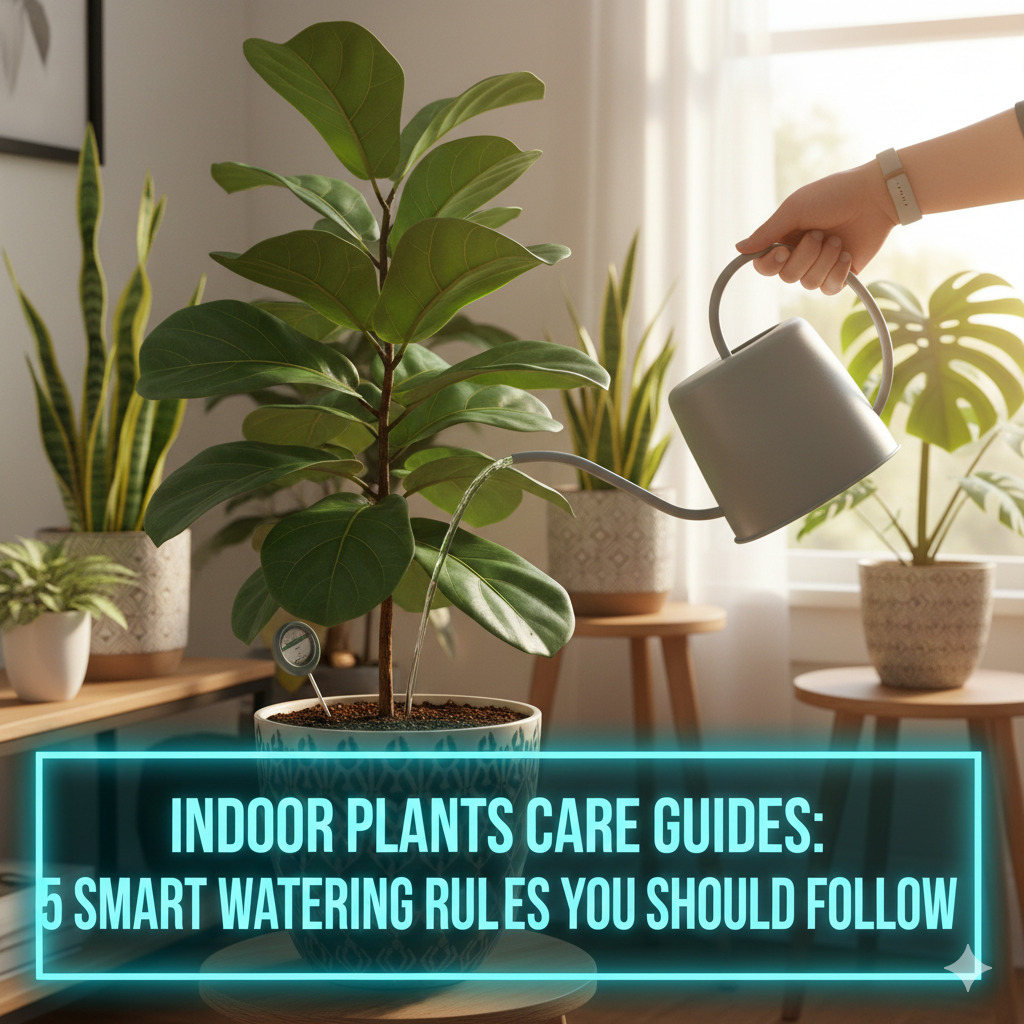
The watering can should always be directed at the base of the plant. Pour water directly onto the soil. Leave it to the roots to do the absorbing.
Bottom Watering — A Game Changer
Did you ever hear of bottom watering? This is done by placing your pot in a tray or bowl of water whereby it soaks moisture through the drainage holes at the bottom.
Here is how to do it:
- Fill a tray or shallow bowl with approximately 1–2 inches of water.
- Place your pot in the water.
- Wait 20–30 minutes.
- The soil will absorb moisture from the bottom up.
- Remove the pot when the top of the soil feels slightly moist.
- Allow excess water to drain before placing the pot back in its spot.
Bottom watering encourages roots to grow downward, strengthens the plant, and keeps the leaves perfectly dry. It is among the best-kept secrets in any indoor plants care guide.
Rule #3 — Use the Right Kind of Water
Surprisingly, the kind of water you use is important.
The majority of people use straight tap water. It is fine for most plants most of the time. However, tap water usually contains chlorine and fluoride that may irritate sensitive plants over time. Brown tips may develop on plants such as peace lilies, spider plants, or dracaenas. That is usually a reaction to the chemicals in the water.
Simple Solutions to Improve Your Water Quality
Let tap water sit overnight. Fill a jug or watering can and leave it for 8–12 hours to allow chlorine to evaporate naturally. This makes the water gentler on your plants and costs nothing.
Use room temperature water. Cold water straight from the tap can shock the roots of tropical plants. It slows down their ability to absorb nutrients. Always use water that matches room temperature.
Collect rainwater. Natural rainwater is soft and chemical-free. Plants love it. If you have space to collect rainwater outside, your indoor plants will benefit greatly from it.
Use filtered water. If you have a water filter at home, that water is also very good for your plants.
According to the Royal Horticultural Society, tap water in hard water areas can cause long-term buildup of minerals in the soil, which is why switching to rainwater or filtered water can noticeably improve plant health over time.
Water Temperature Guide
| Water Type | Best For | Avoid Using On |
|---|---|---|
| Room temp tap water | Most common houseplants | Sensitive plants like orchids |
| Filtered water | All plants, especially sensitive ones | Nothing — it works for everything |
| Rainwater | All indoor plants | N/A |
| Cold tap water | Hardy plants (in emergencies) | Tropicals, orchids, ferns |
| Distilled water | Carnivorous plants, orchids | Not required for all plants |
Rule #4 — Make Sure Your Pot Has Proper Drainage
You can observe all the other rules to the letter, but when there is no drainage hole in your pot, your plant is in trouble. This is one of those basics that gets skipped all the time, particularly when people purchase decorative pots.
Why Drainage Holes Are Non-Negotiable
When water has nowhere to go, it collects at the bottom of the pot. The soil stays wet. The roots sit in standing water. Root rot sets in. Your plant dies.
Even when you water correctly — maintaining the right balance — poor drainage causes water to collect faster than the roots can absorb it.
What to Do If You Love a Pot Without a Hole
Good news: you are not required to abandon your beloved decorative pot. Use it as a cachepot. Here is how:
- Plant your plant in a smaller, plain pot with drainage holes.
- Place that inner pot inside your decorative pot.
- When you water, take the inner pot out, water it over a sink, let it drain fully, then place it back inside the decorative pot.
Through this method, you have the best of both worlds — a beautiful pot and a healthy plant.
Best Pot Materials for Drainage
| Pot Material | Drainage Quality | Moisture Retention | Best For |
|---|---|---|---|
| Terracotta | Excellent | Low (dries fast) | Succulents, cacti, herbs |
| Plastic | Good (if holed) | Medium | Tropicals, ferns |
| Glazed ceramic | Good (if holed) | Medium-high | Most houseplants |
| Fabric grow bags | Excellent | Low | Fast-growing plants |
| Glass/no hole | Poor | Very high | Use only as cachepot |
Rule #5 — Water According to the Season
This is the very simplest tip that most indoor plants care guides omit: your plants require a varying amount of water depending on the time of year.
During spring and summer, most plants are actively growing. They are absorbing more sunlight, producing new leaves, and consuming more energy. This implies that they require more water.
Most plants slow down in fall and winter. Some almost go dormant. They are not growing much, which means they are not using much water either. When you continue watering at the same rate in winter, it is practically certain that you will end up overwatering your plants.
How to Adjust Watering Through the Seasons
Spring and Summer:
- Water more frequently.
- Check soil every 2–3 days for most tropical plants.
- Increase watering as temperatures rise.
- Plants near bright windows may dry out faster.
Fall and Winter:
- Reduce watering frequency significantly.
- Check soil before every single watering — do not assume it has dried.
- Most plants need water only half as often as in summer.
- Cacti and succulents may only need water once a month or less.
Humidity Also Plays a Role
Dry indoor air — common in winter when heaters are running — can make soil dry out faster than expected. In humid bathrooms or kitchens, soil stays moist much longer. Always factor in the humidity level of the room your plant lives in.
A simple humidity meter from any garden store can tell you the moisture level in the air. This tiny tool has the potential to make your plant care routine much better.
Seasonal Watering Chart
| Season | Watering Frequency (General) | Soil Check Frequency |
|---|---|---|
| Spring | Every 5–7 days | Every 3 days |
| Summer | Every 3–5 days | Every 2 days |
| Fall | Every 7–10 days | Every 4–5 days |
| Winter | Every 10–14 days | Every 5–7 days |
These are broad guidelines. Always check the soil before watering, regardless of the season.
Bonus Tips to Make Watering Even Easier
You have the five rules down. Here are some additional tips that simplify the entire process.
Group Plants with Similar Needs Together
Put all your drought-tolerant plants — cacti, succulents, snake plants — together. Move your moisture-loving plants — ferns, calatheas, peace lilies — to a different spot. It is then easy to water each group based on what they actually need, not just what is convenient for you.
Use a Watering Can with a Long Spout
A long, narrow spout gives you control. You can direct water exactly where it needs to go — at the base of the plant, onto the soil — without splashing leaves or nearby plants.
Keep a Simple Plant Journal
This sounds like a lot, yet it is genuinely helpful. All you have to do is record when you watered each plant, what the soil felt like, and how the plant looked. After a few weeks, you will notice patterns. You will know precisely how often each plant dries out and what it looks like when it needs water.
You do not even need anything fancy. A sticky note on each pot or a notes app on your phone works perfectly.
Signs Your Watering Routine Is Working
What is the indicator of whether you are doing it right? Here is what a well-watered, happy plant looks like:
- Leaves are firm and perky — never wilting or limp
- Color is vibrant and uniform — no yellowing or browning
- New growth is appearing (particularly in spring and summer)
- Soil smells clean and earthy — not sour or musty
- Roots, when visible through drainage holes, are white or light-colored — not brown and mushy
Once you begin noticing these signs consistently, you know that your watering routine is dialed in.
FAQs: Indoor Plants Watering Questions Answered
Q: What is the frequency of watering my houseplants? It does not have a one-size-fits-all answer. It is affected by the type of plant, size of the pot, season, and the amount of light the plant receives. It is always safest to check the soil before watering. When the top inch is dry (for most plants), it is time to water.
Q: Is it possible to use ice cubes to water my plants? Some individuals do this, particularly in the case of orchids. It is not harmful to the majority of plants, yet it is not ideal either. Cold water can shock the roots of tropical plants. Room temperature water is always the better choice.
Q: Why are the leaves of my plant turning yellow? Yellow leaves are one of the most common signs of overwatering. When the soil is regularly moist and the leaves are becoming yellow, reduce watering frequency and make sure the pot has proper drainage.
Q: Is it better to water plants in the morning or in the evening? Morning is best. Watering in the morning provides the plant with the entire day to absorb moisture before the cooler temperatures of night arrive. Evening watering may cause too much water to remain in the soil overnight, which promotes mold and fungal problems.
Q: How do I know if my plant is root-bound and needs more water? A root-bound plant has roots completely filling the pot, sometimes sticking out of the drainage holes. These plants dry out at a very high rate. When you find your plant requires water nearly every day, it may be time to repot it into a bigger pot.
Q: Does the size of the pot influence how often I should water? Absolutely. Smaller pots dry out faster because there is less soil to retain moisture. Larger pots hold water longer, which can lead to overwatering if you are not careful. Always match your pot size to your plant size for the best results.
Q: Can tap water really damage my plants? For most plants, tap water is sufficient. However, fluoride and chlorine can be harmful to sensitive plants such as peace lilies, spider plants, and calatheas. If you notice consistent brown tips on these plants, try switching to filtered or rainwater.
Wrapping It Up
You do not need to feel like you are guessing every time you water your indoor plants. These five smart rules from this indoor plants care guide give you everything you need to keep your plants healthy and thriving.
Here is a quick recap of what we covered:
Rule 1 — Always check the soil before watering. Use the finger test or lift test.
Rule 2 — Water the soil, not the leaves. Try bottom watering for the best results.
Rule 3 — Use the right kind of water. Let tap water sit overnight or use filtered water.
Rule 4 — Make sure your pot has drainage holes. Use cachepots for decorative pots without holes.
Rule 5 — Adjust your watering with the seasons. More water in summer, less in winter.
None of these rules are complex. They just take a little attention and practice. When you make them a habit, taking care of plants begins to feel natural — and even enjoyable.
Start with one plant. Apply these rules. Watch what changes. Your plants will tell you precisely how they feel, and once you learn to read those signals, you will never lose another plant to improper watering again.
Happy growing.