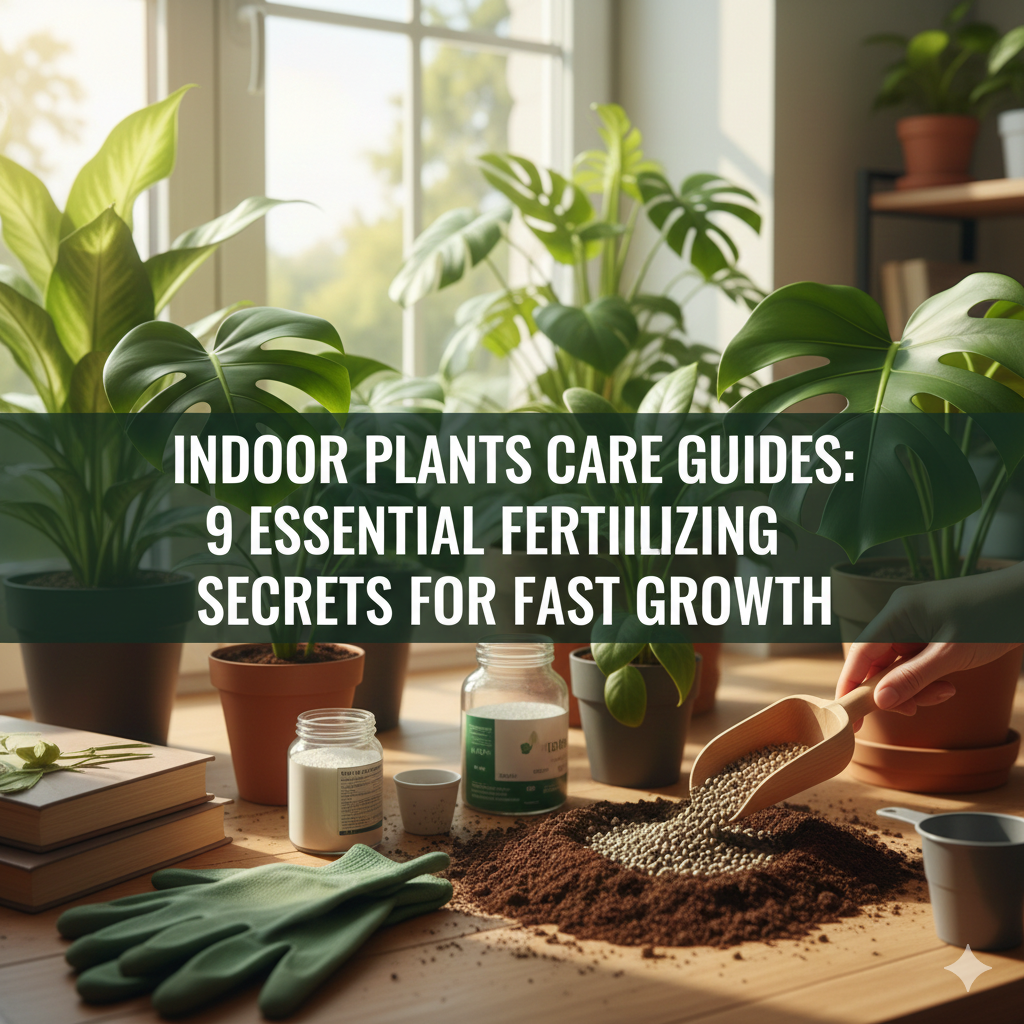
Indoor Plants Care Guides: 9 Secrets to Fertilizing To Grow Fast
Your plant looks sad. The leaves are pale. Growth has stopped. You feed it once a week, expose it to the sun and it does not change.
This is what most people fail to appreciate — watering and light are just two pieces of the puzzle. The third piece is fertilizing and it is the one that is usually ignored.
Indoor plants are unable to extract nutrients from deep soil as compared to outdoor plants. They are stuck in a pot. After the depletion of those nutrients, growth becomes slow or halts altogether. That is where fertilizer comes in.
This will be a guide on 9 fertilizing secrets that do work. These are not complex laboratory methods. These are tested and confirmed tactics that assist your indoor plants to flourish quicker, greener and healthier throughout the entire year.
Let us get into it.
Why Indoor Plants Starve Without Fertilizer
When you purchase a new plant from a store, it is loaded with nutrients in fresh potting mix. That soil can feed your plant for about two or three months. Thereafter, the nutrients are either depleted or flushed away each time you water.
Plants that grow outdoors have it easier. Their roots are able to spread and find new nutrients. Indoor plants are trapped. Their feeding has to be sustained on the same little soil, sometimes for years.
Here is what begins to occur when there is no fertilizer:
- Leaves turn yellow or pale green
- Growth slows down or halts
- Stems become thin and weak
- Flowers refuse to bloom
- The plant becomes more vulnerable to pests and diseases
Fertilizing fixes all of this. It provides your plant with the building blocks it requires in order to grow strong, produce new leaves, and remain vibrant.
What NPK Means (And Why You Should Care)
Every fertilizer package has three figures. Something like 10-10-10 or 5-3-1. These figures represent NPK — Nitrogen, Phosphorus and Potassium. Each one does a different job.
| Nutrient | Symbol | Main Job |
|---|---|---|
| Nitrogen | N | Growth of leaves and stems |
| Phosphorus | P | Strength of roots and flowering |
| Potassium | K | General plant health and disease resistance |
Nitrogen is the growth stimulant. Plants receiving adequate amounts of nitrogen produce lush, dark green leaves in a short period.
Phosphorus works underground. It assists in the growth of deep and strong roots. It also contributes to the blooming of flowers and fruits.
Potassium acts as the immune system for your plant. It assists the plant in transporting water and nutrients and combats stress.
In selecting a fertilizer, match the figures with what your plant needs most. Leafy plants such as pothos or ferns are very fond of higher nitrogen. Flowering plants like peace lily or orchids require increased amounts of phosphorus.
For more detailed plant-specific growing tips, visit Indoor Plants Guide — a dedicated resource for indoor plant lovers at every level.
Secret #1 — Feed the Growing Season, Rest in Winter
This is one of the biggest fertilizing mistakes people make. They either fertilize at any time of the year without thinking, or they never fertilize at all.
Plants follow seasonal rhythms — even indoors.
Spring and summer are the growing seasons. This is when your plant is actively producing new leaves, stems and roots. It needs fuel. Feed it regularly during these months.
Fall and winter are the resting seasons. Growth slows down. Metabolism drops. Fertilizing during this period means unused nutrients accumulate in the soil and may actually scorch the roots.
A Simple Seasonal Schedule
| Season | Fertilizing Frequency |
|---|---|
| Spring | Every 2 weeks |
| Summer | Every 2 weeks |
| Fall | Once a month or less |
| Winter | Stop or reduce to every 6–8 weeks |
Follow this rhythm and your plant will reward you with explosive new growth every spring.
Secret #2 — Always Water Before You Fertilize
This sounds small, yet it makes a big difference.
Never apply liquid fertilizer to dry soil. Dry roots are more delicate. When concentrated fertilizer hits them directly, it can cause root burn — a condition where the roots get chemically damaged and turn brown.
Here is the correct order:
- Water your plant thoroughly first
- Wait 30 minutes
- Then apply your diluted fertilizer
When the soil is already damp, the fertilizer spreads evenly through the root zone. The roots absorb it gently and efficiently. No burning. No damage. Just clean, steady growth.
This single habit alone can make your fertilizing twice as effective.
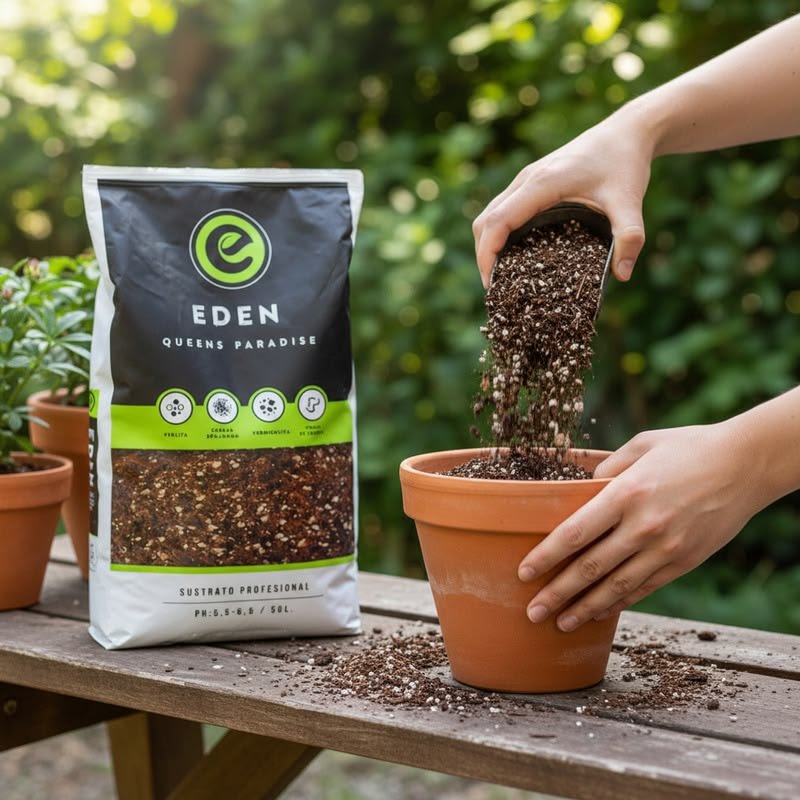
Secret #3 — Less Is More (Dilute Your Fertilizer)
The label says use one teaspoon per gallon. You think, “If one teaspoon is good, two teaspoons must be better.”
It is not.
Over-fertilizing is one of the most common ways people accidentally damage their plants. Excess fertilizer causes salt buildup in the soil. This draws moisture away from the roots through a process known as osmosis. The plant gets dehydrated even when the soil appears wet.
Signs of over-fertilizing:
- White crusty layer on top of the soil
- Leaf tips turning brown and crispy
- Wilting even after watering
- Sudden leaf drop
The fix is simple: Always use half the recommended dose. Mix it weaker than the label suggests, especially for sensitive plants like ferns, calatheas or African violets.
A weaker dose given consistently over time is far better than a strong dose given once in a while.
Secret #4 — Match the Fertilizer Type to Your Plant’s Lifestyle
Not all fertilizers are the same. They come in different forms and each form functions differently.
Liquid Fertilizers
These are mixed with water and applied during watering. They work fast — your plant can absorb them within a day or two. Great for plants that need a quick nutrient boost.
Best for: Most common houseplants during the active growing season.
Granular Fertilizers
These are small pellets sprinkled on the soil surface. They release nutrients slowly as you water. Less precise but extremely low maintenance.
Best for: Large potted plants, outdoor balcony plants, succulents.
Slow-Release Fertilizer Sticks or Spikes
These are pushed into the soil and dissolve slowly over weeks or months. Extremely convenient.
Best for: Busy plant owners who tend to forget regular feeding.
Organic Fertilizers
These include compost tea, worm castings, fish emulsion or seaweed extract. They release nutrients slowly and also improve overall soil health.
Best for: Plant owners who prefer a natural, chemical-free option.
| Fertilizer Type | Speed | Best For | Frequency |
|---|---|---|---|
| Liquid | Fast | Most houseplants | Every 2–4 weeks |
| Granular | Medium | Large pots | Every 1–2 months |
| Slow-release sticks | Slow | Low-maintenance plants | Every 2–3 months |
| Organic | Slow | Eco-conscious growers | Every 3–4 weeks |
Secret #5 — Flush the Soil Every Few Months
Even when you fertilize correctly, salts and minerals slowly build up in the soil over time. This buildup hampers the ability of roots to absorb water and nutrients adequately.
The solution is called soil flushing or leaching.
Here is how to do it:
- Take your plant to a sink or bathtub
- Pour plain, room-temperature water slowly through the soil
- Let it drain out completely from the bottom
- Repeat this two or three times
- Let the pot drain fully before putting it back
This washes away the excess mineral buildup without damaging the plant. Do this every two to three months and your soil will stay fresh and healthy.
After flushing, wait one week before fertilizing again. This gives your plant time to settle before receiving new nutrients.
Secret #6 — Micronutrients Matter Too
Most people only think about NPK. However, plants also need small amounts of other nutrients called micronutrients or trace elements.
These include:
- Iron — assists with green leaf color and energy production
- Magnesium — essential for photosynthesis
- Calcium — strengthens cell walls
- Zinc — assists with enzyme activity
- Manganese — promotes root development
When your plant is missing micronutrients, you might notice:
- Yellowing between the leaf veins (iron or magnesium deficiency)
- Distorted new leaves (calcium deficiency)
- Slow, stunted growth across the board
According to the Royal Horticultural Society, using a complete fertilizer that includes trace elements ensures balanced nutrition and healthier long-term plant growth.
A good complete fertilizer will include these micronutrients on the label. Look for the words “complete fertilizer” or “with trace elements” when shopping. This ensures your plant gets everything it needs — not just the big three.
Secret #7 — Leaf Feeding Works Faster Than You Think
This is a technique most beginners are not aware of — foliar feeding.
Instead of adding fertilizer to the soil, you spray a diluted liquid fertilizer directly onto the leaves. Plants are able to absorb nutrients through tiny pores on their leaves called stomata.
This method works incredibly fast. Foliar nutrients can be absorbed into the plant within a few hours — much faster than root absorption.
How to Do Foliar Feeding
- Mix your liquid fertilizer at half the normal strength
- Pour it into a clean spray bottle
- Spray both sides of the leaves lightly — top and bottom
- Do this in the morning so leaves dry before evening
- Avoid spraying in direct sunlight to prevent leaf burn
Foliar feeding is especially useful when a plant is showing signs of nutrient deficiency and you want to help it recover quickly. It is also a great boost for plants recovering from repotting stress.
Do not replace root feeding with foliar feeding entirely. Use it as a supplement — not a substitute.
Secret #8 — Newly Repotted Plants Need a Break
You have just repotted your plant into fresh soil. The new potting mix already contains nutrients. If you fertilize right away, you are doubling up on nutrients the plant does not need yet.
Worse still, repotting causes some root stress. Small roots get torn or disturbed during the process. Fertilizing stressed roots can make things worse.
The Rule: Wait 6–8 Weeks After Repotting Before Fertilizing
Give the plant time to settle into its new home. Let the roots establish themselves. Let it absorb what is already in the fresh soil.
After six to eight weeks, the plant will be stable, actively growing, and ready to benefit from fertilizer again.
This patience pays off. Plants that are given this recovery window grow much faster once fertilizing begins.
Secret #9 — Read Your Plant’s Signals
Your plant tells you what it needs. You just have to learn the language.
Here is a quick guide to reading common plant signals:
| What You See | What It Might Mean |
|---|---|
| Pale yellow leaves all over | Nitrogen deficiency — increase feeding |
| Yellowing between leaf veins | Magnesium or iron deficiency |
| Dark purple or reddish leaves | Phosphorus deficiency |
| Brown leaf tips | Over-fertilizing or salt buildup |
| Stunted growth in spring | Time to start feeding again |
| Soggy soil with no growth | Root rot — stop fertilizing immediately |
When you see these signs, do not panic. Adjust your fertilizing approach based on what you observe. Plants are resilient. Give them the right support and most of them will recover quickly.
Best Fertilizers for Popular Indoor Plants
Different plants have different preferences. Here is a simple breakdown to make choosing easier:
| Plant | Recommended Fertilizer Type | NPK Ratio to Look For |
|---|---|---|
| Pothos | Balanced liquid fertilizer | 10-10-10 |
| Monstera | Nitrogen-rich liquid fertilizer | 3-1-2 |
| Peace lily | Bloom-boosting fertilizer | 5-10-5 |
| Snake plant | Diluted balanced fertilizer | 10-10-10 (half dose) |
| Succulents | Low-nitrogen cactus fertilizer | 2-7-7 |
| Orchids | Orchid-specific fertilizer | 20-20-20 (weekly, diluted) |
| Ferns | Balanced organic fertilizer | 5-5-5 |
| Fiddle leaf fig | Nitrogen-rich fertilizer | 3-1-2 |
When in doubt, a balanced 10-10-10 fertilizer diluted to half strength is a safe starting point for almost any houseplant.
Common Fertilizing Myths — Busted
Bad advice abounds on the internet. Here are a few myths to stop believing right now.
Myth 1: “Coffee grounds are great fertilizer for all plants.” Coffee grounds are slightly acidic and can work for acid-loving plants like ferns or spider plants. However, too much coffee residue in the soil disrupts the pH and may impair nutrient uptake in most houseplants.
Myth 2: “More fertilizer means faster growth.” No. Excess fertilizer causes salt buildup, root burn, and leaf damage. Regular, moderate feeding surpasses heavy, irregular feeding every time.
Myth 3: “Yellow leaves always mean the plant needs fertilizer.” Not necessarily. Yellow leaves may also indicate overwatering, root rot, low light or pests. Always diagnose the actual problem before reaching for fertilizer.
Myth 4: “Fertilizer can fix any sick plant.” Fertilizer feeds healthy plants. It does not heal sick ones. If your plant is struggling with root rot, disease or severe stress, fertilizing will make things worse — not better.
A Beginner-Friendly Monthly Fertilizing Checklist
Here is a simple routine you can follow every month during the growing season:
Week 1: Check the soil condition. Is it fresh or depleted? Any signs of salt buildup?
Week 2: Water first, then apply diluted liquid fertilizer. Observe how the plant responds over the next few days.
Week 3: Inspect leaves. Any yellowing, browning or new growth? Adjust if needed.
Week 4: Do a light flush if you notice any white residue on the soil. Allow the plant a resting period before the next round.
Repeat this cycle from spring through summer. Slow down in fall. Stop or minimize in winter.
FAQs About Fertilizing Indoor Plants
Q: How often should I fertilize my indoor plants? Fertilize every two weeks in spring and summer with a diluted liquid fertilizer. During fall and winter, cut back to once a month or stop entirely.
Q: Can I use outdoor fertilizer for indoor plants? Yes, but take care with the dosage. Outdoor fertilizers are frequently stronger. Always dilute them to at least half strength before using indoors.
Q: What happens if I forget to fertilize for a few months? Your plant will not die immediately. It may slow down in growth or show pale leaves. Just restart a normal feeding schedule in spring and it should recover.
Q: Is it okay to fertilize a plant that is in a low-light spot? Plants in low light grow more slowly and require fewer nutrients. Excessive fertilizing may result in salt buildup. Cut the feeding frequency in half for low-light plants.
Q: Can I make my own fertilizer at home? Yes. Banana peel water, compost tea and diluted aquarium water are all gentle, natural options. They do not match up to commercial fertilizers in precision, but they can supplement regular feeding well.
Q: My plant’s leaves turned brown after fertilizing. What happened? This is likely fertilizer burn from too high a concentration. Flush the soil thoroughly with plain water and reduce the dose next time. Use half the recommended amount going forward.
Q: Should I fertilize succulents and cacti differently? Yes. Succulents and cacti require very little fertilizer. Use a low-nitrogen cactus formula once in spring and once in summer. That is usually enough.
Wrapping It All Up
Fertilizing does not have to be complicated. You do not need a chemistry degree or an expensive setup. You just need the right habits.
Here is a quick recap of all 9 secrets:
- Feed during the growing season, rest in winter
- Always water before fertilizing
- Use half the recommended dose
- Match the fertilizer type to your plant
- Flush the soil every few months
- Include micronutrients in your routine
- Try foliar feeding for a fast nutrient boost
- Wait 6–8 weeks after repotting before feeding
- Read your plant’s signals and adjust accordingly
Start with one or two of these changes. Monitor how your plant responds. Then build from there.
Fast-growing plants do not simply receive more fertilizer. They receive the right fertilizer at the right time in the right amount.
That is the true secret behind every thriving indoor garden.