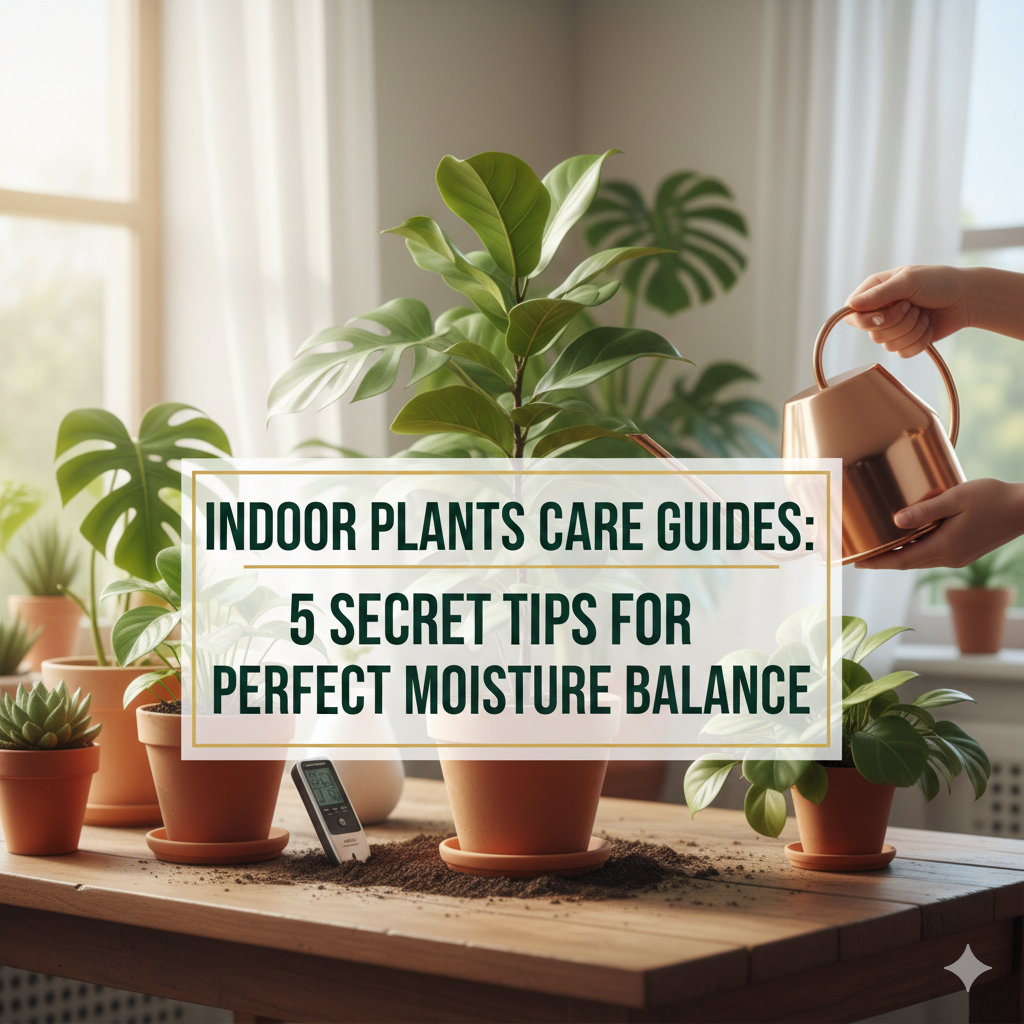
Indoor Plants Care Guides: 5 Secret Tips for Perfect Moisture Balance
Your plant looks sad. The leaves are drooping. Three days ago you watered it, yet something does not work.
Sound familiar?
The greatest thing that a majority of plant owners find hard to handle is moisture. Not too much. Not too little. Just right. And it is the perfection of this balance that makes the difference between growing, green plants and brown, crispy, or soggy ones.
Here is the reality: watering your indoor plant is not merely a matter of pouring water into a pot. It is about knowing your plant, your soil, your pot type, and how humid your place of residence is. These factors all speak to one another. When they are in sync, your plant will bloom. When they are not, trouble is quick to appear.
This guide breaks down 5 secret tips that experienced plant parents and horticulturists employ to maintain moisture at its optimum. They are not complex concepts. They are realistic, easy-to-adopt habits that anyone can start today.
Let’s get into it.
Why Moisture Balance Is the #1 Skill Every Plant Parent Needs
Before rushing into the tips, it is necessary to discuss why moisture matters so much.
Plants need water to survive. That part is obvious. However, water also transfers nutrients from the soil to the roots of the plant. Without the right moisture level, that delivery system collapses.
An excess of water submerges the roots. They can’t breathe. They rot. The plant slowly dies from the bottom up, and by the time you notice the leaves changing color, the damage is already deep.
Too little water, and the plant dries out. Cells shrink. Leaves curl. Growth stops. Eventually the plant goes dormant or dies.
The goal is a consistent moisture level — not too wet, not too dry. Think of it like squeezing a sponge. Damp, but not dripping.
Here is a brief look at what happens at each moisture extreme:
| Moisture Level | What Happens to the Plant |
|---|---|
| Too Wet | Root rot, yellowing leaves, fungus gnats, mold |
| Too Dry | Wilting, brown tips, leaf drop, stunted growth |
| Just Right | Strong roots, green leaves, healthy new growth |
That is precisely why indoor plants care guides pay so much attention to moisture. It is the foundation of everything.
Tip #1 — Read Your Soil Before You Ever Touch the Watering Can
Most people water on a schedule. Every Monday and Thursday. Same time. Every week.
That is one of the biggest mistakes you can make.
Plants do not know what day it is. They care about what the soil feels like right now.
The Finger Test — Simple and Reliable
Stick your finger about one inch into the soil. Sometimes two inches. What does it feel like?
- Dry and crumbly? Time to water.
- Cool and slightly damp? Leave it alone.
- Wet or soggy? Do not water. Wait longer.
This one habit — checking before watering — eliminates overwatering for most beginners. It takes three seconds and it works.
Using a Moisture Meter for More Accuracy
A moisture meter is an excellent tool when you have many plants, or when you want more precision. You push the probe into the soil and it shows you a number — usually on a scale from 1 (dry) to 10 (wet).
Here is a general moisture meter guide:
| Meter Reading | What It Means | Action to Take |
|---|---|---|
| 1–3 | Very dry | Water now |
| 4–6 | Ideal moisture zone | Monitor only |
| 7–9 | Wet | Skip watering |
| 10 | Saturated | Check drainage immediately |
Different plants have different needs. Succulents and cacti prefer readings around 1–3 before watering. Tropical plants like pothos or peace lilies like the 4–6 range consistently.
Seasonal Soil Changes
One thing most indoor plants care guides forget to mention — soil dries out faster in summer and stays wet longer in winter.
Your home’s heating system in winter dries the air but cools the soil less. In summer, higher temperatures pull moisture out fast. Check your soil more often during warmer months.
Tip #2 — Match Your Pot to Your Plant’s Thirst Level
The pot you choose matters just as much as how much water you pour.
This is something most beginners skip over. They pick a pot because it looks pretty. That is fine — but you also need to think about what the pot is made of and whether it has drainage holes.
Drainage Holes Are Non-Negotiable
Every healthy pot setup needs a drainage hole at the bottom.
Without a drainage hole, water collects at the base of the pot. Roots sit in standing water. Root rot sets in within days. No amount of careful watering can fix a pot without drainage.
If you love a decorative pot without holes, use it as a cachepot — a cover for a plain nursery pot that has drainage inside. Best of both worlds.
Pot Material Changes Everything
Here is how different pot materials affect moisture:
| Pot Material | Moisture Retention | Best For |
|---|---|---|
| Terracotta | Low — breathes and dries fast | Succulents, cacti, herbs |
| Plastic | High — holds moisture longer | Tropical plants, ferns |
| Ceramic (glazed) | Medium — some breathability | Most common houseplants |
| Fabric/Grow bags | Very low — air prunes roots | High-water vegetables, fast growers |
| Concrete | Medium-low | Drought-tolerant plants |
Switching from plastic to terracotta can completely fix overwatering problems. The pot naturally pulls moisture from the soil through evaporation, which keeps roots drier and healthier.
Pot Size Affects Moisture Too
A pot that is too big for your plant holds too much soil. All that extra soil stays wet around the roots for days — even weeks. Roots sitting in wet soil is a recipe for rot.
Always choose a pot that is only 1–2 inches wider than your plant’s root ball. When you repot, go up one size at a time — never jump from a 4-inch pot straight to a 10-inch pot.
Tip #3 — Water Quality and Temperature Play a Bigger Role Than You Think
You may be doing everything else right — checking the soil, using the right pot — but if your water quality is off, your plants will still struggle.
Tap Water Issues
Most tap water contains chlorine and sometimes fluoride. These chemicals are not deadly to plants in small amounts, but over time they can build up in the soil and stress your plant.
Some sensitive plants — like spider plants, dracaenas, and peace lilies — show brown leaf tips as a direct response to fluoride.
Easy fix: Let tap water sit in an open container overnight before using it. The chlorine evaporates. Your plants will thank you.
Hard Water vs. Soft Water
Hard water contains high mineral content — calcium, magnesium, and others. These leave white crusty deposits on the soil surface and around the pot. Over time, these minerals can change the soil’s chemistry and make it harder for roots to absorb nutrients.
If you notice white crust on your soil, flush it out. Pour a large amount of water through the pot — enough to drain several times — and let it all wash out the bottom. Do this once every few months.
Water Temperature Matters
Cold water shocks roots. Think about what it would feel like to be splashed with ice water when you are warm and comfortable. Roots feel the same way.
Always use room-temperature water. Let it sit for a bit after filling your watering can. Lukewarm water absorbs into soil faster and does not stress the plant’s root system.
Rainwater — The Gold Standard
Rainwater is naturally soft, slightly acidic, and free of chemicals. Plants absolutely love it.
If you can collect rainwater in a bucket or barrel, use it for your indoor plants. Even a small collection system makes a big difference. Plants watered with rainwater often grow noticeably faster and look healthier within weeks.
For more expert tips on keeping your indoor plants healthy year-round, visit Indoor Plants Guide — a great resource for plant care advice at every level.
Tip #4 — Control Humidity Like a Pro
Watering the soil is only half the moisture story. The air around your plant holds moisture too — and that matters a lot for tropical and humidity-loving plants.
Humidity is measured as a percentage. 40–60% is comfortable for most people and most plants. But some tropical plants — orchids, ferns, calatheas — prefer 60–80% humidity. And succulents prefer drier air, around 30–40%.
Signs Your Plant Needs More Humidity
- Leaf tips turn brown and crispy
- Leaves curl inward
- New growth looks deformed or stunted
- Soil dries out unusually fast
Signs Your Air Is Too Humid
- Mold appears on soil surface
- Leaves develop dark or mushy spots
- Fungus gnats become a problem
- Roots smell musty
Ways to Raise Humidity Naturally
Grouping plants together is the easiest method. Plants release moisture through their leaves in a process called transpiration. When you group several plants, they create a small humid microclimate around each other.
Pebble trays are another low-cost trick. Fill a shallow tray with pebbles. Add water to just below the top of the pebbles — not covering them. Set your pot on top. As the water evaporates, it rises around the plant and raises humidity locally.
A humidifier is the most effective method if you have many humidity-loving plants. A small, inexpensive humidifier running a few hours a day in the same room can make a dramatic difference.
Here is a simple humidity guide for popular plants:
| Plant | Preferred Humidity |
|---|---|
| Cactus & Succulents | 10–40% |
| Pothos | 40–60% |
| Snake Plant | 30–50% |
| Calathea | 60–80% |
| Orchid | 50–70% |
| Boston Fern | 60–80% |
| Monstera | 50–60% |
Should You Mist Your Plants?
Misting is popular but controversial. It provides a temporary boost in humidity that lasts only minutes. It can also lead to fungal problems if water sits on leaves too long, especially in low-light conditions.
According to the Royal Horticultural Society, misting is largely ineffective for raising humidity and better alternatives exist for most plants.
Skip misting unless you do it early in the day and your plant is in a bright, well-ventilated spot. Better alternatives exist — like the pebble tray or humidifier.
Tip #5 — Create a Seasonal Watering Routine That Actually Works
Static watering schedules do not work. But having no routine at all leads to forgetting your plants for weeks.
The answer is a flexible, seasonal routine — one that adjusts based on what is happening in your environment and in your plant’s life cycle.
Spring and Summer — Active Growth Season
During warmer months, plants are growing fast. They are producing new leaves, expanding roots, and working hard. They need more water during this period.
Check soil every 2–3 days. Water more generously when the soil is dry. You may also need to water twice as often compared to winter.
This is also the best time to fertilize — nutrients are absorbed better when moisture is consistent and the plant is actively growing.
Fall and Winter — Rest and Recovery
As light decreases and temperatures drop, most plants slow down. Some go almost completely dormant.
During this period, your plant needs far less water. Overwatering in winter is extremely common — and extremely damaging.
Check soil every 5–7 days. Water only when the top two inches are completely dry. Use less water per session. Skip fertilizer entirely from late fall through winter.
A Month-by-Month Moisture Guide
| Month | Watering Frequency | Humidity Focus |
|---|---|---|
| January–February | Low | Boost with humidifier if heating is on |
| March–April | Increase gradually | Moderate |
| May–June | Moderate to High | Natural outdoor humidity helps |
| July–August | High | Watch for drying from A/C |
| September–October | Decrease gradually | Moderate |
| November–December | Low | Heating dries air — humidify if needed |
Track Your Watering to Build Smart Habits
Keep a simple journal or use your phone’s notes app. Write down when you watered each plant, what the soil felt like, and how the plant responded a few days later.
After a few months, you will have a clear picture of each plant’s rhythm. You will start to feel — almost instinctively — when something is off.
Common Moisture Mistakes That Kill Plants (And How to Stop Making Them)
Even experienced plant parents fall into these traps.
Always watering from above — Top watering is fine, but occasionally bottom watering (setting the pot in a tray of water and letting roots soak it up from below) helps roots grow deeper and ensures the entire root ball gets hydrated evenly.
Ignoring the drainage tray — Water sitting in a drainage tray for more than 30 minutes gets reabsorbed into the pot. This can re-wet roots that were just starting to dry out. Empty drainage trays after each watering.
Using the same watering schedule for every plant — A cactus and a fern in the same room need completely different moisture levels. Treat each plant individually.
Watering immediately after repotting — When you repot a plant, roots are disturbed and stressed. Wait 3–5 days before watering again. This encourages roots to spread out in search of moisture rather than sitting in it.
Forgetting that pots dry out faster near heating vents or windows — Location matters. A plant near a sunny window or a heating vent dries out faster than one in a shaded corner. Adjust your watering frequency based on where each plant lives.
FAQs — Indoor Plants Care Guides: Moisture Balance Edition
Q: How do I know if I am overwatering or underwatering my plant? Overwatered plants have soft, yellow, or mushy leaves and wet soil that never seems to dry. Underwatered plants have dry, brittle leaves, soil that pulls away from the pot edges, and drooping that does not recover after watering.
Q: Can I use a spray bottle to water my plants? Spray bottles work for misting leaves but not for watering soil. They do not deliver enough water to reach roots. Use a proper watering can to water the soil thoroughly.
Q: What is the best time of day to water indoor plants? Morning is ideal. It gives the plant a fresh supply of water to use throughout the day and allows any surface moisture to evaporate before nighttime. Watering at night can encourage mold and fungus.
Q: How long should I let tap water sit before using it on plants? At least 30 minutes is helpful, but overnight is better. This allows chlorine to dissipate fully and the water to reach room temperature.
Q: Do all plants need humidity? No. Desert plants like succulents and cacti prefer dry air. Most common houseplants do fine at average indoor humidity. Only tropical plants — calatheas, orchids, ferns — need elevated humidity.
Q: Why does my plant wilt even though the soil is wet? This is a sign of root rot. Rotting roots cannot deliver water to the plant even when soil is saturated. Check the roots — if they are brown, mushy, and smell bad, remove the damaged roots and repot in fresh, dry soil.
Q: How often should I completely flush my soil? Every 3–4 months is a good rule. Flushing removes salt and mineral buildup that can prevent nutrient absorption. Pour water slowly and generously until it runs clear from the drainage hole.
Putting It All Together — Your Moisture Balance Action Plan
Here is a quick summary of everything covered:
Tip 1: Always check soil before watering. Use your finger or a moisture meter. Never water on a fixed schedule blindly.
Tip 2: Match your pot material and size to your plant’s needs. Always use pots with drainage holes.
Tip 3: Use room-temperature, chemical-free water. Let tap water sit overnight. Collect rainwater when possible.
Tip 4: Monitor and adjust humidity around your plants based on each plant’s preference. Use pebble trays or a humidifier for humidity-loving varieties.
Tip 5: Shift your watering routine with the seasons. Water more in spring and summer. Pull back significantly in fall and winter.
Final Thoughts — Small Changes, Big Results
Perfect moisture balance is not about being perfect every single time. It is about paying attention.
Watch your plants. Touch the soil. Notice how leaves look and feel. Over time, you will develop a natural sense for when something is off — and you will catch problems before they become serious.
The best indoor plants care guides are not manuals you read once and forget. They are living resources you return to as your plants grow and your skills develop.
Start with one tip from this guide today. Just one. Maybe it is checking your soil before your next watering. Or moving a plant off a drainage tray after it has been sitting there too long.
Small changes stack up. And before long, your plants will show you — through full, healthy, green growth — that you have figured out the balance.