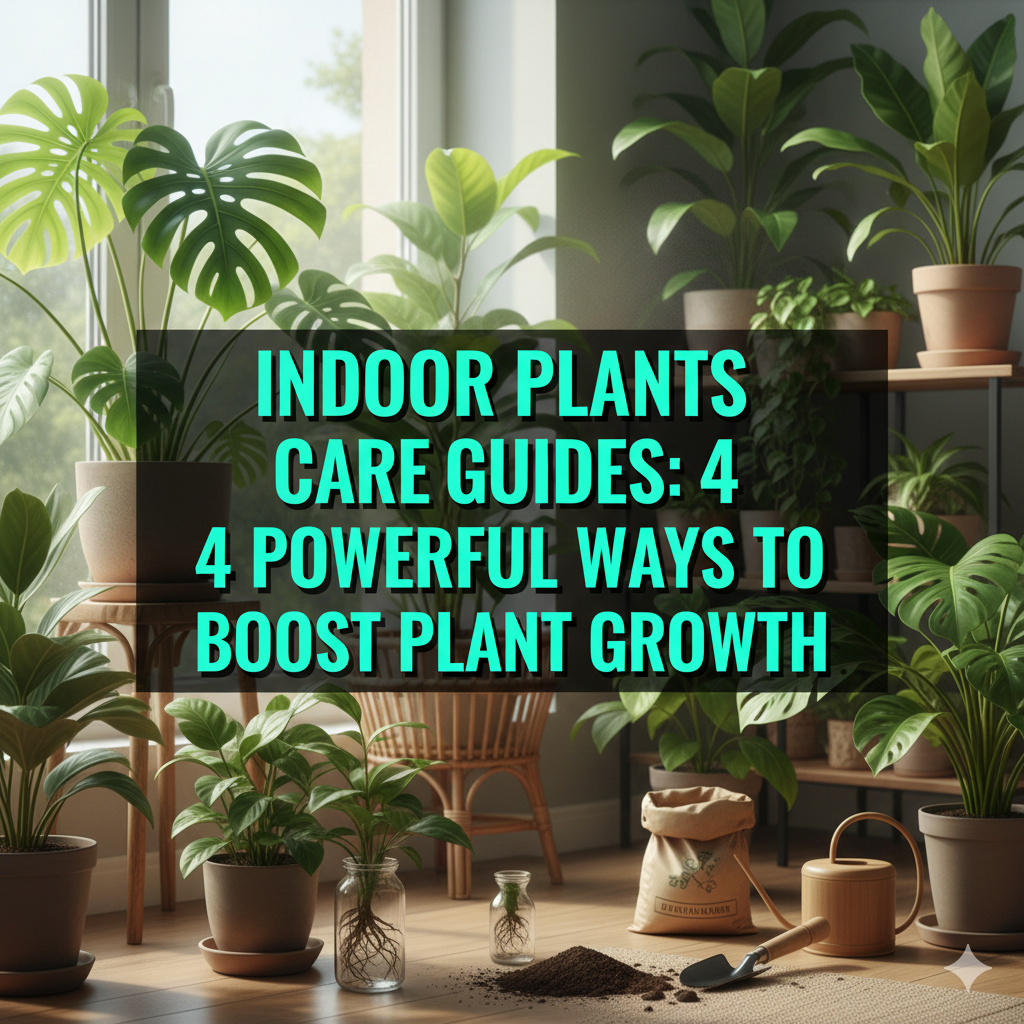
Indoor Plants Care Guides: 4 Forcible Ways to Advance the Growing of Plants
Have you ever thought of your indoor plant and wondered why it is just sitting there looking depressed and dead? You water it. You talk to it. Perhaps you go about the room with it hoping to get a miracle. But nothing seems to work.
The bottom line is this — most indoor plants do not fail because of misfortunes. They have difficulty due to some mere things we do wrong even without our knowledge.
This is the guide that will alter that.
Regardless of whether you are a complete novice or have already lost a few of your plants in the process, these indoor plants care guides will guide you through 4 effective ways to achieve an impressive increase in the growth of your plant. No confusing science. No expensive equipment. Simply useful, simple steps to follow and which do work.
Let’s get into it.
The Reason Most Indoor Plants Fail to Grow
First, it is better to discuss why plants decelerate or cease growing indoors at all.
Plants outside receive natural sunlight, natural air, rain and fertile soil that is full of nutrients and microorganisms. Within your house, there is nothing automatic about it. Those conditions you have to make yourself.
It is important that your plant has four largest things to prosper:
- The right amount of light
- Proper watering habits
- Good quality land and drainage
- The appropriate nutrients at the appropriate time
These four things will help you to get your plant to pay off with lush and green leaves that grow quickly. Misjudge one of them and growth creeps along at the rate of a snail — or ceases altogether.
These indoor plants care guides will be just the solution to mend that.
Way #1 — Lighten Your Home Plants and Feed Them
Light Is Food for Plants
It is common knowledge among most people that plants require light. What the majority of people do not know though is the extent to which, the type of, and the duration of light helps or hurts.
Plants synthesize their own food by a process known as photosynthesis. The more light (the right one) the more food and the faster the growth. Simple as that.
The tricky part? Insufficient light retards growth. Excessive direct sun may however burn leaves. It is all about the golden mean.
Low Light vs. Bright Indirect Light vs. Direct Sun
Here is an easy explanation of what these lighting terms imply:
| Type of Light | What It Looks Like | Best For |
|---|---|---|
| Low Light | A windowless corner, dim room | Pothos, Snake Plant, ZZ Plant |
| Bright Indirect Light | Close to a window but no direct rays | Monstera, Peace Lily, Ferns |
| Direct Sunlight | Full sun through a window | Cacti, Succulents, Herbs |
The majority of houseplants prefer bright indirect light. That normally implies putting them within 3–5 feet of an east or west-facing window.
The Direction of Your Window Matters
Most plant guides pass by this, however it makes a great difference.
East-facing windows get gentle morning sun — perfect for most tropical houseplants.
West-facing windows receive intense afternoon sun — good for sun-loving plants, but too fierce for delicate ones.
South-facing windows receive the greatest amount of light during the day — great for succulents and herbs.
North-facing windows receive the least amount of light — only low-light plants will perform well here.
Indications That a Plant Is Getting Insufficient Light
- Leaves growing pale yellow or light green
- Leggy, long stems stretching toward the window
- Slow or zero new growth
- Small, underdeveloped new leaves
How to Deal When Your Space Is Too Dark
You do not need plenty of natural light in your home and should not abandon plants. A simple and inexpensive solution is grow lights. LED grow lights imitate natural sunlight and can be run for 12–16 hours every day to ensure that your plants stay healthy.
You can get good grow lights for less than $20–$30 and they are really effective with plants such as herbs, pothos and even small tropical plants.
Way #2 — Water Smarter, Not More
The Biggest Plant-Killing Mistake People Make
Houseplants are most often killed by overwatering. It’s not a close competition.
Overwatering causes the soil to remain wet. Wet soil suffocates roots and causes root rot — a condition where roots literally rot in the soil. Once root rot has set in, the plant is very difficult to salvage.
The goal is not to keep soil wet. The goal is to water deeply and then let the soil dry out just enough before watering again.
How to Know When to Water
Never mind the “water every Sunday” rule. Plants do not follow a calendar. Instead, use one of these two simple checks:
The Finger Test — Insert your finger approximately one inch into the soil. If it feels dry, water it. If it still feels moist, wait a day or two.
The Lift Test — Pick up the pot. A dry pot weighs significantly less than a freshly watered one. Over time, you will learn to tell when your plant is thirsty just by its weight.
How to Water Properly
Water slowly and deeply. Pour water until it drains out of the bottom of the pot. This will stimulate roots to grow deep down, making your plant stronger and more stable.
Do not keep your plant sitting in a saucer full of water longer than 30 minutes. That leftover water gets reabsorbed and keeps the roots too wet.
Watering Needs by Plant Type
| Plant | Watering Frequency (Average) | Let Soil Dry? |
|---|---|---|
| Succulents & Cacti | Every 2–3 weeks | Completely dry |
| Pothos, Philodendron | Every 7–10 days | Top 1–2 inches dry |
| Ferns, Peace Lily | Every 5–7 days | Slightly moist always |
| Snake Plant | Every 2–4 weeks | Completely dry |
| Monstera | Every 7–10 days | Top 2 inches dry |
Water Quality Also Matters
This is something that most novice plant owners never consider. Tap water in many cities is mixed with chlorine and fluoride, which may accumulate in the soil and damage delicate plant species over time.
When your tap water is heavily treated, leave it in an open container overnight before using it. This allows most of the chlorine to evaporate. Better still — use collected rainwater or filtered water where possible.
Way #3 — Build a Soil Foundation That Plants Love
Soil Is More Than Just Dirt
Many individuals simply take outside garden soil and use it indoors. That’s a mistake. Outdoor soil is too dense for pots, compacts quickly indoors and does not drain well. It can also bring pests and disease into your home.
Good indoor plant soil is light, aerated and drains well while still holding just enough moisture for the roots to absorb. For a deeper look at how soil affects plant health, NASA’s Clean Air Study also highlights how the growing environment — including soil conditions — plays a huge role in keeping indoor plants thriving.
What Makes a Great Potting Mix?
Here are the key ingredients you will find in a good indoor potting mix:
Peat Moss or Coco Coir — Holds moisture without getting soggy. Coco coir is the more environmentally friendly option.
Perlite — Those tiny white balls you see in potting mix. They improve drainage and prevent the soil from compacting.
Bark or Wood Chips — Adds airflow and structure. Commonly used in orchid and tropical plant mixes.
Compost — Contains natural nutrients and beneficial microorganisms that help roots grow.
Different Plants Need Different Soil
Plants do not all use the same kind of soil. Using the wrong mix can seriously slow growth.
| Plant Type | Best Soil Mix |
|---|---|
| Succulents & Cacti | Sandy, fast-draining mix (add extra perlite) |
| Tropical Plants | Standard potting mix with perlite |
| Orchids | Bark-based orchid mix |
| African Violets | Light, slightly acidic mix |
| Herbs | Well-draining potting mix with compost |
Don’t Ignore Drainage Holes
Even the finest soil cannot save a plant if the pot has no drainage hole. Water gathers at the base, roots decay and the plant dies.
Always use pots with drainage holes. If you love a decorative pot that does not have holes, use it as an outer cover but keep your plant in a plastic nursery pot with drainage inside it.
When to Repot Your Plant
Plants grow. At some point, their roots end up filling the entire pot and run out of room. When this occurs, growth slows dramatically because the plant has nowhere left to expand.
Signs it’s time to repot:
- Roots coming out of the drainage holes
- Roots twisting tightly inside the pot (root-bound)
- Soil drying out at a very fast rate after watering
- Plant appears top-heavy and keeps tipping over
When repotting, choose a new pot that is only 1–2 inches larger in diameter than the current one. Going too big too fast can cause overwatering issues.
Way #4 — Feed Your Plants the Nutrients They Crave
Why Fertilizing Matters
Think about trying to grow and stay healthy on just water alone. It would not work for you, and it does not work for plants either.
Plants need three main nutrients to grow strong and fast:
Nitrogen (N) — Promotes leafy, green growth. Critical for plants with lots of foliage.
Phosphorus (P) — Supports root development and flowering.
Potassium (K) — Strengthens the overall plant and improves disease resistance and water regulation.
These will be listed on fertilizer bottles as an N-P-K ratio such as 10-10-10 or 20-20-20.
When to Fertilize Indoor Plants
Spring and summer are the most active growing seasons for plants. It is at that time they require the most nutrients. During fall and winter, most houseplants slow down or go dormant, so you need to reduce or stop feeding entirely.
A basic fertilizing schedule for most houseplants:
- Spring and Summer: Feed every 2–4 weeks
- Fall: Feed once a month or stop feeding
- Winter: No feeding (or very minimal)
Types of Fertilizers for Indoor Plants
Liquid Fertilizers — Fast-acting, easy to control dosage. You dilute them in water and apply during your regular watering. Best for most houseplants.
Slow-Release Granules — Tiny pellets you mix into the soil. They release nutrients gradually over 3–6 months. Less hassle, great for low-maintenance plant owners.
Organic Options — Worm castings, compost tea, fish emulsion. Gentle on plants, good for long-term soil health.
Signs Your Plant Is Nutrient-Deficient
| Symptom | Possible Deficiency |
|---|---|
| Overall pale yellow leaves | Nitrogen deficiency |
| Purple or reddish leaves | Phosphorus deficiency |
| Brown leaf edges | Potassium deficiency |
| Yellowing between leaf veins | Iron or magnesium deficiency |
| Slow, stunted growth | General nutrient deficiency |
The Golden Rule of Fertilizing
Less is more. Applying too much fertilizer is equally as harmful as applying too little. Excessive nutrients scald the roots — a condition called fertilizer burn — and may even kill the plant.
Always follow the directions on the fertilizer label. When in doubt, use half the recommended amount. You can always add more — you can never take it back.
Bonus Tips to Go Even Further
Humidity Makes a Big Difference
The majority of tropical houseplants — such as monsteras, ferns and calatheas — originate from humid environments. The average home humidity sits around 30–50%, while most tropical plants thrive at 60% or higher.
Easy ways to boost humidity:
- Group plants together — they emit moisture as they breathe
- Install a small humidifier nearby
- Place pots on a tray filled with water and pebbles — water evaporates gradually around the plant
Wipe Down Your Plant’s Leaves
Dusty leaves are not able to absorb light properly. Wipe the leaves down gently with a damp cloth once every month. This keeps them clean, helps them absorb more light and also lets you notice early signs of pest infestations.
Prune to Promote Growth
Cutting back dead, yellowing or leggy stems will actually cause your plant to grow fuller and faster. Removing dying parts causes the plant to redirect its energy to new healthy growth.
Use clean, sharp scissors or pruning shears. Always cut just above a leaf node — the point where a leaf meets the stem — for the best results.
If you want to explore more detailed guides on specific plant varieties and seasonal care routines, Indoor Plants Guide is a great resource packed with beginner-friendly and expert plant care tips.
Quick Summary: The 4 Ways at a Glance
| Growth Booster | Key Action |
|---|---|
| Light | Match light level to plant type; use grow lights if needed |
| Water | Water deeply, less often; let the soil guide you, not the calendar |
| Soil | Use quality potting mix with good drainage; repot when root-bound |
| Nutrients | Fertilize in spring/summer; use half the recommended dose |
FAQs About Indoor Plant Care
Q: What is the frequency of watering my indoor plants? There is no simple answer — it depends on the plant, pot size and time of year. The most effective way is to check the soil with your finger. Water when the top inch or two feels dry.
Q: Why are my plant’s leaves turning yellow? Yellow leaves may indicate overwatering, underwatering, lack of light or a nutrient deficiency. Before jumping to conclusions, first check your watering habits and lighting placement.
Q: Can I use any soil for my indoor plants? No. Outdoor garden soil is too dense for pots. Always use a quality indoor potting mix, and adjust it based on your specific plant’s needs.
Q: Is tap water okay for watering plants? Tap water is sufficient for most plants. If your water is heavily chlorinated, let it sit overnight before using it. Delicate plants may do better with filtered or rainwater.
Q: How do I know if my plant needs a bigger pot? If roots are sticking out of drainage holes, the plant is drying out too fast after watering, or growth has suddenly stalled — it is probably time to repot into a slightly larger container.
Q: Do indoor plants need fertilizer in winter? Most plants enter a rest period during winter and do not require feeding. Fertilizing during this time may even be detrimental. Resume feeding in early spring when growth picks back up.
Q: What is the easiest indoor plant to care for? Snake plants, pothos and ZZ plants are among the most forgiving and low-maintenance. They can withstand low light, infrequent watering and still manage to look great.
Wrapping It All Up
It is not about having a green thumb when it comes to growing beautiful indoor plants. It has to do with knowing the right things to do and doing them consistently.
These indoor plants care guides have taken you through the four most powerful things you can do to boost plant growth — light, water, soil and nutrients. All four of them play an extremely important role. Nail all four together and the results will genuinely surprise you.
Start with one plant. Put into practice what you have learned here. Watch it grow.
Then do it again with another one.
Before you know it, you will have a home full of lush, thriving plants — and you will wonder how you ever thought plants were difficult to grow.