The 7 Best Indoor Plants to Start With
1. Pothos (Epipremnum aureum) — The Forgiving Vine
Pothos is the best plant to introduce to any beginner first.
It is a trailing vine with heart-shaped leaves that may be solid green or marbled with white, yellow, or silver. It is beautiful, fast-growing, and handles neglect like a champ.
Why it is perfect for beginners: Pothos can survive in low light, bright indirect light, and even under fluorescent office lights. It withstands irregular watering. Forget to water it for two weeks? It will look a bit droopy, but give it water and it springs right back.
How to care for it:
Water pothos when the top inch of soil is dry. This normally amounts to once every 1–2 weeks depending on the humidity and light of your home. Use any basic potting mix. It does not require a lot of fertilizer — a monthly treatment in spring and summer will suffice.
Pothos also grows well in pure water. Drop a cutting into a glass jar filled with water, place it near a window, and watch the roots grow. This makes it one of the easiest plants to propagate and share with friends.
Watch out for: Overwatering. Yellow leaves usually mean too much water. Let the soil dry out between waterings.
2. Snake Plant (Sansevieria trifasciata) — The Night Owl of Plants
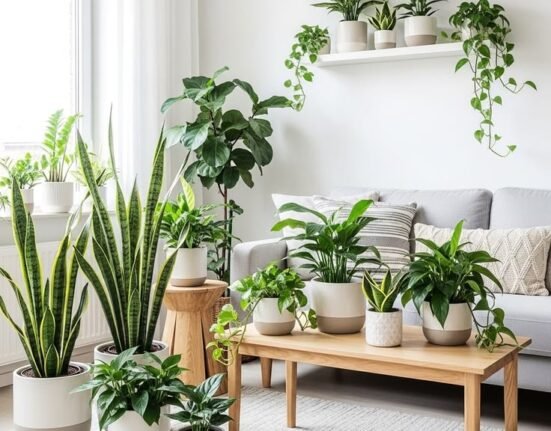
The snake plant, also called mother-in-law’s tongue, is virtually unkillable.
It has tall, stiff, sword-shaped leaves banded with green and yellow. It looks architectural and modern, fitting perfectly in any room style — minimalist, boho, classic, you name it.
Why it is perfect for beginners: Snake plants can cope with very low light. They store water in their thick leaves and can go weeks before needing a drink. In fact, they prefer to be a little dry rather than wet.
How to care for it:
Water snake plants every 2–6 weeks depending on the season. During winter, you may not need to water more than once a month. Use well-draining soil, preferably a cactus or succulent mix. Place it in indirect light, though it can also handle darker corners.
One interesting fact: NASA lists the snake plant as one of the best air-purifying plants. It converts CO₂ into oxygen during the night — which is unusual behavior for most plants. This is why many people keep one in their bedroom.
Watch out for: Root rot from overwatering. Always let the soil dry completely before adding more water.
3. Spider Plant (Chlorophytum comosum) — The Cheerful Grower
Spider plants are fun, friendly, and fast-growing. They produce long, arching green-and-white striped leaves and eventually sprout little “babies” that dangle from the mother plant like tiny spiders on silk threads. That is where the name comes from.
Why it is perfect for beginners: Spider plants are highly adaptable. They grow in a wide range of light conditions and do not require much attention. They are also non-toxic to pets and kids, which is a huge bonus for families.
How to care for it:
Water spider plants once a week during warmer months and every 2 weeks during winter. They prefer indirect light, though some morning sun can be tolerated. They like slightly humid conditions, so a bathroom or kitchen works great.
The baby plants — called spiderettes — can be cut off and placed in water or soil to grow new plants. It is a fun activity and a great way to build up your plant collection for free.
Watch out for: Brown leaf tips. This usually means the water has too much fluoride or chlorine. Use filtered water or leave tap water out overnight before using it.
4. ZZ Plant (Zamioculcas zamiifolia) — The Low-Maintenance Legend
The ZZ plant could be the lowest-maintenance plant on this entire list. It stores water in its thick rhizomes (underground stems), which means it can endure extreme neglect.
Its leaves are dark green and glossy — almost like plastic — but it is very real and very easy to love.
Why it is perfect for beginners: ZZ plants grow in low light, dry air, and can go weeks without water without complaining. This is your plant if you travel often or tend to forget your plants exist.
How to care for it:
Water ZZ plants every 2–3 weeks in summer and even less in winter. It thrives in nearly any light — though bright indirect light helps it grow faster. Use a well-draining potting mix. Fertilize lightly 2–3 times during the growing season.
Watch out for: ZZ plants grow slowly, so do not panic if yours does not seem to be changing much. The plant is also mildly toxic if eaten, so keep it away from pets and small children.
5. Peace Lily (Spathiphyllum) — The Drama Queen With a Big Heart
Peace lilies are among the few flowering indoor plants that actually thrive in low light. They have deep green, glossy leaves and produce beautiful white blooms that resemble small sails.
Here is the thing about peace lilies — they are a little dramatic. Their leaves droop visibly when they need water. It is almost like the plant is raising its hand to ask for a drink. Once you water it, it perks back up within hours.
Why it is perfect for beginners: That drooping behavior is actually helpful for beginners. You do not have to guess when to water it — the plant tells you. It is also one of the best air-purifying plants available.
How to care for it:
Water when the leaves begin to droop slightly, or when the top inch of soil is dry — usually once a week. Peace lilies love humidity, so misting them occasionally or keeping them in a bathroom helps. They prefer indirect light and can even grow under fluorescent lighting.
Watch out for: Peace lilies are toxic to cats and dogs. If you have pets, place this one out of their reach or choose a different plant.
6. Aloe Vera — The Plant That Pulls Double Duty
Aloe vera is part plant, part first-aid kit. Its thick, spiky leaves hold a gel that has been used for centuries to soothe sunburns, minor cuts, and skin irritation.
It is also very easy to grow.
Why it is perfect for beginners: Aloe vera is a succulent, meaning it stores water in its leaves. It needs very little watering and thrives in bright, sunny spots like a windowsill. It is also widely available and inexpensive.
How to care for it:
Water aloe vera every 2–3 weeks in summer and even less in winter. Place it in bright direct or indirect sunlight. Use a cactus or succulent mix with excellent drainage. Never let it sit in standing water.
When a leaf gets thick and plump, you can cut it open and apply the gel directly to your skin. Just rinse it first.
Watch out for: Overwatering is the number one killer of aloe. Mushy, brown leaves at the base mean the roots are rotting. It is always better to underwater than to overwater.
7. Chinese Evergreen (Aglaonema) — The Colorful Survivor
Chinese evergreens are among the most beautiful plants on this list — and the most tolerant. They come in shades of green, silver, red, pink, and even orange. Every variety looks like a piece of living art.
Despite their stunning looks, they are tougher than they appear.
Why it is perfect for beginners: Chinese evergreens adapt to almost any indoor environment. They handle low light, inconsistent watering, and dry air without throwing a fit. This is why they are popular in offices and hotels.
How to care for it:
Water when the top inch of soil is dry — roughly once a week or every 10 days. Brighter-colored varieties (red, pink) need more light. Darker green varieties can handle lower light. All of them prefer warmer temperatures and dislike cold drafts.
Watch out for: Chinese evergreens are toxic to pets, just like peace lilies. Also, avoid placing them near air conditioning vents — they do not like cold blasts of air.
Quick Comparison: All 7 Plants at a Glance
| Plant | Light Needed | Watering Frequency | Pet-Safe? | Best For |
|---|---|---|---|---|
| Pothos | Low to bright indirect | Every 1–2 weeks | No | Beginners, shelves, hanging |
| Snake Plant | Low to medium | Every 2–6 weeks | No | Bedrooms, dark corners |
| Spider Plant | Indirect to medium | Weekly | Yes | Families, bathrooms |
| ZZ Plant | Low to medium | Every 2–3 weeks | No | Travelers, offices |
| Peace Lily | Low to medium | Weekly | No | Air purification |
| Aloe Vera | Bright direct/indirect | Every 2–3 weeks | No | Sunny windowsills |
| Chinese Evergreen | Low to bright | Every 7–10 days | No | Colorful decor |
Common Mistakes New Plant Parents Make
Even the easiest plants can struggle if a few key mistakes are made. Here are the most common ones — and how to fix them.
Watering Too Much
This is the single biggest killer of houseplants. More plants die from overwatering than from neglect. Always check the soil before watering. Push your finger about an inch into the soil. If it feels wet or damp, wait a few more days.
Using Pots Without Drainage Holes
Water needs somewhere to go. If it sits at the bottom of a pot, roots will rot. Always use pots with drainage holes, or add a layer of rocks at the bottom if your pot does not have one.
Putting Plants in the Wrong Light
Low-light plants placed in direct sun can get scorched. Sun-loving plants stuck in a dark corner will slowly weaken and eventually die. Match the plant to the light you actually have — not the light you wish you had.
Ignoring Dust on Leaves
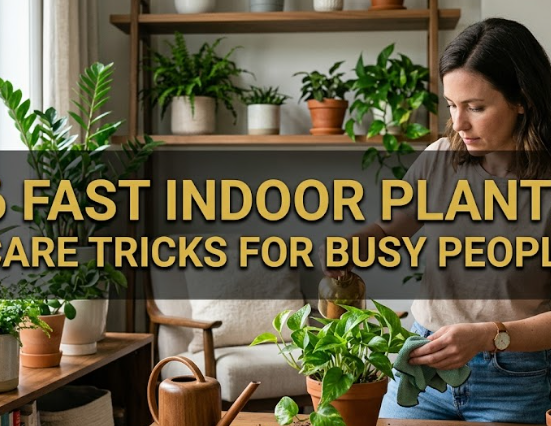
Dusty leaves cannot absorb light properly. Wipe your plant’s leaves with a damp cloth every few weeks. It is quick, easy, and makes a real difference in how healthy your plant looks and grows.
Repotting Too Often or Not Enough
Most indoor plants need repotting every 1–2 years. Signs that a plant needs a bigger pot: roots coming out of the drainage holes, soil drying out very fast after watering, or the plant looking too large and top-heavy in its container.
A Simple Indoor Plant Care Routine for Busy People
There is no need to spend hours on your plants each week. Here is a basic routine that takes less than 10 minutes:
Every week: Check the soil moisture of all your plants. Water only the ones that need it.
Every 2 weeks: Wipe down leaves. Check for pests by looking under the leaves for tiny bugs or webbing.
Every month: Add diluted liquid fertilizer during spring and summer.
Every season: Rotate your plants so all sides get equal light. Check if any need repotting.
That is it. Simple, consistent, and effective.
According to the Royal Horticultural Society, maintaining a regular care routine — even a minimal one — is the most important factor in keeping indoor plants healthy long-term.
How to Tell When Your Plant is Happy
Happy plants show clear signs of health. Look for:
New growth — New leaves pushing out from the center or stem tips mean your plant is thriving.
Firm, bright leaves — Healthy leaves are vibrant in color and feel firm, not limp or papery.
No yellowing or browning — An occasional yellow leaf is normal. Lots of them signal a problem.
No pests — Healthy plants in good conditions are more resistant to common pests like spider mites and fungus gnats.
FAQs About Indoor Plant Care
Q: How often should I water my indoor plants? A: It depends on the plant, pot size, and season. Most beginner plants need water once every 1–2 weeks. Always check the soil before watering — if it is still damp, wait a few more days.
Q: Can indoor plants survive in a room with no windows? A: Very few plants can survive with zero natural light. However, snake plants, ZZ plants, and pothos can handle very low light levels. You can also use a grow light to supplement if natural light is limited.
Q: Why are my plant’s leaves turning yellow? A: Yellow leaves are usually a sign of overwatering, poor drainage, or lack of nutrients. Check your watering schedule first — that is the most common cause.
Q: What is the easiest indoor plant for a complete beginner? A: Pothos and snake plants are widely considered the easiest indoor plants. Both handle neglect well and grow in a variety of conditions.
Q: Do indoor plants really improve air quality? A: Yes, though the effect in a typical home is modest. Plants do absorb some airborne toxins and release oxygen. Having several plants throughout your home can contribute to a fresher environment.
Q: How do I know if my plant needs a bigger pot? A: If roots are growing out of the drainage holes, the soil dries out very quickly after watering, or the plant looks cramped and top-heavy, it is time to repot.
Q: Are indoor plants safe for pets? A: Not all of them. Spider plants and some succulents are pet-safe. But pothos, snake plants, peace lilies, ZZ plants, and Chinese evergreens are toxic to cats and dogs. Always check before bringing a new plant home.
Q: What is the best way to start a plant collection on a budget? A: Start with one or two easy plants like pothos or spider plants. Once you are confident, propagate them — pothos cuttings root easily in water and spider plants produce free baby plants. You can also swap cuttings with friends.
Wrapping It All Up
There is no need to be afraid or overwhelmed when starting your indoor plant journey. The 7 plants in this guide — pothos, snake plant, spider plant, ZZ plant, peace lily, aloe vera, and Chinese evergreen — are genuinely easy to care for and genuinely beautiful in any space.
The secret to keeping plants alive is not some magical skill. It is simply a matter of paying a little attention. Check the soil before watering. Give your plants the right amount of light. Wipe the leaves once in a while. Repot when needed.
Do those four things, and your plants will reward you with growth, color, and life.
Pick one plant from this list. Start there. Experience what it is like to have something green growing in your space. Then add another one when you are ready. Before you know it, you will be the person your friends come to for plant advice.
That is how every great plant parent got started — with one beginner plant and a little curiosity.