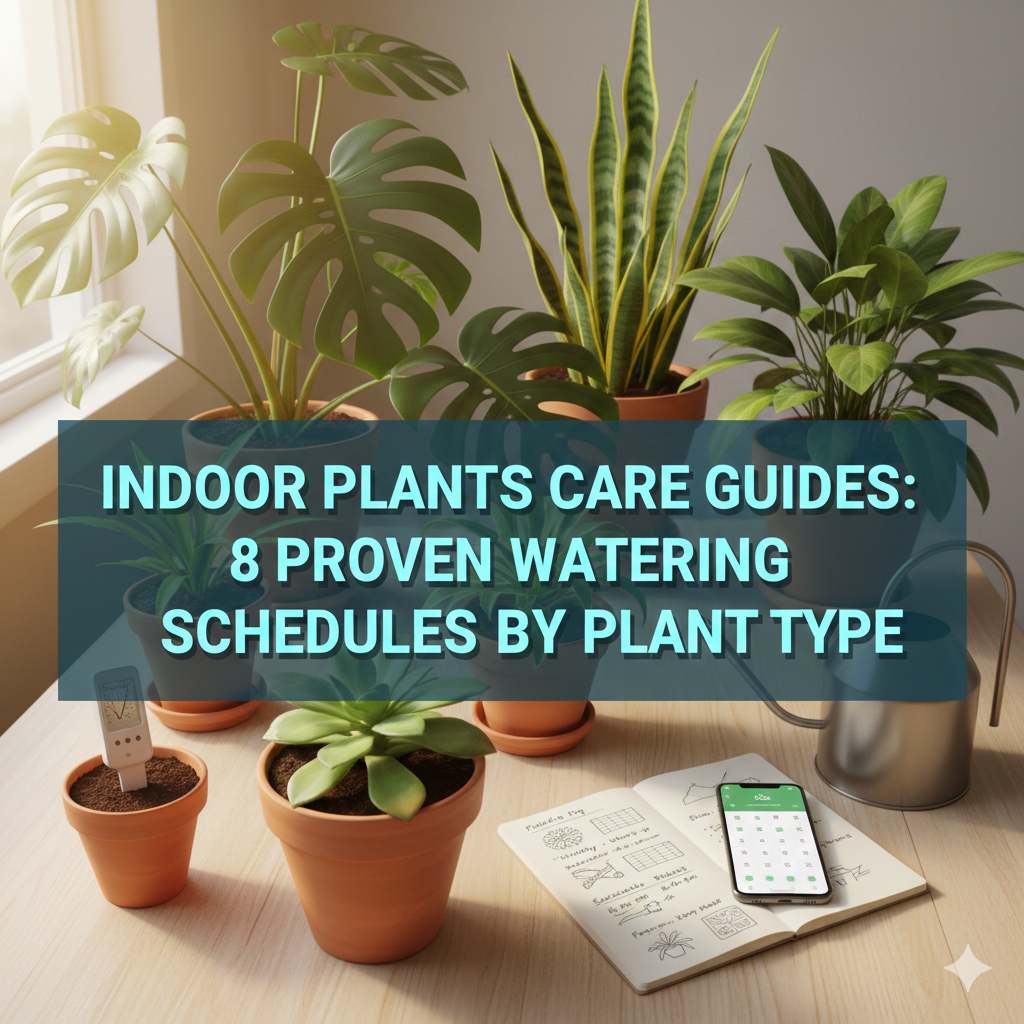
Best Plants Care Guides: 8 Watering Schedules by Plant Type
Majority of house plants do not die because of neglect. They succumb to excess love — that is, excess water.
The number one plant killer is overwatering of the indoor plants. However, underwatering is no better. The tricky part? Every plant is different. A cactus and a fern are the two poles apart concerning the water requirements. It is a disaster to treat them in the same way.
This is precisely the reason why this guide is there.
Regardless of being a beginner plant parent or you have been keeping greenery alive all your life, this article simplifies the frequency of watering 8 common types of indoor plants. You will have good schedules, tips that can be easily remembered, and some tricks that are used by professional gardeners.
Let’s get into it.
The Reason Why Watering Schedules Are Important
Plants are living things. They must have water — how much, how often, how — all these things are different according to the kind of plant, the type of pot it is in, the kind of soil mixture, the time of the year, and even the humidity of your house.
It is so easy to say something like “water every Sunday.” However, it does not work on all plants.
Based on the type of plant, however? That’s a game changer.
When you synchronize your watering schedule with the real demand of your plant, then a number of things are achieved. Your plants grow stronger. Their roots stay healthy. You stop wasting water. And you cease to replant dead vegetation every few months.
Signs You’re Watering Wrong
The red flags to be careful of before leaping into schedules are:
Symptoms of overwatering: Yellow leaves, mushy stems, soft ground, surface mold, smell of rot on the roots.
Underwatering indicators: Crispy brown leaf edges, drooping leaves, bone-dry soil shrinking away on the sides of the pot, retarded growth.
Remember them when you read about every type of plant.
The Finger Test — Your Best Watering Tool
Forget expensive gadgets. The finger test is not expensive, quick, and precise.
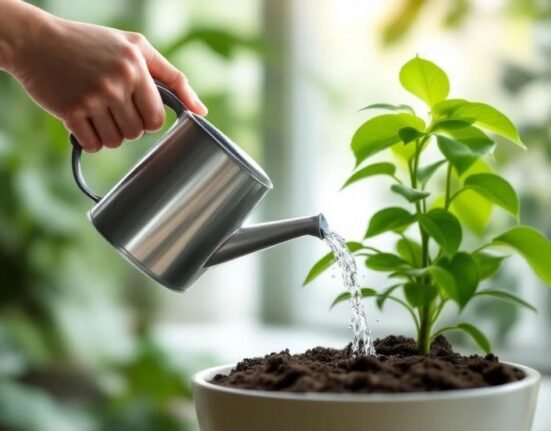
Insert your finger into the soil about an inch. When it becomes dry, then it is time to water. In case it remains wet or cool, then you have to wait two more days.
In the case of succulents and cacti, it should not be watered until the top two inches are dry. In the case of tropical plants and ferns, water only when the upper layer dries out.
This simple test will be of better use than any prescribed calendar schedule.
Watering Schedule #1 — Succulents
Watering Frequency: Summer — every 14–21 days, Winter — every 30–45 days
The indoor plant world champions are succulents, which are low-maintenance. Their leaves and stems are made to hold the water, and thus they will be able to survive dry seasons.
The greatest error people commit with succulents is that they overwater them. The roots rot when they are too long in wet soil. And once the root rot is established, it is quite difficult to turn back.
The Soak and Dry Method
That method of watering the succulents is known as the “soak and dry” method. Here’s how it works:
Wet all the way till the water drains at the bottom of the pot. Then, dry up the soil and water once again. Don’t mist the leaves. Watering a little every few days is not a good idea. Deep drink, then leave it alone.
In winter, the succulents become semi-dormant. Reduce the amount of watering by nearly half.
| Season | Watering Frequency |
|---|---|
| Spring/Summer | Every 14–21 days |
| Fall | Every 21–30 days |
| Winter | Every 30–45 days |
Pro Tip: It is always advisable to use a pot with drainage holes. Succulents planted in standing water will perish quickly.
Watering Schedule #2 — Cacti
Watering Frequency: Every 21–28 days during growing season, every 6–8 weeks during winter
Cacti are even harder plants than succulents. They are plants capable of surviving in the desert, and they adapted to severe droughts. At home, you can practically leave them unattended over extensive periods.
You should water your cactus every three to four weeks during spring and summer. Some varieties of cactus can survive up to six to eight weeks without any water, especially during winter.
How to Know Whether a Cactus Is Thirsty
Look at the body. A healthy cactus appears plump and firm. You may also notice slight wrinkling or the body looks a little thinner than normal in case it requires water. That’s your cue to water.
The soak and dry method is also used here. Wet the soil thoroughly, let it drain completely, and keep water off until the soil is bone dry.
Common mistake: Misting cacti. This does practically nothing to the roots and may lead to surface rot. Water at all times at the soil level.
Watering Schedule #3 — Pothos
Watering Frequency: Once every 7–10 days
One of the simplest indoor plants to grow is pothos. It is tolerant, quick-growing, and can take its fair share of neglect without raising a fuss. This is why it is ideal when starting out.
Pothos should be watered at the time when the first inch of the soil becomes dry. This is approximately once a week or every ten days in most households.
Pothos in Low Light vs. Bright Light
The light influences the rate at which the soil dries up. Low-light areas will require the addition of water relatively rarely as compared to a location close to a sunny window.
Adjust your schedule depending on the location of your plant and not the week of the year.
| Light Condition | Watering Frequency |
|---|---|
| Low light | Every 10–14 days |
| Medium light | Every 7–10 days |
| Bright indirect light | Every 5–7 days |
One of the best things about pothos is that it is the plant to indicate when it is thirsty. The leaves will begin to point downwards. Water it, and an hour or two later they snap right back up.
Watering Schedule #4 — Peace Lily
Watering Frequency: Every 7–10 days, or when the leaves start to droop slightly
Peace lilies are drama queens — best of all. When they are thirsty they will literally droop, and this will be a very clear visual signal.
This also renders them simple to maintain. Just watch the leaves. As soon as they begin to wilt, give them a thorough watering.
Peace Lily and Humidity
These plants love humidity. They are also tropical in nature and thus a dry house may be very stressful to them. Being misted on the leaves once or twice a week, or having a small humidifier close to the area, can make a significant difference in the appearance and health of the leaves.
Water peace lilies with room-temperature water. The roots can be shocked by cold water. Allow the tap water to stand overnight prior to using it — that also allows the chlorine to evaporate, which peace lilies are sensitive to.
Warning: Peace lilies are poisonous to pets and children if consumed. Keep them out of reach.
Watering Schedule #5 — Snake Plant (Sansevieria)
Watering Frequency: Every 14–28 days depending on season and light
Snake plants may be the most tolerant indoor plants in the world. They thrive on neglect. As a matter of fact, overwatering and not underwatering causes the majority of snake plant deaths.
These plants save water in their thick, upright leaves. They are able to spend weeks without water and they still appear perfectly well.
The Golden Rule for Snake Plants
When in doubt, don’t water it.
Look at the soil prior to each watering. Before any water is added, the first two inches must be thoroughly dry. During winter, extend this even farther — once a month is not an uncommon thing.
| Season | Watering Frequency |
|---|---|
| Spring/Summer | Every 14–21 days |
| Fall/Winter | Every 21–28+ days |
Snake plants do well in low-light conditions, however, they dry at a slower rate. When it is in a dark corner, err on the side of less watering.
Watering Schedule #6 — Ferns (Boston Fern, Maidenhair Fern)
Watering Frequency: Every 3–5 days, or once the first half-inch of soil becomes dry
Ferns are the opposite of cacti. They are so fond of water, and so averse to dry air, and must be watered consistently to stay lush and green.
The two widely used types of ferns indoors are Boston ferns and maidenhair ferns. They both like soil that is continually damp — never waterlogged, nor completely dry either.
How to Water Ferns Properly
Gradually pour water till it flows out of the drainage holes. Test the soil every two or three days. When the ground is dry or the leaves begin to appear somewhat shriveled, then it is time to water.
Ferns also love humidity. Group them with other plants, place them on a tray made of pebbles filled with water below the pot, or mist them regularly.
Fern Watering by Season
| Season | Soil Check Frequency | Watering |
|---|---|---|
| Spring/Summer | Every 2 days | When top half-inch dries |
| Fall/Winter | Every 3–4 days | Slightly decrease frequency |
Key Tip: Ferns are sensitive to fluoride and chlorine. Filtered or distilled water should be used. Otherwise, tap water should be left to stand overnight before using.
Watering Schedule #7 — ZZ Plant (Zamioculcas Zamiifolia)
Watering Frequency: Every 14–21 days in summer, every 3–4 weeks in winter
ZZ plants have thick, waxy leaves and underground rhizomes that, like mini reservoirs, store water. This makes them very drought-resistant.
They are an excellent option for people who travel frequently or just forget to water their plants.
ZZ Plant Watering Tips
Water only after the soil is absolutely dry. The rhizomes have sufficient water to sustain the plant even in dry seasons. Excessive watering causes yellowing leaves and rotting of roots.
ZZ plants prefer indirect light. They consume less water in low-light situations and the soil stays moist longer — which means you will water even less regularly.
One good rule of thumb: if you are not sure whether to water or not, wait another week.
Watering Schedule #8 — Spider Plant
Watering Frequency: Spring/Summer — every 7–10 days, Fall and Winter — every 14 days
Spider plants are easy-going, grow rapidly, and extremely versatile. They give long, arched leaves and small spiderette offshoots that are capable of being propagated into new plants.
They prefer regular moisture through their growing season (spring through summer), although they would also like to dry out somewhat in fall and winter.
Spider Plants and Tap Water
Spider plants are infamous for developing brown tips on the leaves when watered with fluoride-heavy tap water. If your spider plant has dry brown ends, then switch the water to filtered or distilled.
| Season | Watering Frequency |
|---|---|
| Spring/Summer | Every 7–10 days |
| Fall/Winter | Every 10–14 days |
Water them well and drain out all the water, and do not leave them standing in water. They are light-hearted but not fond of wet feet.
Quick Comparison Chart — All 8 Plants at a Glance
| Plant Type | Watering Frequency (Summer) | Watering Frequency (Winter) | Drought Tolerance |
|---|---|---|---|
| Succulents | Every 14–21 days | Every 30–45 days | High |
| Cacti | Every 21–28 days | Every 6–8 weeks | Very High |
| Pothos | Every 7–10 days | Every 10–14 days | Medium |
| Peace Lily | Every 7–10 days | Every 10–14 days | Low-Medium |
| Snake Plant | Every 14–21 days | Every 21–28 days | High |
| Ferns | Every 3–5 days | Every 5–7 days | Very Low |
| ZZ Plant | Every 14–21 days | Every 3–4 weeks | High |
| Spider Plant | Every 7–10 days | Every 10–14 days | Medium |
5 Factors That Alter the Frequency of Watering
With an excellent schedule, a couple of variables may still derail things. Here’s what to keep an eye on:
Pot material: Terracotta pots dry out much quicker than plastic or glazed ceramic pots. In case you change the type of pot, then change your watering schedule accordingly.
Pot size: When the pot is small, it dries faster. Big pots retain moisture and thus require less frequent watering.
Season: Spring and summer are the active growing seasons of most plants and thus they require more water. Fall and winter cause growth to slow and water requirements are greatly reduced.
Humidity: Central heating of homes in winter results in the air being very dry. This accelerates the rate of soil evaporation, hence your plants might require water a bit more frequently during such months.
Soil type: Sandy or gritty soil drains fast. Heavy soils with a lot of peat retain moisture longer. Be familiar with your soil mix before setting a schedule.
The Watering Guide for All Indoor Plants
No matter what plant you are growing, some good habits will always help.
Water in the morning. This allows time during the day for the plant to absorb moisture and minimizes any fungal problems that proliferate in overnight dampness.
Water deeply, not often. Thorough watering promotes deep root growth. Weak and surface-level roots are the result of shallow watering.
Always examine first before watering. Do not water on a hard day-by-day basis. Apply the finger test and watch the plant. The calendar is merely a guide, never a rule.
Empty the saucer. After watering, empty any water that collects in the saucer beneath the pot. Plants left in standing water invite root rot.
Use room-temperature water. Roots may be stressed by cold water, particularly with tropical plants such as the peace lily and ferns.
For more detailed guidance on specific plant varieties, visit Indoor Plants Guide — a comprehensive resource for everything related to houseplant care, from soil selection to light requirements.
According to the University of Missouri Extension, overwatering is one of the most common reasons houseplants fail indoors — a great reminder that less is often more when it comes to watering.
FAQs — Watering of Indoor Plants: Questions and Answers
Q: What makes me realize that I am overwatering my plant? Watch out for leaves turning yellow, the stem getting mushy around the soil line, soil that is always wet and can never dry out, or a sour smell coming from the pot. These are typical symptoms of overwatering.
Q: Could I water all my plants on one day? You can do so, though you must be checking the soil first. Use your watering day as a time to check on your plants, rather than an automatic trigger to add water to all the pots.
Q: What is the most appropriate water to use on indoor plants? Filtered water at room temperature is preferable. When using tap water, have it sit in an open container overnight. This assists in the evaporation of chlorine, which is more favorable to delicate plants such as ferns and spider plants.
Q: Do indoor plants need less water during winter? Yes, almost always. The vast majority of houseplants reduce their growth during winter, which implies that they do not consume as much water and the soil remains wet longer. During the colder months, watering frequency should be reduced.
Q: Is it better to water from the top or the bottom? Both are used, but they serve different purposes. Most plants can be top watered. Bottom watering — in which the pot is placed in a tray with water and the soil is allowed to absorb the moisture from below — is wonderful for plants that are sensitive to wet leaves, such as African violets.
Q: My plant’s leaves are turning yellow despite the fact that I water it regularly — why? The problem is often excessive watering with too little interval between waterings. Yellow leaves are among the early symptoms of overwatering. Cut back and allow the soil to dry up longer between waterings.
Q: Can I use a moisture meter instead of the finger test? Absolutely. Moisture meters are inexpensive and provide a more accurate reading of soil moisture levels. They are particularly handy in case you have many plants or find the finger test difficult.
Q: What should I do when I go on holiday and will not be able to water my plants? Most drought-resistant plants such as snake plants, ZZ plants, and cacti can do fine without water for a week or two. In the case of moisture-loving plants such as ferns and peace lilies, it would be a good idea to ask someone to check in, or use self-watering pots or wicking systems before you leave.
Wrapping It All Up
You do not need to make watering your indoor plants complicated. When you have a clear idea of what kind of plant you have and what it really requires, you will build a routine that works — and that you will stick to.
The schedules in this guide are not strict rules. They are starting points. It is your duty to observe your plants, check the soil, and adjust depending on what you see. You will get a feel for it with time. You will walk past a pothos and simply know it is time for a drink. A snake plant will appear somewhat dull and you will know that it has been too long since you last watered it.
This is when caring for plants ceases to be a responsibility and begins to be instinctive.
Start with one or two plants. Acclimatize yourself to their rhythms. Then build up your collection with confidence. Your home — and your plants — will be glad.