Indoor Plants Care Guides: 8 Working Tips for Window Plant Setup
Have you ever put a plant near a window and watched it slowly droop, turn yellow, or just stop growing? You’re not alone. Window placement sounds simple, but there’s a lot more going on than just “put plant near light.”
The right window setup can totally change the way your plants grow. The wrong one may kill them quietly over the course of weeks. This guide goes through all you need to know about setting up your window plants the right way — from what direction your window faces to how humidity and seasonal shifts change everything.
Let’s break it down into 8 proven, practical, and actually working tips.
Why Window Placement Is Everything for Indoor Plants
Before jumping into the tips, let’s talk about the importance of windows.
Plants require light to produce food through the process of photosynthesis. But not all light is the same. Intensity, duration, and direction all play a role. A south-facing window provides very different light from a north-facing one. A plant sitting six inches from glass gets way more light than a plant sitting three feet back.
Getting this right is the foundation of indoor plant care. Everything else — watering, fertilizing, humidity — works better when your plant is getting the light it actually needs.
Tip 1: Know Which Direction Your Windows Are Facing
This is the single most important step of all. The direction your window faces determines how much sun enters throughout the course of a day.
South-Facing Windows
These get the most light. Sunlight streams in for much of the day, especially in winter. South-facing windows are best for high-light plants such as:
- Cacti and succulents
- Herbs, such as basil and rosemary
- Fiddle leaf figs
- Aloe vera
If you have a south-facing window and there’s nothing in front of it, you’re losing prime plant real estate.
East-Facing Windows
These get gentle morning sun. The light is soft and not too intense, which makes east-facing windows ideal for medium-light plants. Spider plants, pothos, peace lilies, and ferns do really well here.
West-Facing Windows
West windows receive afternoon sun, which is warmer and more intense than morning light. Many flowering plants and herbs thrive here. Be careful with delicate plants — the afternoon heat can take its toll.
North-Facing Windows
These get the least light. No direct sun, just ambient brightness. Most plants struggle here, but low-light champions such as snake plants, ZZ plants, and cast iron plants can manage.
| Window Direction | Light Level | Best Plants |
|---|---|---|
| South | Bright, all day | Succulents, cacti, herbs |
| East | Soft morning light | Ferns, pothos, peace lily |
| West | Warm afternoon light | Flowering plants, herbs |
| North | Low ambient light | Snake plant, ZZ plant |
Tip 2: Distance From the Glass Makes All the Difference
Many people don’t realize this: the farther a plant sits from the window, the less light it receives. And light doesn’t decrease in a straight line — it drops off fast.
A plant sitting 1 foot from a window may get 1,000 foot-candles of light. Move it 3 feet back and that drops down to around 200–300 foot-candles. That’s a massive difference.
The Safe Distance Rule
Here’s a basic guide to follow:
- High-light plants: Within 1–2 feet of the window
- Medium-light plants: 2–5 feet from the window
- Low-light plants: As far as 8 feet away can work, but closer is still better
If your plant starts to lean hard toward the window or grow long, weak stems, it is telling you it needs more light. Move it closer.
Watch Out for Cold Glass in Winter
During cold months, glass can become very cold. Plants touching the glass may suffer from chilling. Leave a small gap — even just 2–3 inches — between the leaves and the windowpane during winter.
Tip 3: Match the Plant to the Light — Not the Other Way Around
This sounds obvious, but many plant owners do it backward. They select a plant they love and then squeeze it into whatever window they have available. The result? Disappointment.
A better approach: figure out what type of light each window in your home offers, then choose plants that naturally prefer that light.
How to Check the Light Level of Your Window
You don’t need fancy equipment. Try this simple hand test:
- Hold your hand about a foot above a white piece of paper near the window on a sunny day.
- Look at the shadow your hand casts.
- A sharp, clear shadow = bright direct light. A soft, fuzzy shadow = bright indirect light. Almost no shadow = low light.
This works surprisingly well and takes less than a minute.
Quick Plant-to-Light Matching Chart
| Light Type | What You See | Good Plant Picks |
|---|---|---|
| Bright direct | Sharp shadow, feels warm | Cacti, rosemary, aloe |
| Bright indirect | Soft shadow, well-lit | Monstera, rubber plant, fiddle leaf |
| Medium light | Faint shadow | Pothos, dracaena, philodendron |
| Low light | No real shadow | Snake plant, ZZ, cast iron plant |
Tip 4: Rotate Your Plants Regularly
Here’s a tip that almost nobody talks about — rotating your plants.
Plants always grow toward light. If you never rotate them, one side grows full and lush while the other side becomes bare and spindly. Over time, the plant looks lopsided and unbalanced.
How Often Should You Rotate?
A quarter turn every 1–2 weeks is usually sufficient. You don’t need a schedule — just give the pot a quarter turn each time you water.
Some plants are more sensitive to rotation than others. Flowering plants such as orchids and Christmas cacti may drop buds if you rotate them too frequently. For these, it’s better to leave them in place once they start blooming.
For everything else — monstera, pothos, rubber plants, ferns — regular rotation keeps growth even and full.
Mark the Pot to Track Rotation
Put a small piece of tape or a sticker on one side of the pot. Each time you water, rotate until the tape faces the window again. Simple, effective, and easy to remember.
Tip 5: Use Sheer Curtains to Soften Harsh Light
Direct sunlight can be too intense for many houseplants. Even plants that like bright light often prefer it to be indirect — meaning the sun isn’t beating straight down on the leaves.
Sheer curtains or frosted window film are a great solution. They filter the sunlight without blocking it completely. The result is soft, diffused light that most houseplants absolutely love.
Signs That Your Plant Is Getting Too Much Direct Sun
- Leaves appear bleached or washed out
- Brown, crispy patches on leaf surfaces (not the edges)
- Leaves curling inward during the day
- Soil drying out unusually fast
If you’re seeing any of these, try hanging a sheer curtain or moving the plant slightly back from the window.
Signs Your Plant Isn’t Getting Enough Light
- Long, stretched-out stems (called etiolation)
- Leaves turning pale green or yellow
- Slow or stopped growth
- Leaves are smaller than normal
Use these signs as feedback. Your plant is always communicating with you — you just have to know what to look for.
Tip 6: Adjust Your Setup With the Seasons
This is one of the most overlooked aspects of indoor plant care.
The sun’s position in the sky changes throughout the year. In summer, the sun is high and bright. In winter, it sits lower on the horizon and is much weaker. This changes how much light enters your windows significantly.
What Happens in Winter
In winter, south-facing windows actually become more useful for sun-loving plants because the low sun angle sends more light directly into south-facing rooms. Meanwhile, north and east windows become noticeably dimmer.
Move your plants closer to windows in fall and winter. If a plant was doing fine 3 feet from a window in July, it may need to be 1 foot away by December to get the same amount of light.
What Happens in Summer
In summer, south and west-facing windows can become too intense, especially at midday. This is when sheer curtains are most useful. You may also want to move some delicate plants a little further back from south-facing windows at the height of summer.
Seasonal Plant Movement Guide
| Season | What to Do |
|---|---|
| Spring | Move plants closer to windows as light increases |
| Summer | Use curtains on south/west windows; watch for heat stress |
| Fall | Begin moving plants closer to brighter windows |
| Winter | Maximize light; move plants to south windows if possible |
Tip 7: Keep the Windows and Leaves Clean
This tip is simple but makes a real difference — dirty windows block out light.
Dust, grime, and water spots on glass can reduce light transmission by 20–30%. That may not sound like much, but for a plant already struggling in a low-light corner, it matters.
Wipe your windows down every few weeks, especially on the inside. It takes five minutes and can make a noticeable improvement to your plant’s light situation.
Don’t Forget the Leaves
Dusty leaves also absorb less light. Dust builds up on the surface and acts like a tiny shade cloth.
Wipe large leaves down with a damp cloth every few weeks. For plants with many small leaves such as ferns, a gentle shower in the sink or bathtub works better. Let the leaves dry before placing the plant back in a cold window.
A clean leaf is an efficient leaf. It sounds small, but this habit adds up over time.
Tip 8: Supplement With Grow Lights When Natural Light Isn’t Enough
Sometimes your home just doesn’t have enough natural light. Maybe you live in an apartment with north-facing windows only. Maybe the light is blocked by trees or buildings. Maybe you live somewhere with very short winter days.
This doesn’t mean you can’t grow plants. It just means you need to supplement with grow lights.
What Type of Grow Light Should You Get?
There are a few main options:
Full-spectrum LED grow lights are the best choice for most people. They’re energy efficient, don’t produce much heat, and cover the full range of light that plants need for both leaf growth and flowering.
Fluorescent lights (T5 tubes) are a budget-friendly alternative and work well for seedlings and low-to-medium light plants.
Incandescent bulbs are not recommended. They generate too much heat and too little usable light for plants.
How Long Should Grow Lights Run?
Most houseplants need 12–16 hours of light per day when using artificial lighting. Use a simple outlet timer to automate this — it’s cheap and takes the guesswork out.
Keep the light approximately 6–12 inches above the plant for high-light species. For low-to-medium light plants, 12–24 inches is fine.
According to the University of Minnesota Extension, understanding the light needs of your specific plants is essential before investing in supplemental grow lighting — different species have very different requirements.
Grow Light Distance Guide
| Plant Type | Distance from Light | Hours Per Day |
|---|---|---|
| Succulents / Cacti | 4–6 inches | 14–16 hours |
| Herbs | 6–12 inches | 14–16 hours |
| Tropical foliage | 12–18 inches | 12–14 hours |
| Low-light plants | 18–24 inches | 10–12 hours |
Bonus: Creating a Window Sill Plant Display That Actually Works
Once you’ve got the light situation figured out, it’s worth thinking about how to arrange your plants physically — for both health and looks.
Layering by Height
Put taller plants behind shorter ones. This way, every plant gets access to light without being blocked. It also looks more intentional and designed.
Group Plants With Similar Needs Together
A window full of sun-loving succulents is easy to care for. Mix in a fern that needs humidity and low light and you’ll constantly be fighting to keep everyone happy. Grouping similar plants together simplifies your care routine dramatically.
Use Plant Stands and Shelves
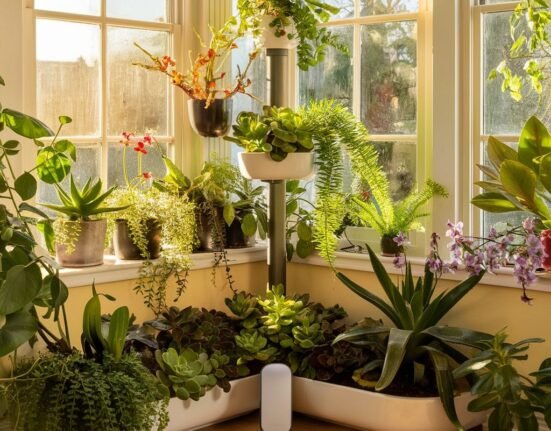
Window-mounted plant shelves or stands can vastly increase your usable window space. You can stack multiple levels of plants in a single window, allowing more plants access to natural light without cluttering your floor.
For even more ideas on arranging and caring for your houseplants, Indoor Plants Guide is a fantastic resource packed with practical tips for every type of indoor gardener.
Common Mistakes People Make With Window Plants
Even seasoned plant owners mess these things up. Here’s what to avoid:
Choosing the wrong plant for the window you have. This is the number one mistake. Always match plant to light, not light to plant.
Never rotating the pot. This results in lopsided and uneven growth over time.
Ignoring seasonal changes. What worked in summer won’t automatically work in winter. Adjust your setup as the seasons shift.
Overwatering despite good light. Good light doesn’t mean you water more — always check the soil before watering. Light affects how fast soil dries, which varies by season and plant type.
Forgetting about airflow. Windowsills can get stuffy, especially in winter when windows are closed. Poor air circulation encourages mold and pests. Open windows occasionally on mild days, or use a small fan on low to keep air moving.
Frequently Asked Questions About Indoor Plants and Window Setup
Q: Can a plant get too much light from a window? Yes. Signs include bleached or scorched leaves, crispy brown patches on leaf surfaces, and rapid soil drying. Sheer curtains or moving the plant back slightly can help.
Q: What is the best window for most houseplants? East-facing windows are generally considered ideal for the majority of common houseplants. The gentle morning light is bright but not harsh, and the temperatures stay more stable than afternoon-lit west or south windows.
Q: How do I know if my plant needs more light? Look for stretched, leggy growth; pale or yellowing leaves; very slow growth; and leaves that are smaller than normal. These are classic signs of insufficient light.
Q: Do plants need direct sunlight or just bright light? Most houseplants prefer bright indirect light — meaning the room is very well-lit but the sun isn’t shining directly onto the leaves. Only a handful of plants, like cacti, succulents, and herbs, truly thrive in direct sunlight.
Q: Should I place plants right against the window? Not always. In summer, direct contact with hot glass can scorch leaves. In winter, cold glass can cause chilling damage. A few inches of space between the leaves and the glass is usually safer year-round.
Q: Can grow lights fully replace sunlight for indoor plants? For most houseplants, yes. A good full-spectrum LED grow light used 12–16 hours a day can support healthy growth even without natural light. However, natural sunlight remains the gold standard when available.
Q: Why does my plant keep leaning toward the window? This is called phototropism — the plant grows toward its light source. It means your plant wants more light. Either move it closer to the window or rotate it regularly to encourage even growth.
Q: How often should I clean my windows to help my plants? Once a month is a good habit. Clean windows can improve light transmission noticeably, especially in winter when every bit of light counts.
Wrapping It All Up
Setting up window plants the right way isn’t complicated, but it does require attention to detail. The direction your window faces, how far your plant sits from the glass, whether you rotate it, how you adjust for seasons — all of these small things add up to either thriving plants or struggling ones.
These 8 tips from this indoor plants care guide are not theories — they are practical, tested strategies that make a real difference.
Start with one change. Maybe move a plant closer to the window. Maybe add a sheer curtain to protect a sun-sensitive plant. Maybe finally figure out which direction your windows face.
Small, intentional adjustments are how you go from “keeping plants alive” to genuinely watching them grow and flourish. Your windows are full of potential light — give your plants the chance to use it.