Indoor Plants Care Guides: 5 Wonders of Sunlight
Your plant looks sad. The leaves are pale. The stems are straining toward the window as if begging for help.
Sound familiar?
Most indoor plants do not die from too much water or bugs. They die from bad light. Sunlight is food for plants. Without enough of it, your plant can’t grow, can’t make energy and slowly fades away.
The good news? You do not need a greenhouse or a south-facing wall of windows. You just have to know the right tricks.
This guide takes you through 5 powerful ways to get the most out of sunlight for your indoor plants — all explained in simple terms, with the plant science behind it, and easy to implement today.
Why Sunlight Is Your Indoor Plant’s #1 Need
Before we get into the five methods, let’s talk about why light matters so much.
Plants have the ability to produce their own food through a process known as photosynthesis. They take in light, water and carbon dioxide — and make energy (sugar) for their growth.
No light = no food = no growth.
Inside a home, light levels are dramatically lower than outside. Even a bright, sunny room receives only about 1% of the available sunlight from outside. That’s a huge difference.
This is why so many indoor plants struggle. They’re surviving, not thriving.
When you learn to get the most out of the light your plants are receiving, everything changes. Leaves get greener. Growth speeds up. Flowers bloom. And that sad, droopy plant on your shelf? It perks right back up.
How to Know If Your Plant Isn’t Getting Enough Light
Before attempting any of the five methods below, check to see if your plant is indeed light-starved. Here are the clearest signs:
Signs of insufficient light in indoor plants:
| Sign | What It Means |
|---|---|
| Pale or yellowing leaves | Not enough light for chlorophyll production |
| Long, thin, stretchy stems | Plant growing toward light source (etiolation) |
| Small new leaves | Plant conserving energy due to low light |
| Slow or no growth | Insufficient energy from photosynthesis |
| Leaves dropping off | Plant shedding to reduce energy usage |
| Leaning toward the window | Uneven light exposure |
If your plant shows two or more of these signs, it’s time to do something about it.
Light Levels Explained: What “Bright,” “Medium” and “Low” Really Mean
You’ve seen plant tags that say “bright indirect light” or “tolerates low light.” But what do those terms really mean inside your home?
Here’s a simple breakdown:
Bright Direct Light — Sunlight falls directly on the plant. Usually within 1–2 feet of a south or west-facing window. Great for cacti, succulents and herbs.
Bright Indirect Light — Close to a window but not in the beam of direct sunlight. Think 2–5 feet from a south/west window, or right next to a north/east window. Perfect for pothos, monsteras and fiddle leaf figs.
Medium Light — A few feet from a window, or close to a window that doesn’t receive a lot of direct sun. Works for snake plants, ZZ plants and peace lilies.
Low Light — Far from windows, in hallways, or in rooms with small windows. Very few plants really survive here (cast iron plant, some ferns).
Quick Light Level Test You Can Do Right Now
Hold your hand about 12 inches above a piece of white paper in the spot where your plant sits. Do this at the brightest time of day.
- Sharp, clear shadow = Bright direct light
- Soft but visible shadow = Bright indirect light
- Faint, barely-there shadow = Medium light
- No shadow at all = Low light
This quick test takes 10 seconds and tells you exactly what you’re working with.
5 Powerful Ways to Make the Most of Sunlight for Your Indoor Plants
Now let’s get to the good stuff. These five methods work together — you don’t have to choose only one. The more you combine them, the better your results.
1. Choose the Right Window and Place Your Plant Correctly
This is the most impactful change you can make. Where you place your plant in your home determines everything.
Which Direction Does Your Window Face?
In the Northern Hemisphere (USA, UK, Europe, Canada), here’s what each window direction gives you:
| Window Direction | Light Type | Best For |
|---|---|---|
| South-facing | Bright, all-day light | Sun-loving plants: succulents, herbs, citrus |
| West-facing | Strong afternoon sun | Moderate light plants: pothos, spider plants |
| East-facing | Gentle morning sun | Shade-tolerant to moderate: ferns, orchids |
| North-facing | Low, indirect light all day | Low-light plants: snake plants, ZZ plants |
A south-facing window is like prime real estate for your plants. If you have one — use it.
How Far From the Window Should Your Plant Be?
Distance matters more than most people realize. Light intensity drops off fast as you move away from a window.
- 0–2 feet away: Bright direct to bright indirect
- 2–5 feet away: Bright indirect to medium
- 5–8 feet away: Medium to low
- Beyond 8 feet: Low light only
Get your light-hungry plants as close to the window as possible. Even moving a plant from 5 feet away to 2 feet away can double or triple the light it receives.
Watch Out for These Common Placement Mistakes
Don’t put plants behind sheer curtains if they need bright light. Curtains can cut light by 30–50%.
Don’t place plants in corners away from windows, even if the room feels bright to your eyes. Human eyes adapt to low light; plants can’t.
Keep glass clean. Dirty windows block more light than you’d think. Give your windows a wipe-down every few weeks.
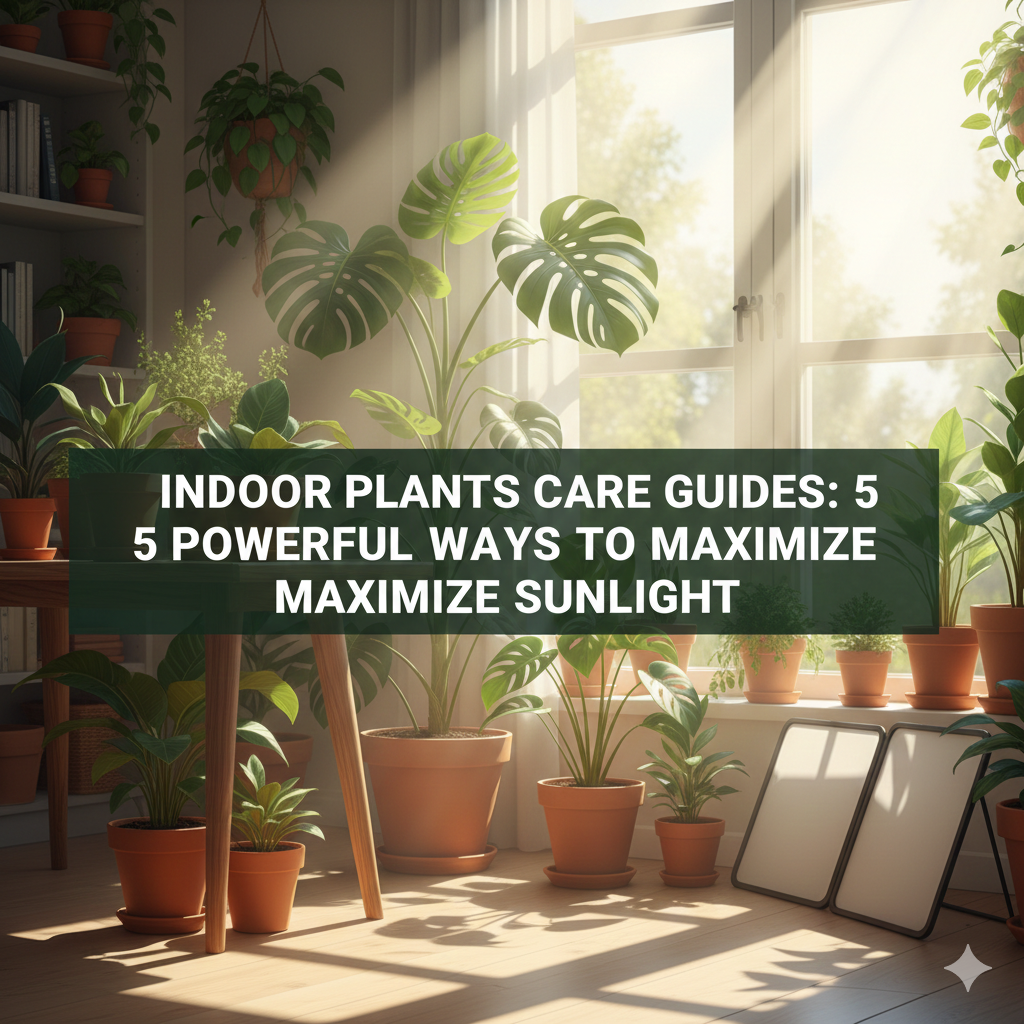
2. Use Reflective Surfaces to Bounce Light Around the Room
Here’s a trick most people never consider when setting up their plants — mirrors and light-colored walls can serve as natural light amplifiers.
How Reflected Light Helps Plants
Light bounces. When sunlight streams through a window, most of it falls on the floor, walls and furniture — and gets absorbed. But if those surfaces are light-colored or reflective, the light bounces back onto your plants.
It’s not quite the same as direct sunlight, but reflected light can make a substantial difference in how much light a plant receives throughout the day.
Easy Ways to Add Reflected Light
Hang a mirror near (not directly across from) your window. Position it to catch and redirect sunlight toward your plant shelf or table. A large mirror on a wall adjacent to a window works beautifully.
Paint your walls white or light cream. Dark walls absorb light. Light walls reflect it. This sounds simple because it is. White walls can make a room significantly brighter for your plants.
Use light-colored pots and shelves. White or metallic pots and plant stands reflect light back up onto the lower leaves.
Place plants on a white tray or piece of foam board. A white surface beneath your plants acts like a mini reflector for the lower leaves.
What Not to Do
Don’t position a mirror directly across from a window where it would reflect concentrated sunlight directly onto leaves. This can actually burn your plants, particularly succulents and plants with thin leaves.
3. Rotate Your Plants Regularly for Even Growth
You’ve most likely noticed that plants always seem to lean toward the window. That’s called phototropism — plants naturally grow toward the source of light.
If you never rotate your plant, one side receives all the light while the other side stays in shadow. The result? Uneven, lopsided growth. One side looks full and healthy. The other side is bare and pale.
How Often Should You Rotate?
Most indoor plants benefit from a quarter-turn rotation every 1–2 weeks. This gives each side of the plant equal light exposure over time.
A simple trick: Every time you water your plant, give it a quarter turn. You water regularly anyway, so this becomes a natural habit.
Which Plants Need Rotating Most?
Plants that need frequent rotation:
- Pothos
- Monstera
- Rubber plant
- Peace lily
- Fiddle leaf fig
Plants that don’t need much rotation:
- Succulents (they tolerate uneven light better)
- Hanging plants (they receive light from multiple angles)
- Grow-light setups where light comes from above
Signs You’ve Been Neglecting to Rotate
If your plant has grown noticeably toward the window, it’s been too long. You’ll also notice the side facing away from the window has smaller, paler leaves and fewer new growth points.
The fix is simple — rotate and give it a few weeks to even out.
4. Clean Your Plant’s Leaves to Let More Light In
This one surprises a lot of people. You can have your plant right next to a sunny window and still give it better light — simply by cleaning its leaves.
Why Dusty Leaves Block Light
Every leaf is a solar panel. The green surface absorbs sunlight and converts it into energy.
But when dust, grime and mineral deposits accumulate on leaves, they block some of that incoming light. In a home where every bit of sunlight counts, this really matters.
Research in horticulture shows that even a thin layer of dust on leaves can reduce photosynthesis efficiency by 20–30%.
How to Clean Plant Leaves Properly
The wipe-down method (best for large, flat leaves like monsteras, rubber plants and fiddle leaf figs):
- Dampen a soft cloth with room-temperature water
- Gently wipe the top and bottom of each leaf
- Support the leaf with your other hand so you don’t snap it
- Do this once a month or whenever you see visible dust
The shower method (best for small-leaved or bushy plants such as pothos, ferns and peace lilies):
- Take the plant to a shower or sink
- Use lukewarm water and rinse the leaves gently
- Let the plant drain fully before putting it back
- Do this every 4–6 weeks
What to avoid:
- Don’t use cold water — it can shock tropical plants
- Don’t use leaf-shine sprays with oils or waxes — they clog pores (stomata) on leaves
- Don’t wipe fuzzy-leaved plants like African violets — the hairs on their leaves trap dust naturally and shouldn’t be disturbed with a wet cloth
5. Add Grow Lights to Fill the Gap on Dark Days
Sometimes, even the best window placement isn’t enough. Dark winters. North-facing apartments. Rooms with tiny windows. This is where grow lights become a game-changer.
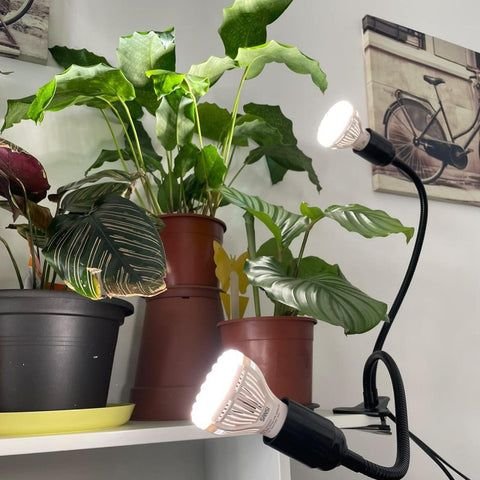
Grow lights are artificial lights designed to mimic the spectrum of sunlight that plants need for photosynthesis. They’ve become much more affordable and efficient in recent years — and they work really well.
According to the University of Missouri Extension, full-spectrum grow lights are among the most effective tools for supplementing natural light in low-light indoor environments, and can significantly improve the growth and health of houseplants.
Types of Grow Lights: Which One Should You Get?
| Type | Pros | Cons | Best For |
|---|---|---|---|
| LED Grow Lights | Energy-efficient, long-lasting, low heat | Higher upfront cost | All plants, especially in winter |
| Fluorescent (T5/T8) | Affordable, good for seedlings | Less efficient than LED | Herbs, seedlings, low-light plants |
| Full-Spectrum LED | Closely mimics sunlight | Can be expensive | All-purpose indoor growing |
| Incandescent Bulbs | Cheap to buy | Too much heat, wrong spectrum | Not recommended |
For most home growers, a full-spectrum LED grow light is the best investment. They last for years, use less electricity and don’t overheat.
How to Use Grow Lights Correctly
Distance matters. Grow lights lose intensity quickly with distance, just like natural light.
- High-light plants (succulents, herbs): 6–12 inches from the light
- Medium-light plants (pothos, philodendrons): 12–24 inches
- Low-light plants: 24–36 inches
Duration matters. Most indoor plants need 12–16 hours of light per day when using grow lights as a supplement, or up to 16 hours if grow lights are the primary source.
Use a simple outlet timer so your lights turn on and off automatically. Plants need a dark period too — don’t leave lights on 24 hours a day.
Signs your grow light is working: New leaf growth within 2–4 weeks, deeper green color in existing leaves, reduced stretching and leaning.
Budget-Friendly Grow Light Options
You don’t need to spend a lot. A basic clip-on LED grow light starts around $15–$25 and works well for a few small plants. For a full plant shelf, expect to spend $30–$80 for a quality bar-style LED panel.
Putting It All Together: A Simple Sunlight Checklist
Use this checklist to give your indoor plants the best light possible:
Weekly:
- Rotate plants a quarter turn when watering
- Check if any plant is visibly leaning toward the window
Monthly:
- Wipe down large leaves with a damp cloth
- Clean your windows
- Reassess plant placement — has sunlight shifted with the season?
Seasonally:
- Move plants closer to windows in fall/winter
- Turn on grow lights during short winter days
- Move plants back from direct sun in summer to avoid leaf scorch
Seasonal Light Changes: What to Do in Winter vs. Summer
The sun’s position changes throughout the year. A window that gets strong afternoon sun in June might get almost no direct sunlight in December. Your plants feel this shift even if you don’t notice it.
In Winter:
- Days are shorter — less total light available
- The sun sits lower in the sky, changing which windows get light
- Move plants closer to windows
- Turn on grow lights to make up for missing hours of daylight
- Clean windows more often — condensation and grime build up faster
In Summer:
- Days are longer — more total light available
- Direct sunlight is stronger and can actually burn some indoor plants
- Use sheer curtains or move plants slightly back from south-facing windows
- Watch for signs of sunburn: bleached, white or crispy patches on leaves
FAQs: Indoor Plants and Sunlight
Q: Can a plant survive with zero natural light?
Yes, but only with grow lights. Some plants like pothos and snake plants tolerate very low natural light, but no plant survives in complete darkness without an artificial light source.
Q: How many hours of light do indoor plants need each day?
Most indoor plants do best with 8–16 hours of light per day. Low-light plants are fine with 8–10 hours. High-light plants like herbs and succulents prefer 12–16 hours.
Q: Is light through a window as good as outdoor sunlight?
Not quite. Glass filters out some UV rays and reduces overall intensity. However, most indoor plants are tropical species that naturally grow under forest canopies and are adapted to indirect, filtered light — so window light works well for them.
Q: My plant is near a window but still looks pale. What’s wrong?
Check these: Is the window dirty? Is there a curtain blocking light? Is the window north-facing? Is the season affecting sunlight? Also check if the plant has root rot or other issues — poor roots can cause pale leaves even with good light.
Q: Can I move my indoor plant outside in summer for more light?
Yes! This is called hardening off. Start by placing the plant in a shaded outdoor spot for a few hours a day, then gradually increase sun exposure over 1–2 weeks. Direct outdoor sunlight is much stronger than indoor light, so introduce it slowly to prevent leaf burn.
Q: Do all plants need the same amount of light?
No. Light needs vary widely. Cacti and succulents want maximum sun. Pothos and snake plants thrive in medium to low light. Always check the specific light requirements for each plant you own.
Q: What’s the fastest way to improve my plant’s light situation?
Move it closer to your best window and clean its leaves. Those two steps alone can make a noticeable difference within a week.
The Bottom Line
Light is the single most important factor in your indoor plant’s health. The good news is you don’t need a perfect home or an expensive setup to get it right.
Start simple. Move your plants closer to windows. Rotate them regularly. Wipe the dust off their leaves. Add a mirror if you can. And if winters get dark where you live, a basic grow light will change everything.
These five approaches from this indoor plants care guide work for beginners and experienced plant parents alike. You don’t need all five at once — even one or two changes can bring a struggling plant back to life. For more detailed care guides on a wide range of houseplants, visit Indoor Plants Guide — your go-to resource for keeping every plant in your home healthy and thriving.
Pick one thing from this guide and try it this week. Your plants will thank you.