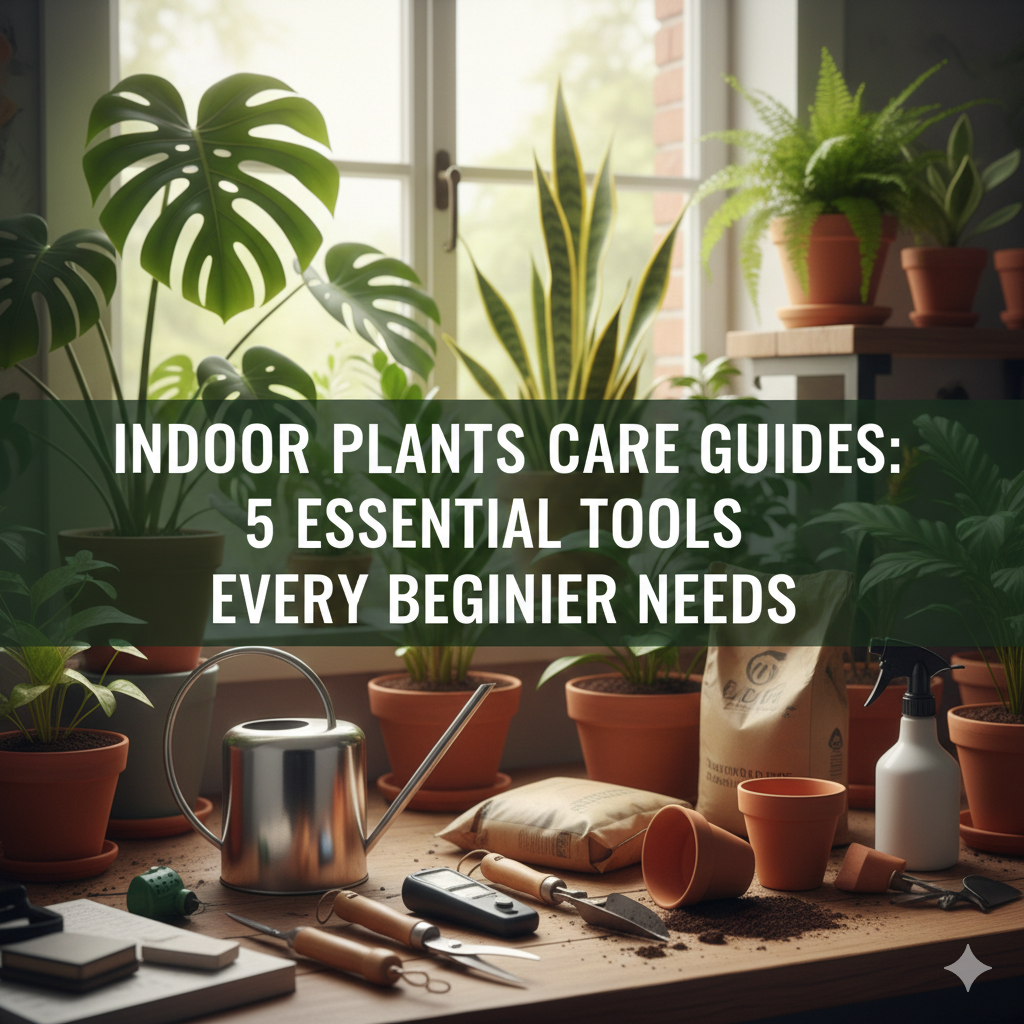
Indoor Plants Care Guides: 5 Essential Tools Every Beginner Needs
You have just purchased your first houseplant. Probably it is a pothos on your windowsill. Or a snake plant you had bought at the store because somebody said it is hard to kill.
Either way, you’re excited. And maybe a little nervous.
The reality is as follows: the majority of novices do not fail because they do not care enough. They do not work out as they lack the appropriate tools. They either overwater or underwater. They repot at the wrong time. They speculate when they are supposed to measure.
This guide fixes all of that.
The Indoor Plants Care Guides are geared towards the actual beginner, with no massive jargon, no insanity of advice. Only five tools that really matter, discussed in simple language so that you can get off to a good start and keep your plants alive and healthy.
Let’s get into it.
The Reason Tools Matter More Than You Think
The commonly accepted idea is that all one needs in taking care of plants is sunlight and water. Add some water, place the plant close to a window, and that is it.
But plants are living things. They need care that changes with the season, room temperature, soil type, and the size of the pot as well. When you lack the right tools, you are literally guessing each time.
And guessing leads to dead plants.
The good news? You do not have to spend a lot of money. The five tools included in this guide are things that will cost you very little, are easy to locate, and will entirely transform your approach to taking care of your indoor plants. As soon as you possess them, you will never guess at all, but will grow with confidence.
Tool #1 — A Moisture Meter (Your Plant’s Best Friend)
What It Does
A moisture meter is a small device with a metal probe. You insert the probe into the soil and it informs you of how wet or dry the soil is — normally on a scale of 1 to 10.
That’s it. Simple as that.
However, this is why it is so important: houseplants die because of overwatering the most. Not underwatering. Overwatering.
The roots are unable to breathe when soil remains excessively wet over an extended period. They start to rot. The plant dies gradually and its leaves tend to appear droopy or yellowish — and a beginner would be confused and assume that there is a need to water the plant more. So they water more. And the problem gets worse.
The use of a moisture meter stops that cycle completely.
How to Use It
Plunge the probe halfway into the soil — not just the surface. Wait about 30 seconds. Read the number.
- 1 to 3 means dry. Time to water.
- 4 to 7 means moist. Check again in a day or two.
- 8 to 10 means wet. Do not water yet.
Various plants have different preferences. Cacti and succulents do not want the soil to be wet when they are watered. Peace lilies and ferns prefer to stay a little damper. A moisture meter allows you to give the best care to each individual plant.
What to Look For When Buying
| Feature | What to Look For |
|---|---|
| Scale | 1–10 scale is the easiest to read |
| Probe length | Minimum 6 inches for deeper pots |
| Extra features | Some have pH and light readings — a nice bonus |
| Price range | $8–$20 is adequate for a novice |
You don’t need anything fancy. A simple model is ideal. Just remember to clean the probe after each use so it remains accurate.
Tool #2 — A Watering Can With a Long Spout
Why the Spout Shape Is So Important
You may well be thinking — a watering can is a watering can. What’s the big deal?
The point is this: it is not just the quantity of water that matters but the manner of watering.
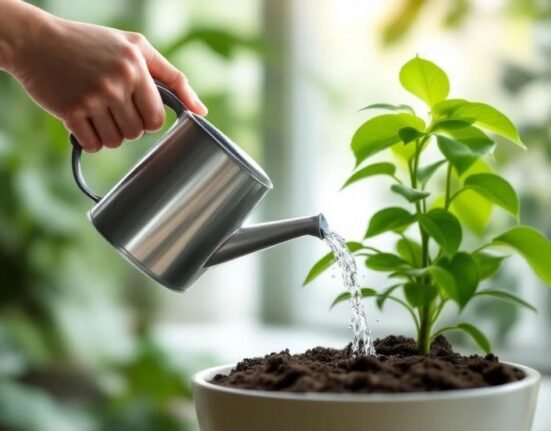
A watering can with a long and narrow spout gives you control. You can direct the water exactly where you want it — right at the base of the plant, into the soil. This prevents water from landing on the leaves, which is significant since damp leaves are likely to develop fungal issues and rot.
Short, wide spouts have a tendency of spilling water all over. That is fine with outside garden beds, but indoors, you want accuracy.
How to Water Indoor Plants the Right Way
Watering correctly is a skill. Here is a simple process to follow:
- Use your moisture meter first to confirm the plant actually needs water.
- Water slowly and gradually at the base of the plant.
- Continue until water drains out of the bottom holes.
- After 30 minutes, empty the saucer under the pot to ensure the roots are not sitting in water.
It is that last step which beginners frequently skip. It is just as bad to leave water in the saucer as it is to overwater — the roots can still rot.
Choosing the Right Size
| Plant Collection Size | Recommended Can Size |
|---|---|
| 1–5 plants | 1-liter can |
| 5–15 plants | 2-liter can |
| 15+ plants | 4-liter can or more |
With a smaller can you have greater control. A bigger one spares you from traveling back and forth to the sink. Choose according to the number of plants you currently have, and upgrade as your collection grows.
Tool #3 — A Set of Pruning Shears (Clean Cuts = Healthy Plants)
Why You Need to Prune
The process of pruning sounds scary. But it is merely trimming — removing withered leaves, brown tips, or overgrown stems.
Here’s why it’s so important:
Dead and rotting leaves drain energy away from the rest of the plant. When you remove them, the plant transfers that energy to new growth instead. Pruning also helps the plant keep a nice shape and prevents disease from spreading.
If you have ever seen a plant with one brown, mushy stem surrounded by healthy ones — that is exactly the kind of thing that spreads when it is left alone. One snip can save the entire plant.
Why Clean Cuts Matter
Breaking leaves by hand, or using dull scissors, cuts the plant tissue and leaves ragged edges. Those rough cuts may serve as entry points for bacteria and fungi.
Sharp pruning shears give a clean cut that heals fast and keeps the plant healthy.
How to Keep Your Shears Clean
This is a step that most beginners will skip entirely — and it is a huge mistake.
Wipe the blades with rubbing alcohol before cutting any plant. Wipe again after each plant before moving to the next one. This will avoid the transmission of disease among plants.
Think of it like washing your hands between patients at a doctor’s office. It sounds small, but it makes a real difference.
Quick Pruning Tips for Beginners
- Always cut right above a leaf node — the point where a leaf joins the stem
- Remove yellow or brown leaves as soon as you notice them
- Prune no more than one-third of the plant at a time
- Spring and summer are the most appropriate seasons to prune — avoid heavy pruning in winter
Tool #4 — A Digital Thermometer and Humidity Gauge (Know Your Room’s Climate)
Plants Feel Temperature and Humidity Too
Light and water are the only things that come to mind among beginners. But temperature and humidity play a massive role in the health of plants — especially indoors.
Most houseplants come from tropical or subtropical climates. They are acclimatized to warm weather and damp air. When you bring them inside, they are forced to adjust to whatever your home’s climate is like. And your home may be too cold, too dry, or too drafty for certain plants.
A digital thermometer and humidity gauge — sometimes sold together as a “thermo-hygrometer” — tells you precisely what is going on in the air around your plants. For a deeper look at how climate affects your houseplants, Indoor Plants Guide is a great resource to explore plant-specific care tips and growing conditions.
What’s a Good Range?
Here is a basic table showing the ideal conditions for common houseplants:
| Condition | Ideal Range | Signs It’s Off |
|---|---|---|
| Temperature | 60°F–80°F (15°C–27°C) | Wilting, leaf drop, slow growth |
| Humidity | 40%–60% | Brown leaf tips, crispy edges |
| Winter indoor air | Often drops to 20%–30% humidity | Very common in heated homes |
Winter is especially tricky. Heaters dry out the indoor air fast. When your home drops below 30% humidity, plants will begin to show signs of stress — brown tips, falling leaves, and stunted growth.
Simple Ways to Boost Humidity
Once you know your humidity level is too low, you have a few easy options:
- Place a small humidifier close to your plants
- Group plants together — they create a micro-humid environment around each other
- Set pots on a tray filled with pebbles and water — the evaporation adds moisture to the air
- Mist leaves lightly in the morning — though this works better for some plants than others
Without a humidity gauge, you would never know this was the problem. You would just watch your plants struggle and wonder what you are doing wrong.
Tool #5 — A Basic Soil and pH Testing Kit
What Is Soil pH and Why Does It Matter?
pH measures how acidic or alkaline something is on a scale of 0 to 14. A pH of 7 is neutral. Below 7 is acidic. Above 7 is alkaline.
According to the University of Massachusetts Amherst Extension, most houseplants prefer soil with a pH between 6.0 and 7.0 — slightly acidic to neutral.
When the pH is off, the plant will not absorb nutrients correctly, even if those nutrients are present in the soil. This is a very common hidden cause of yellowing leaves, slow growth, and plants that simply do not look right despite being cared for.
A basic soil pH testing kit lets you monitor the pH of your potting mix and make adjustments when needed.
How to Use a pH Testing Kit
Most beginner-friendly kits are simple:
- Take a small sample of moist soil
- Mix it with the testing solution provided
- Compare the color to the included chart
- Adjust if needed
When soil is excessively acidic — below 6.0 — a little lime may be added to raise the pH. If it is too alkaline — above 7.0 — sulfur or peat moss can bring it down.
pH Preferences of Popular Houseplants
| Plant | Preferred pH Range |
|---|---|
| Pothos | 6.1 – 6.5 |
| Peace Lily | 5.8 – 6.5 |
| Snake Plant | 5.5 – 7.5 |
| Spider Plant | 6.0 – 7.2 |
| Fiddle Leaf Fig | 6.0 – 7.0 |
| Monstera | 5.5 – 7.0 |
You do not have to test your soil every week. Once every two to three months, or whenever you repot, is plenty.
How All 5 Tools Work Together
The best thing about these five tools is that they each solve a different problem, but work together as a system.
Your moisture meter tells you when it is time to water. Your watering can helps you water correctly. Your pruning shears keep the plant healthy and clean. Your thermometer and humidity gauge tell you what the air is doing. And your pH kit makes sure the soil is doing its job.
Once you have all five, you are no longer guessing. You have actual information — and actual information brings actual results.
Here is a simple weekly routine you can follow:
Quick Weekly Plant Check — Takes Less Than 15 Minutes
- Check moisture levels with your meter — water only what needs it
- Look over every plant for dead or yellowing leaves — snip anything that looks suspicious
- Check your thermometer and humidity gauge — adjust if needed
- Once a month, check soil pH on any plant that seems off
That’s it. No complicated schedules. Just a quick check-in that keeps everything on track.
Common Beginner Mistakes These Tools Prevent
Be honest — everyone makes mistakes at the beginning. But the right tools can cut your learning curve in half.
Here are the most common beginner mistakes and how each tool helps:
| Mistake | Tool That Prevents It |
|---|---|
| Overwatering | Moisture meter |
| Watering leaves instead of roots | Long-spout watering can |
| Spreading disease between plants | Clean pruning shears |
| Dry air from winter heating | Humidity gauge |
| Nutrient lockout from bad soil pH | pH testing kit |
Every single one of these mistakes is fixable. And every single one of them is preventable with the right tool in your hand.
Budget Breakdown: What Will This Actually Cost?
Good news — you need not spend a fortune to get started.
| Tool | Average Cost |
|---|---|
| Moisture meter | $8 – $20 |
| Watering can with long spout | $10 – $25 |
| Pruning shears | $8 – $20 |
| Digital thermometer + humidity gauge | $10 – $20 |
| Soil pH testing kit | $8 – $18 |
| Total | $44 – $103 |
For under $50, you can get basic versions of all five. For around $100, you can get quality versions that will last for years.
Compare that to the cost of replacing plants that die from preventable causes — it adds up fast.
FAQs About Indoor Plant Care Tools
Q: Do I really need all five tools, or can I get by with fewer?
You can begin with just the moisture meter and watering can — those two alone will prevent most beginner mistakes. Add the other tools as your plant collection grows and your confidence builds.
Q: How often should I use a moisture meter?
Most plants should be checked every 2–3 days. Succulents and cacti can be checked once a week since they do not dry out so fast.
Q: Can I reuse pruning shears without cleaning them?
Technically yes, but it is risky. Disease spreads easily from plant to plant through contaminated blades. Cleaning with rubbing alcohol takes only 10 seconds and protects all your plants.
Q: Is a separate thermometer necessary if my phone shows the temperature?
Your phone shows outdoor or general indoor temperature. A dedicated device placed near your plants gives you a far more precise measurement of the actual microclimate where your plants live — which can differ very widely from the rest of the room.
Q: What if my soil pH is off? Will my plant die?
Not right away — but it will gradually decline. Plants with improper pH find it hard to absorb nutrients even when the soil looks healthy. Fixing the pH normally leads to visible improvement within a few weeks.
Q: Are digital or chemical pH tests better for houseplants?
Both work. Digital testers are faster and reusable. Chemical or strip tests are cheaper to buy upfront but cost more over time. For a beginner with a small collection, a chemical kit is perfectly fine.
Q: How do I know if low humidity is stressing my plants?
Look for brown, crispy tips on the leaves — especially on the outer edges. This is among the most evident signs of low humidity stress. A humidity gauge will confirm it.
A Final Word: Start Simple, Stay Consistent
Indoor plant care does not have to be intimidating. The greatest mistake beginners make is not choosing the wrong plant — it is trying to figure everything out through trial and error without any tools.
These five tools take the guesswork out of the process. They provide you with actual data about what your plant requires, rather than having you rely on gut feeling or general advice that may not apply to your specific plant, your specific pot, or your specific room.
Start with one or two tools if budget is a concern. Nothing on this list prevents more plant deaths than a moisture meter. Add the rest over time as you become more comfortable.
And last but not least — never be afraid to make mistakes. Every experienced plant parent has killed a plant or two. The difference is they kept going, kept learning, and kept growing.
These Indoor Plants Care Guides are here to ensure that you do just that — grow, one plant at a time.
Now go check on your plants. They’re waiting.