Indoor Plants Care Guides: 11 Smart Self-Watering Ideas for Busy Owners
Do you love plants but keep forgetting to water them? You’re not alone.
Millions of plant owners watch their beloved greens wilt — not from lack of love, but from lack of time. Work, school, travel, and a packed daily schedule make it nearly impossible to keep a consistent watering routine.
The good news? You don’t have to choose between a busy life and a green home.
Smart self-watering ideas have changed the game for plant lovers everywhere. These clever systems and DIY tricks deliver water to your plants automatically — or at least make watering way easier and more efficient.
In this guide, you’ll find 11 practical, budget-friendly self-watering ideas that work for beginners and experienced plant parents alike. Whether you have one succulent on a windowsill or a full indoor jungle, there’s something here for you.
Let’s dive in.
Why Most Busy People Struggle to Keep Plants Alive
Before jumping into solutions, it helps to know the real problem.
Most indoor plants don’t die from underwatering alone. They die from inconsistent watering — getting too much water one week and none the next. This confuses the plant’s root system and leads to stress, root rot, or drought damage.
Busy owners also tend to forget during travel or hectic weeks, then overcompensate when they return.
Self-watering systems fix this by delivering small, steady amounts of moisture directly to the soil — mimicking natural rainfall far better than the occasional big pour.
The Science Behind Self-Watering
Plants absorb water through their roots using a process called capillary action — the same force that makes a paper towel soak up liquid. Many self-watering systems are built around this principle.
When the soil starts to dry out, it pulls moisture from a nearby water source through a wick or porous material. The plant essentially drinks on demand. No timers. No guesswork.
What to Know Before You Pick a Self-Watering System
Not all plants have the same watering needs. Before choosing a method, consider:
| Factor | What to Check |
|---|---|
| Plant type | Succulents need less water; ferns need more |
| Pot size | Larger pots need more water capacity |
| Soil type | Well-draining soil works best with most systems |
| Indoor climate | Dry air speeds up moisture loss |
| How long you travel | Longer trips need bigger reservoirs |
Matching the right system to the right plant makes all the difference.
11 Smart Self-Watering Ideas for Busy Plant Owners
1. Self-Watering Pots With Built-In Reservoirs
This is the most popular solution — and for good reason.
Self-watering pots have a two-part design. The top section holds the soil and plant. The bottom section holds water. A wicking layer between the two slowly pulls moisture up into the soil as needed.
Best for: Most houseplants including pothos, peace lilies, and herbs.
Why it works: The plant controls its own water intake. It pulls water only when the soil gets dry enough.
Tips for using it:
- Fill the reservoir every 1–2 weeks instead of watering daily
- Don’t overfill — check the water level indicator if the pot has one
- Don’t use it with heavy garden soil
These pots range from $10 to $50 depending on size and brand. LECHUZA, Mkono, and Santino are popular brands worth checking out.
2. DIY Wick Watering With Cotton Rope
No budget for a fancy pot? No problem.
This old-school trick works surprisingly well. All you need is a cotton rope or shoelace, a container of water, and your existing plant pot.
How to set it up:
- Cut a piece of thick cotton rope (about 12–18 inches long)
- Push one end about 2–3 inches into the soil near the roots
- Place the other end into a jar or bottle of water set slightly above or beside the pot
The cotton rope acts as a wick, slowly drawing water from the jar into the soil through capillary action.
Best for: Small to medium plants like herbs, pothos, and philodendrons.
Pro tip: Use unbleached, natural cotton rope for best results. Synthetic materials don’t wick water as effectively.
This method can keep a plant hydrated for 3–7 days depending on plant size and room temperature.
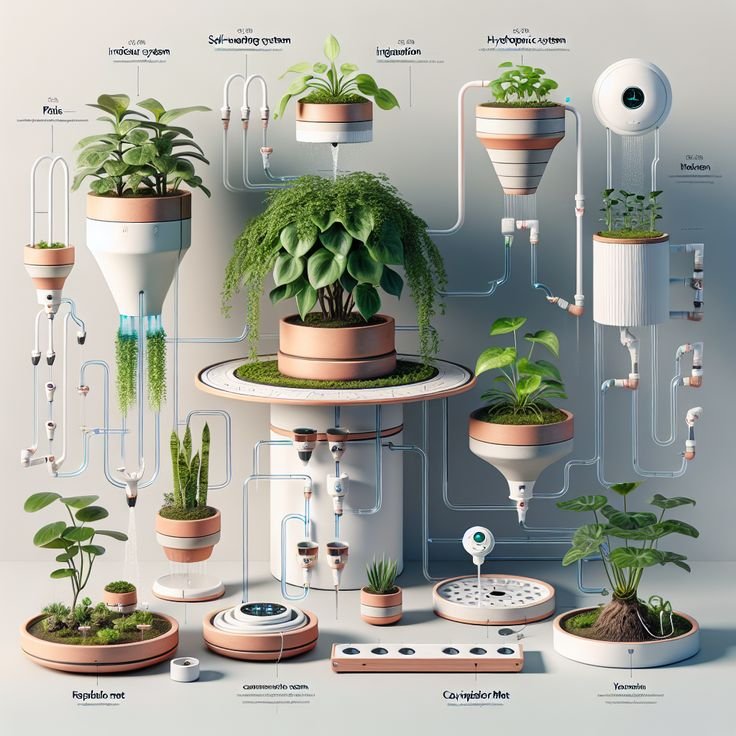
3. Plastic Bottle Drip Irrigation
This is one of the most popular DIY methods online — and it genuinely works.
Take an empty plastic bottle (a 1-liter or 2-liter soda bottle works great). Fill it with water. Then flip it upside down and insert it into the soil.
Two ways to do this:
Option A – Slow drip: Poke a tiny hole in the bottle cap before inserting. Water drips slowly into the soil.
Option B – Terra cotta spike: Buy a cheap terra cotta spike (under $5 each). Screw it onto the bottle cap. Insert the spike into the soil. The porous clay releases moisture gradually.
Best for: Medium to large potted plants.
How long it lasts: A 2-liter bottle can keep a plant watered for 3–5 days, sometimes longer in cool rooms.
4. Terra Cotta Watering Spikes (Ollas)
Terra cotta spikes — also called ollas — are small clay cones or stakes connected to a water reservoir.
You fill the attached bottle or tube with water, insert the spike into the soil, and let the clay do its thing. Because terra cotta is naturally porous, it slowly “sweats” moisture into the surrounding soil.
Why plant lovers swear by this method:
- Delivers water at root level where plants actually absorb it
- Prevents surface evaporation
- Works passively — no setup beyond filling the reservoir
Best for: Herbs, tomatoes, flowering plants.
Bonus: You can make a DIY version using a terra cotta pot with a cork in the drainage hole. Bury the pot up to its rim in the soil and fill with water. It works the same way.
5. Automatic Drip Watering Systems
If you want something more high-tech without going full smart-home, an automatic drip system is the perfect middle ground.
These kits come with thin tubes, a small pump or gravity-fed reservoir, and a timer. You set how often and how long water flows to each plant, and the system handles the rest.
Popular options:
- Gravity-fed drip kits (no power needed, great for balconies)
- Battery-powered drip systems with built-in timers
- USB-powered mini irrigation kits for indoor use
Best for: Multiple plants in one area, herb gardens, plant shelves.
Price range: $15–$60 for most beginner kits.
Setup tip: Thread the drip tube near the base of each plant and secure it with a small stake. Set your timer for early morning watering — plants absorb moisture better when it’s cooler.
6. The Plastic Bag Greenhouse Trick
This one sounds weird but it’s genuinely effective for short trips.
Water your plant thoroughly. Then place a clear plastic bag loosely over the plant and pot — like a mini greenhouse. The moisture that evaporates from the soil and leaves gets trapped inside the bag and drips back down.
How long it works: Up to 2 weeks for most plants.
Best for: Tropical plants, ferns, pothos, and anything that likes humidity.
Important: Don’t seal the bag completely. Leave a small gap for airflow to prevent mold.
Not recommended for: Succulents, cacti, or any drought-tolerant plants. They don’t need that much moisture and could develop root rot.
7. Self-Watering Plant Globes
These are the glass or plastic water globes shaped like a ball with a long spike. You’ve probably seen them in garden stores or gift shops.
Fill the globe with water, flip it upside down, and push the spike into the soil. As the soil dries, a small vacuum inside the globe releases water in tiny amounts.
Best for: Small to medium houseplants.
Realistic expectation: Most globes last 1–2 weeks. They work best in cool, humid rooms. In dry or hot rooms, water releases faster.
Tips:
- Wet the soil before inserting the globe — dry soil causes water to gush out too fast
- Clean globes between uses to prevent algae buildup inside
Decorative glass globes also add a pretty touch to your plant display.
8. Moisture-Retaining Soil Additives
Sometimes the best self-watering trick isn’t a gadget — it’s what’s already in your soil.
Certain additives hold onto moisture and release it slowly back to plant roots. Mixing these into your potting soil significantly extends the time between waterings.
If you want to go deeper into choosing the right soil mix and additives for different plant types, Indoor Plants Guide has a wealth of helpful resources for every level of plant owner.
Top moisture-retaining additives:
| Additive | How It Helps | Best For |
|---|---|---|
| Perlite | Improves drainage, reduces overwatering | All plants |
| Coco coir | Holds moisture without compacting | Tropical plants |
| Vermiculite | Retains water, improves aeration | Seedlings, herbs |
| Hydrogel crystals | Absorbs up to 400x its weight in water | Most houseplants |
| Worm castings | Improves soil structure and moisture retention | All plants |
How to use: Mix these into your standard potting soil before repotting. Most gardeners use a ratio of about 10–20% additive to soil.
Note on hydrogel crystals: Use sparingly. Too many can cause the soil to become waterlogged.
9. Bathtub Soaking Method for Vacation Prep
Going away for a week? This simple trick keeps most plants happy without any equipment at all.
A day before you leave, place your potted plants (with drainage holes) in a bathtub or large basin filled with a few inches of water. Let them soak for 30–60 minutes. This saturates the soil fully.
Then, remove the plants and let excess water drain completely. Place them in a cool, low-light spot while you’re away — less light means less water evaporation and slower growth.
Works best for: 5–10 day trips.
Combine with: The plastic bag trick (idea #6) for trips up to 2 weeks.
10. Smart Plant Sensors and App-Connected Watering
For the tech-savvy plant owner, smart sensors are a game changer.
These small devices plug into your soil and measure:
- Soil moisture levels
- Light exposure
- Temperature
- Nutrient levels (on some models)
They sync to a smartphone app and alert you when a plant needs water. Some premium models connect to automatic watering systems and trigger watering automatically.
Popular smart sensors:
- Xiaomi Mi Plant Monitor (budget-friendly)
- Sustee Aquameter (color-coded moisture indicator, no app needed)
- Planta App paired with various sensors (great for beginners)
Best for: Serious plant collectors, people who tend to overwater, and anyone who wants data-driven plant care.
Price range: $10–$80 depending on features.
Even without automatic watering, a sensor that tells you exactly when to water is far better than guessing. For a detailed breakdown of how smart sensors compare, this guide from the University of Maryland Extension is a reliable reference point.
11. Layered Drainage Self-Watering Setup (DIY Double Pot Method)
This clever DIY method turns any two pots into a self-watering system.
What you need:
- A large outer pot (without drainage holes or with them blocked)
- A smaller inner pot with drainage holes
- Gravel or perlite
- A thick cotton wick or rope
How to build it:
- Place a layer of gravel or perlite at the bottom of the outer pot
- Pour water into the outer pot until it sits just below the inner pot’s base
- Thread a cotton wick through the drainage hole of the inner pot
- Set the inner pot on top of the gravel layer so the wick dangles into the water below
- Plant your plant in the inner pot with potting mix
The wick pulls water up from the reservoir below. As the soil dries, it draws more.
Reservoir capacity depends on pot size. A large outer pot can hold enough water to last 1–2 weeks.
Best for: Any medium to large indoor plant.
Quick Comparison: Which Method Is Right for You?
| Method | Cost | DIY or Buy | Best For | Lasts Without Refill |
|---|---|---|---|---|
| Self-watering pot | $10–$50 | Buy | Most houseplants | 1–3 weeks |
| Cotton wick | Under $2 | DIY | Small plants | 3–7 days |
| Plastic bottle drip | Free | DIY | Medium plants | 3–7 days |
| Terra cotta spike | $3–$10 | Buy/DIY | Herbs, flowers | 1–2 weeks |
| Drip irrigation kit | $15–$60 | Buy | Multiple plants | 2–4 weeks |
| Plastic bag greenhouse | Free | DIY | Tropical plants | Up to 2 weeks |
| Water globe | $5–$20 | Buy | Small/medium plants | 1–2 weeks |
| Soil additives | $5–$15 | DIY | All plants | Ongoing |
| Bathtub soaking | Free | DIY | Pre-vacation prep | 1 week |
| Smart sensors | $10–$80 | Buy | All plants | N/A (alerts only) |
| Double pot method | Under $10 | DIY | Medium/large plants | 1–2 weeks |
Common Mistakes to Avoid With Self-Watering Systems
Even the best system can backfire if used incorrectly. Watch out for these common slip-ups.
Overfilling the Reservoir
More water doesn’t always mean better care. If the reservoir stays full for too long, roots can sit in standing water and rot. Check your system regularly and let the reservoir empty before refilling.
Using the Wrong Soil
Heavy garden soil or clay-based mixes don’t work well with capillary systems. They become compacted and block water flow. Always use a light, well-draining potting mix.
Ignoring Plant Type
A self-watering pot designed for tropical plants will overwater a cactus. Match the system to the plant. Succulents and cacti generally do best with minimal watering and should stick to manual watering or smart sensors only.
Skipping Maintenance
Wicks get clogged. Reservoirs grow algae. Drip tubes get blocked. Set a monthly reminder to inspect and clean your self-watering setup.
FAQs About Self-Watering Systems for Indoor Plants
Q: Can I use self-watering pots for succulents and cacti? Most self-watering pots are not ideal for succulents and cacti because these plants need dry periods between waterings. If you want to use one, let the reservoir fully empty and stay empty for 1–2 weeks before refilling.
Q: How do I know if my self-watering system is working? Check the soil about 2 inches deep. It should feel slightly damp but not soggy. If it’s bone dry, the wick or system may be clogged. If it’s always wet, you’re likely overfilling the reservoir.
Q: How long can I leave my plants unattended with a self-watering system? Depending on the system and plant type, most setups last 1–3 weeks. Combine methods — like soaking + plastic bag — for longer trips.
Q: Are water globes actually effective? Yes, for short periods. They work best in cooler rooms with moderate light. In warm or sunny spots, they drain faster. They’re great for weekend trips but not reliable for 2-week vacations on their own.
Q: Do self-watering systems prevent all plant problems? No. They help with consistent moisture, but plants still need proper light, nutrients, temperature, and occasional inspection. Self-watering is one part of a complete care routine.
Q: What plants do best with self-watering setups? Pothos, peace lilies, spider plants, ferns, herbs like basil and mint, philodendrons, and most tropical houseplants thrive with self-watering systems. Avoid using them for drought-tolerant plants.
Q: Can I make a self-watering system for free? Absolutely. The cotton wick method, plastic bottle drip, plastic bag greenhouse, bathtub soak, and double pot method all cost little to nothing if you use materials you already have at home.
A Few Extra Tips to Keep Your Indoor Plants Thriving
Self-watering systems handle moisture, but your plants need a little more love to truly flourish.
Light matters more than water. A plant in low light uses water much more slowly. Place plants near windows but away from harsh afternoon sun. Rotate pots every few weeks so all sides get even light exposure.
Feed your plants regularly. Liquid fertilizers added to your watering routine every 2–4 weeks during the growing season (spring and summer) keep plants healthy and vibrant.
Check for pests often. Fungus gnats love moist soil. If you notice tiny flies around your plants, let the top inch of soil dry out between waterings and consider a sticky trap.
Repot when needed. Plants that have outgrown their pots don’t absorb water efficiently. If roots are circling the bottom or poking out of drainage holes, it’s time for a bigger pot.
Wrapping It All Up
Caring for indoor plants doesn’t have to feel like a chore — or a guessing game.
These 11 smart self-watering ideas give busy plant owners real, proven ways to keep their green friends happy without babysitting them daily. From simple DIY tricks using items you already own to smart tech solutions, there’s a method here for every budget, lifestyle, and plant type.
Start with one or two methods that fit your situation. See how your plants respond. Adjust as needed.
The best plant care system is the one you’ll actually stick with. And with self-watering solutions in place, staying consistent has never been easier.
Your plants are rooting for you — literally.