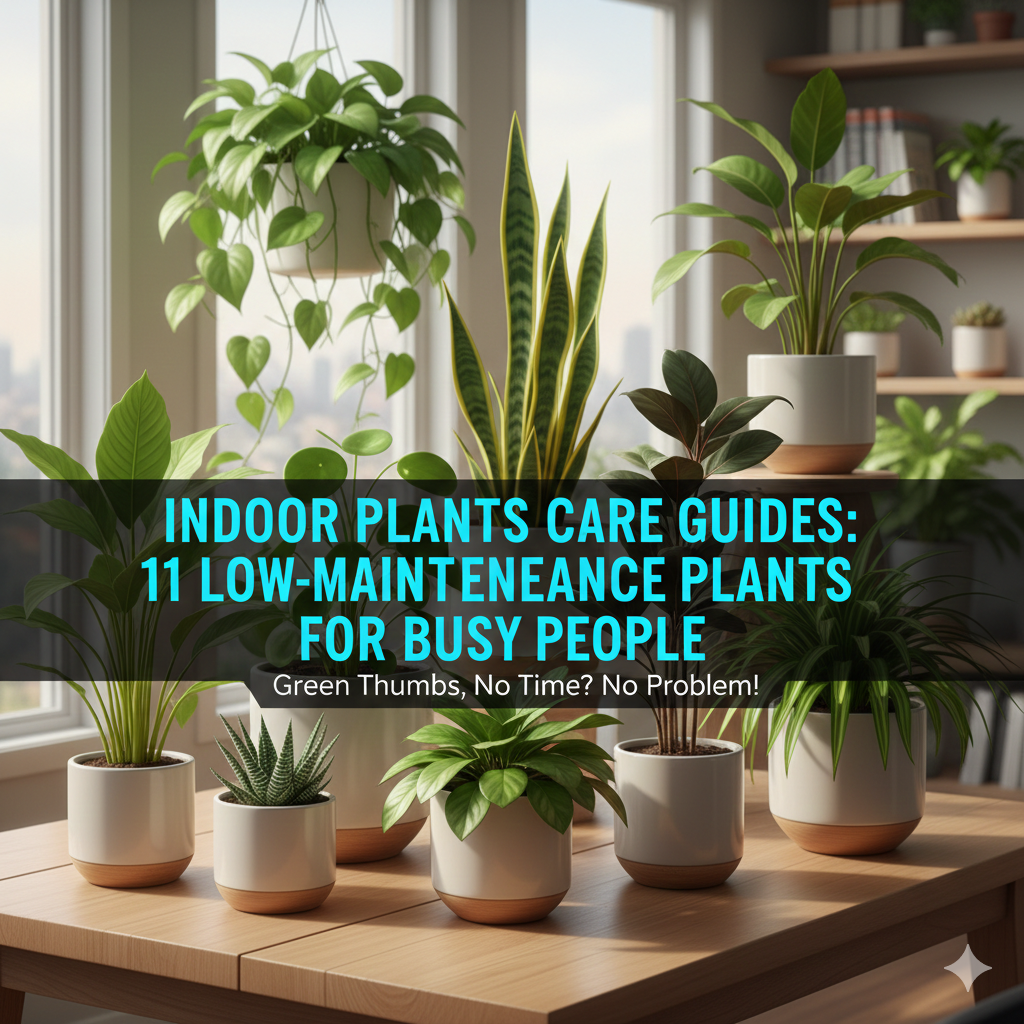
Indoor Plants Care Guides: 11 Low-Maintenance Plants for Busy People
You have a passion for the thought of having plants at home. But there are jobs and errands and all the other things life throws at you — you forget to water them. They die. You feel guilty. Sound familiar?
The good news: not everything must be taken care of on a day-to-day basis. Some plants are even better off left alone. This guide takes you through 11 indoor plants that can be literally unkillable, even if you are the busiest person in the world.
These plants will bring life, color, and cleaner air to your small apartment or large house — and you do not need to give much in return.
Why Low-Maintenance Plants Are a Game-Changer
Most people fail to stick with plants due to poor choices at the start. An orchid or a fiddle leaf fig sounds pretty — but they are not easy to please. They only require the right amount of water, light, and humidity. One mistake and they’re gone.
Low-maintenance plants are tolerant. They deal with inconsistent watering. They do not make a fuss when left alone for two weeks. They can get accustomed to indoor light conditions that most plants would hate.
And the benefits go far beyond just looking good.
Research has established that indoor plants can reduce stress, enhance concentration, and even help purify the air you breathe. You are not only decorating — you are investing in your mental and physical health.
For a deeper dive into plant selection, care schedules, and room-by-room placement ideas, Indoor Plants Guide is a great resource to bookmark.
What Makes a Plant “Low-Maintenance”?
Before we jump into the list, here is a brief breakdown of what separates easy plants from high-maintenance ones.
| Feature | Low-Maintenance Plants | High-Maintenance Plants |
|---|---|---|
| Watering | Every 1–3 weeks | Every 2–3 days |
| Light Requirements | Indirect or low light | Bright, direct sunlight |
| Humidity | Tolerates dry air | Needs constant humidity |
| Soil Sensitivity | Forgiving | Very specific mix needed |
| Repotting | Rarely | Frequently |
| Price | Usually affordable | Often expensive |
When a plant ticks most of the boxes on the left, it belongs on your windowsill.
The 11 Best Low-Maintenance Indoor Plants
1. Snake Plant (Sansevieria trifasciata)
The snake plant is simply the superhero of houseplants. It withstands low light, drought, and neglect — and it still looks sharp.
Its tall, stiff leaves with yellow or white edges give it a modern, clean look. It fits perfectly in offices, bedrooms, and living rooms.
Care at a Glance:
| Water | Every 2–6 weeks depending on season |
| Light | Low to bright indirect light |
| Soil | Well-draining potting mix or cactus soil |
| Humidity | Any level |
| Toxicity | Mildly toxic to pets |
One of the coolest things about the snake plant? It absorbs carbon dioxide at night instead of during the day. That makes it an excellent bedroom plant to improve air quality while you sleep.
Pro Tip: Don’t water it unless you are sure. Snake plants dislike standing in wet soil. Overwatering is the #1 way people kill them.
2. Pothos (Epipremnum aureum)
Pothos is the plant that will not give up. You can put it on a high shelf, let it trail down the walls, or keep it in a corner with nearly no light — and it will keep growing.
It also comes in a variety of gorgeous varieties: golden pothos, marble queen, neon, and others. They all have slightly different appearances, but they all share the same easy-going nature.
Care at a Glance:
| Water | Every 1–2 weeks |
| Light | Low to medium indirect light |
| Soil | Any standard potting mix |
| Humidity | Adapts to most conditions |
| Toxicity | Toxic to pets and children if eaten |
Pothos is also one of the best air-purifying plants worth owning. It helps remove toxins like formaldehyde and benzene from indoor air.
Fun Fact: Pothos can even grow in a jar of plain water with no soil at all. Just change the water every week or two.
3. ZZ Plant (Zamioculcas zamiifolia)
The ZZ plant is your second chance if you have killed every plant you have ever owned. It has thick rhizomes (underground stems) that store water — meaning it can survive weeks without a single drop.
Its glossy, dark green leaves look like they have been polished. People often think it is fake.
Care at a Glance:
| Water | Every 2–4 weeks |
| Light | Low to bright indirect light |
| Soil | Well-draining mix |
| Humidity | Not picky at all |
| Toxicity | Mildly toxic — keep away from pets and children |
Growth of the ZZ is slow, so do not expect quick changes. But it will outlast nearly every other plant in your home if you just leave it alone.
4. Spider Plant (Chlorophytum comosum)
Spider plants are cheerful, fast-growing, and incredibly tough. They grow long, arching leaves with a stripe down the middle — and over time, they shoot out little baby plants that dangle from long stems like spiders on a web. That is how they got their name.
Care at a Glance:
| Water | Every 1–2 weeks (let soil dry slightly between waterings) |
| Light | Medium to bright indirect light |
| Soil | Any well-draining potting mix |
| Humidity | Average household humidity works fine |
| Toxicity | Non-toxic — safe for pets and children |
Spider plants are excellent in hanging baskets. The babies (called spiderettes) can be cut off and grown into new plants — completely free.
Best for: Beginners, pet owners, bathrooms, and kitchens.
5. Aloe Vera
Aloe vera is the plant that gives back. Keep it alive, and it will return the favor when you get a sunburn or a minor skin irritation. The gel inside its thick leaves has real soothing properties.
It is a succulent, so it stores water in its leaves. That means you really do not need to water it very much.
Care at a Glance:
| Water | Every 3 weeks (less in winter) |
| Light | Bright indirect light or a few hours of direct sun |
| Soil | Cactus or succulent mix |
| Humidity | Low — do not mist it |
| Toxicity | Mildly toxic to pets if ingested |
Place it near a sunny window and forget about it. The most common mistake people make is overwatering.
- Signs it needs water: The leaves start to look slightly shriveled or thin.
- Signs it has been overwatered: Mushy, brown, soft leaves at the base.
6. Peace Lily (Spathiphyllum)
Peace lilies are beautiful plants with deep green leaves and white, sail-shaped flowers. They are among the few flowering plants that thrive in low-light conditions — making them ideal for rooms without large windows.
Care at a Glance:
| Water | Every 1–2 weeks (it droops slightly when thirsty, then perks back up after watering) |
| Light | Low to medium indirect light |
| Soil | Well-draining potting mix |
| Humidity | Likes a little extra moisture in the air |
| Toxicity | Toxic to pets and humans — keep out of reach |
The peace lily even warns you when it is thirsty. It droops dramatically, almost as if it is fainting. Water it and within a few hours it stands right back up. It is hard to find a more communicative plant.
7. Chinese Evergreen (Aglaonema)
Chinese evergreens come in a dazzling range of colors — deep green, silver, red, pink, and even orange. Although they appear exotic, they are as low-maintenance as plants get.
They tolerate low light, inconsistent watering, and low humidity without complaining. That is rare for a plant this beautiful.
Care at a Glance:
| Water | Every 1–2 weeks |
| Light | Low to medium indirect light (darker varieties tolerate lower light) |
| Soil | Well-draining potting mix |
| Humidity | Average indoor levels work fine |
| Toxicity | Toxic to pets |
Color Guide by Light Level:
| Leaf Color | Light Requirement |
|---|---|
| Dark Green | Low light |
| Silver / Gray | Low to medium light |
| Red / Pink / Orange | Medium to bright indirect light |
Choose the color that matches your room’s light conditions — and you will have a thriving plant with barely any effort.
8. Rubber Plant (Ficus elastica)
The rubber plant makes a bold statement. Its large, waxy leaves come in deep green, burgundy, or even tricolor varieties. It can even grow into a small indoor tree if you let it.
Despite its dramatic look, it is surprisingly simple to maintain.
Care at a Glance:
| Water | Every 1–2 weeks (let the top inch of soil dry out first) |
| Light | Medium to bright indirect light |
| Soil | Well-draining potting mix |
| Humidity | Average indoor levels |
| Toxicity | Toxic to pets and humans |
Wipe the leaves with a damp cloth occasionally. This helps the plant absorb more light and keeps it looking glossy and healthy.
In the right conditions, the rubber plant grows quickly. When it gets too tall, simply trim the top — which actually encourages it to grow bushier.
9. Cast Iron Plant (Aspidistra elatior)
True to its name, the cast iron plant is as tough as nails. It earned its reputation over centuries as the go-to plant for dark Victorian hallways in England — before electric lights existed.
It withstands deep shade, temperature swings, dust, and drought better than almost anything.
Care at a Glance:
| Water | Every 2–3 weeks (very drought tolerant) |
| Light | Low to very low light |
| Soil | Any regular potting mix |
| Humidity | Not particular |
| Toxicity | Non-toxic to pets and humans |
This is the plant for the darkest corner of your home that gets almost no natural light. Most plants would die there. The cast iron plant thrives.
Growth is slow — but that also means you will not need to repot it often. Once it is settled, just leave it alone.
10. Dracaena (Various Species)
Dracaenas are tall, architectural plants with long, strappy leaves. They come in many varieties — corn plant, dragon tree, marginata, and more — but all share the same low-care personality.
They are consistently found in offices and hotels because they look dramatic without requiring a dedicated caretaker.
Care at a Glance:
| Water | Every 2 weeks (less in winter) |
| Light | Low to bright indirect light |
| Soil | Well-draining mix |
| Humidity | Average indoor conditions |
| Toxicity | Toxic to cats and dogs |
One important note: dracaenas are sensitive to fluoride in tap water. If the leaf tips start turning brown, switch to filtered or distilled water.
11. Succulents (Various Types)
Succulents are an entire family of plants — echeveria, haworthia, sedum, and many others. What they all share is the ability to store water in their leaves, stems, or roots. That makes them perfect for people who forget to water.
Care at a Glance:
| Water | Every 2–4 weeks (let soil dry completely between waterings) |
| Light | Bright indirect to some direct sunlight |
| Soil | Cactus or succulent mix (never regular potting soil — too heavy) |
| Humidity | Low — they hate humidity |
| Toxicity | Varies by species (most are non-toxic) |
The golden rule with succulents: when in doubt, do not water. They die from too much water far more often than from too little.
Best spots for succulents: South or east-facing windowsills, sunny desks, kitchen counters near windows.
Quick Comparison Chart: All 11 Plants at a Glance
| Plant | Watering Frequency | Light Level | Pet-Safe | Beginner-Friendly |
|---|---|---|---|---|
| Snake Plant | Every 2–6 weeks | Low–Bright | ❌ No | ✅ Yes |
| Pothos | Every 1–2 weeks | Low–Medium | ❌ No | ✅ Yes |
| ZZ Plant | Every 2–4 weeks | Low–Bright | ❌ No | ✅ Yes |
| Spider Plant | Every 1–2 weeks | Medium–Bright | ✅ Yes | ✅ Yes |
| Aloe Vera | Every 3 weeks | Bright | ❌ No | ✅ Yes |
| Peace Lily | Every 1–2 weeks | Low–Medium | ❌ No | ✅ Yes |
| Chinese Evergreen | Every 1–2 weeks | Low–Medium | ❌ No | ✅ Yes |
| Rubber Plant | Every 1–2 weeks | Medium–Bright | ❌ No | ✅ Yes |
| Cast Iron Plant | Every 2–3 weeks | Very Low | ✅ Yes | ✅ Yes |
| Dracaena | Every 2 weeks | Low–Bright | ❌ No | ✅ Yes |
| Succulents | Every 2–4 weeks | Bright | Varies | ✅ Yes |
Simple Tips to Keep Any Indoor Plant Alive
You have picked your plant. Here is how to keep it thriving without spending hours on it every week.
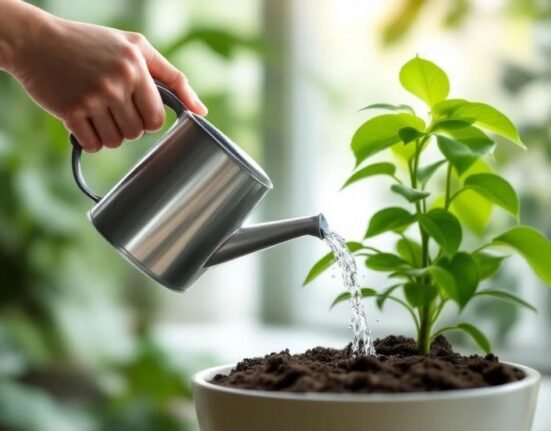
Use the Finger Test Before Watering Stick your finger about an inch into the soil. If it feels damp, wait. If it feels dry, water it. This simple trick prevents overwatering — the #1 killer of indoor plants.
Match the Plant to Your Light Do not put a sun-loving plant in a dark room. Think about which direction your windows face. South-facing windows get the most light. North-facing ones get the least. Pick plants that match what you actually have.
Don’t Repot Too Often Most beginners repot plants too early. A majority of low-maintenance plants prefer to be slightly root-bound. Only repot when you notice roots growing out of the drainage holes.
Skip the Plant Food in Winter Most indoor plants go dormant in winter. Fertilizing at this stage does more harm than good. Use a plain liquid fertilizer in spring and summer — once a month is sufficient.
Drainage Is Non-Negotiable Never let a plant sit in water at the bottom of its pot. This rots the roots fast. Always use pots with drainage holes, or add a layer of gravel at the bottom to improve drainage.
According to the Royal Horticultural Society, proper drainage and matching light conditions to the right plant are the two most impactful habits for keeping indoor plants healthy long-term.
FAQs: Indoor Plant Care for Busy People
Q: What indoor plant requires the least amount of watering? Your best bets are the ZZ plant and the cast iron plant. Both can go 3–4 weeks (sometimes even longer) between waterings without any issues.
Q: Can I keep these plants in a room with no windows? Very few plants can survive with zero natural light. If your room has no windows, consider using a simple grow light for a few hours a day. Snake plants and cast iron plants tolerate the lowest light conditions of all.
Q: Which is the simplest plant for a complete beginner? Pothos. It is almost impossible to kill, it looks good anywhere, and it grows fast enough that you will actually see results — which keeps you motivated.
Q: How do I know if I am overwatering? Yellow leaves, mushy stems, and a sour smell from the soil are the biggest signs of overwatering. As a rule, wait longer and use less water.
Q: Are any of these plants safe around cats and dogs? Spider plants and cast iron plants are non-toxic to pets. Most others on this list — including pothos, ZZ plant, and peace lily — are toxic if chewed or ingested. Keep those out of reach of curious animals.
Q: Do indoor plants actually clean the air? Studies, including a well-known NASA research study, have found that some indoor plants can remove certain toxins from the air. One plant is unlikely to transform your home’s air quality dramatically — but having several spread across your living space does make a real difference over time.
Q: How often should I fertilize low-maintenance plants? Once a month during spring and summer is enough. Use a balanced liquid fertilizer diluted to half strength. Avoid fertilizing in fall and winter.
Wrapping It Up
You do not need a green thumb to have a home full of flourishing plants. You just need the right plants — ones that suit your lifestyle, your schedule, and your space.
The 11 plants in this indoor plants care guide were specifically selected for busy people, forgetful people, and those new to plant parenting. Each one is forgiving, flexible, and truly beautiful in its own way.
Start with one or two. Get comfortable. Learn their rhythms. Soon you will be asking yourself how your home ever felt complete without them.
The most desirable plant is the one that is still alive a year from now — and with this list, that is very much within reach.