6 Fast Pest & Problem Control Fixes Every Indoor Plant Owner Needs
Indoor plants change the energy of a room. They soften sharp corners, clean up stale air, and quietly turn ordinary apartments into living spaces. But anyone who has kept plants long enough knows this: the moment you relax, something shows up. Tiny flies hovering over the soil. Sticky leaves. Yellowing edges. Mysterious webbing.
The good news? Most indoor plant problems are not disasters. They are signals. And with the right fast-response fixes, you can control pests and correct plant stress before things spiral out of hand.
This guide walks you through six fast pest and problem control fixes every indoor plant owner should know. These are practical, realistic solutions you can apply immediately using tools and materials that are easy to find. Along the way, you’ll find reference tables, diagnostic charts, and quick-action checklists you can use whenever something looks “off.”
Why Indoor Plants Get Pests in the First Place
Before jumping into fixes, it helps to understand why pests appear indoors at all.
Unlike outdoor plants, indoor plants live in a controlled but artificial environment. There are:
- No natural predators
- Limited airflow
- Stable temperatures
- Often high humidity in pockets
- Frequent watering
These conditions are ideal not only for plants but also for insects.
Most pests enter your home through:
- Newly purchased plants
- Open windows
- Potting soil
- Contaminated tools
- Bringing outdoor plants inside
The key is not panic. The key is response speed.
Quick Reference: Common Indoor Plant Pests
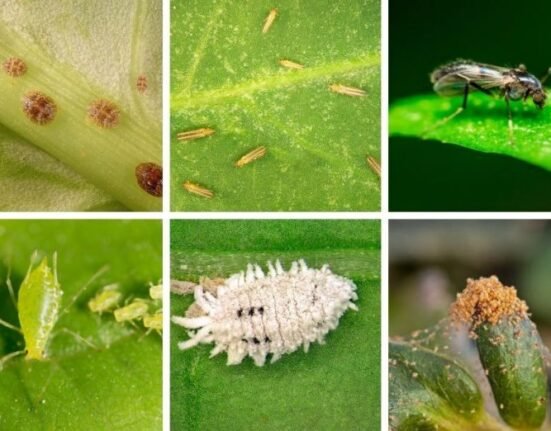
| Pest Type | Visible Signs | Where You’ll See Them | Damage Pattern |
|---|---|---|---|
| Fungus Gnats | Tiny black flies around soil | Soil surface | Weak roots, stunted growth |
| Spider Mites | Fine webbing, speckled leaves | Undersides of leaves | Yellowing, leaf drop |
| Mealybugs | White cotton-like clusters | Leaf joints, stems | Sticky residue, slow growth |
| Aphids | Green/black soft-bodied insects | New growth tips | Curled leaves, sticky sap |
| Scale Insects | Brown bumps stuck to stems | Stems and leaf veins | Yellowing, weakened plant |
| Thrips | Silvery streaks, tiny dark specks | Leaves and flowers | Distorted growth, scars |
Keep this table bookmarked mentally. When you notice symptoms, you’ll know where to look first.
Fix #1: Stop Fungus Gnats Fast
If you see tiny flies rising from your plant every time you water it, you’re dealing with fungus gnats.
Why They Appear
Fungus gnats thrive in consistently moist soil. Their larvae live beneath the surface and feed on organic matter — and sometimes delicate roots.
Immediate Control Plan
Step 1: Let the Soil Dry
Stop watering until the top 1–2 inches of soil are completely dry. Larvae need moisture to survive.
Step 2: Yellow Sticky Traps
Place sticky traps near the soil surface to capture adult gnats and break the breeding cycle.
Step 3: Hydrogen Peroxide Soil Drench
Mix:
- 1 part 3% hydrogen peroxide
- 4 parts water
Pour it through the soil. It kills larvae on contact but is safe for roots in diluted form.
Fungus Gnat Elimination Timeline
| Day | Action Taken | Expected Result |
|---|---|---|
| 1 | Stop watering + set traps | Fewer flying adults |
| 3 | Apply peroxide drench | Larvae significantly reduced |
| 7 | Maintain dry cycle | Population collapse |
| 14 | Resume careful watering | Problem eliminated |
The key here is consistency. Overwatering is almost always the root cause.
Fix #2: Eliminate Spider Mites Before They Spread
Spider mites are sneaky. They’re nearly invisible to the naked eye, but the damage gives them away.
Warning Signs
- Fine webbing
- Tiny yellow dots on leaves
- Leaves losing color and vitality
Spider mites love dry air and stagnant conditions.
Fast Action Strategy
Step 1: Rinse the Plant
Take it to the sink or shower and spray the undersides thoroughly. This alone can remove a large portion.
Step 2: Increase Humidity
Spider mites struggle in humid environments.
Step 3: Neem Oil Spray
Mix neem oil with water and a few drops of mild dish soap. Spray every 4–5 days for 2 weeks.
Spider Mite Treatment Schedule
| Week | Treatment Focus | Goal |
|---|---|---|
| 1 | Wash + Neem Spray | Kill active mites |
| 2 | Repeat Spray | Destroy newly hatched mites |
| 3 | Monitor | Prevent reinfestation |
Persistence matters more than intensity.
Fix #3: Remove Mealybugs Without Damaging Your Plant
Mealybugs look like bits of cotton stuck to stems. They feed on plant sap and excrete sticky residue (honeydew).
Quick Response Method
Spot Treatment with Alcohol
Dip a cotton swab in 70% isopropyl alcohol. Dab directly onto the mealybugs. They dissolve instantly.
Follow-Up Spray
Use insecticidal soap weekly until no signs remain.
Mealybug Control Checklist
- Inspect leaf joints
- Check undersides
- Clean nearby surfaces
- Isolate the plant
- Repeat inspection every 3 days
Isolation is crucial. Mealybugs spread quickly.
Fix #4: Control Aphids on New Growth
Aphids target tender new leaves and stems.
Why They’re Dangerous
They multiply rapidly and can distort growth permanently if ignored.
Fast Control Plan
Strong Water Spray
Blast them off with water first.
Insecticidal Soap
Apply thoroughly, especially on new growth.
Manual Removal
If infestation is small, pinch off affected tips.
Aphid Infestation Growth Chart
| Time Without Treatment | Population Growth Rate |
|---|---|
| 3 Days | Doubles |
| 1 Week | 4–8x Increase |
| 2 Weeks | Full Infestation |
Speed is your advantage.
Fix #5: Treat Root Rot Before It’s Too Late
Not all plant problems involve insects. Root rot is a silent killer.
Symptoms
- Yellow leaves
- Mushy stems
- Sour soil smell
- Wilting despite wet soil
Emergency Rescue Plan
- Remove plant from pot.
- Rinse roots.
- Cut off brown, mushy sections.
- Repot in fresh, well-draining soil.
- Reduce watering frequency.
Healthy vs. Rotting Roots
| Healthy Roots | Rotting Roots |
|---|---|
| Firm | Soft |
| White | Brown/Black |
| Earthy smell | Sour odor |
Once rot spreads too far, recovery becomes unlikely. Early action is everything.
Fix #6: Solve Leaf Yellowing and Nutrient Deficiencies
Not all yellow leaves mean pests.
Common Causes
| Symptom Pattern | Likely Cause |
|---|---|
| Bottom leaves yellowing | Overwatering |
| Pale entire plant | Nitrogen deficiency |
| Yellow with green veins | Iron deficiency |
| Brown crispy edges | Underwatering or salt burn |
Fast Fix Approach
- Check soil moisture first.
- Flush soil to remove salt buildup.
- Apply balanced liquid fertilizer if needed.
- Improve drainage.
Diagnostic Flow Chart
Leaves turning yellow?
→ Check soil moisture
→ Wet? Reduce watering
→ Dry? Water deeply
→ Still yellow? Check nutrients
→ Veins green? Add iron
→ Overall pale? Add nitrogen
Systematic diagnosis prevents overcorrecting.
Preventative Maintenance Schedule
Prevention saves far more time than treatment.
| Frequency | Task |
|---|---|
| Weekly | Inspect leaves (top and bottom) |
| Biweekly | Wipe leaves clean |
| Monthly | Check drainage holes |
| Every 3 Months | Refresh topsoil layer |
| Annually | Repot if rootbound |
Consistency beats emergency fixes.
Indoor Plant Environmental Balance Chart
| Factor | Ideal Range | Too Low Causes | Too High Causes |
|---|---|---|---|
| Humidity | 40–60% | Spider mites | Mold growth |
| Light | Species-dependent | Weak growth | Leaf scorch |
| Watering | When top 1–2 inches dry | Root rot | Dehydration stress |
| Airflow | Gentle circulation | Pest buildup | Excess drying |
Balanced conditions discourage pests naturally.
The Golden Rule: Isolate First, Diagnose Second
When you notice a problem:
- Move the plant away from others.
- Inspect thoroughly.
- Identify before treating.
- Treat consistently.
- Monitor weekly.
Most infestations spread because we ignore early warning signs.
Emergency Pest Control Kit Every Plant Owner Should Have
| Item | Purpose |
|---|---|
| Neem oil | Broad pest control |
| Insecticidal soap | Aphids, mites, thrips |
| 70% isopropyl alcohol | Mealybugs, spot treatment |
| Yellow sticky traps | Fungus gnats |
| Pruning shears | Remove damaged growth |
| Well-draining potting mix | Root health |
Think of it as a first-aid kit for greenery.
When to Let a Plant Go
Sometimes, despite best efforts, a plant declines beyond recovery.
Consider replacement if:
- 80% of roots are rotted
- Repeated infestations occur
- Structural damage is severe
- Disease spreads to stems irreversibly
Letting go is part of gardening. It makes room for healthier growth.
Frequently Asked Questions (FAQs)
1. How often should I inspect my indoor plants for pests?
At least once a week. Check undersides of leaves, stems, and soil surface. Early detection prevents major infestations.
2. Can I use household dish soap instead of insecticidal soap?
Yes, but use a mild, fragrance-free soap and dilute it properly (about 1–2 teaspoons per quart of water). Test on one leaf first to avoid damage.
3. Why do pests keep coming back even after treatment?
Most pests lay eggs that hatch later. Consistent treatment over 2–3 weeks is necessary to break the life cycle.
4. Is neem oil safe for all plants?
Most plants tolerate neem oil well, but some delicate species may show sensitivity. Always test on a small section before full application.
5. How do I prevent overwatering?
Use pots with drainage holes, allow soil to partially dry between waterings, and avoid watering on a strict calendar schedule.
6. Should I quarantine new plants?
Absolutely. Keep new plants isolated for 2–3 weeks before placing them near existing ones. This simple habit prevents most pest introductions.
Final Thoughts
Indoor plant care is less about perfection and more about observation. Most pest and plant problems give early warnings — subtle color changes, slight drooping, tiny specks. The difference between a thriving indoor garden and a struggling one is not luck. It’s attention and quick response.
By mastering these six fast fixes — controlling fungus gnats, eliminating spider mites, removing mealybugs, managing aphids, rescuing root rot, and correcting nutrient issues — you build resilience into your plant care routine.
Plants are forgiving. They want to grow. With steady care, clean conditions, and prompt action, your indoor space can remain lush, vibrant, and pest-free year-round.