10 Smart Indoor Plant Care Hacks That Revived My Dying Plants
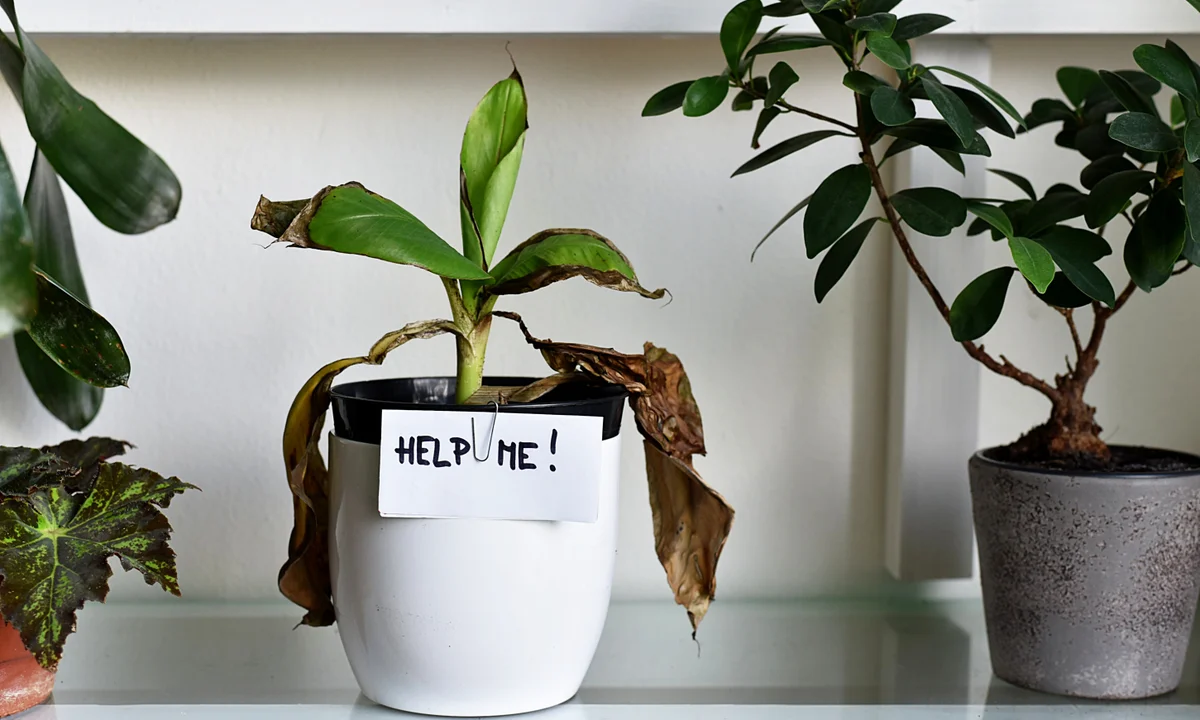
There was a time when my home looked less like a calming indoor jungle and more like a botanical emergency ward. Yellowing leaves. Limp stems. Brown, crispy edges. Soil that smelled suspiciously swampy.
I had done what most beginners do — I watered when I felt guilty, fertilized when I remembered, and placed plants wherever there was space rather than where there was light.
But instead of giving up, I decided to experiment. Over time, I discovered ten practical, science-backed, and surprisingly simple indoor plant care hacks that didn’t just “help” my plants — they completely revived them.
This article is a deep dive into those hacks, the logic behind them, practical examples, and the measurable difference they made. I’ve also included tables, care charts, and diagnostic guides so you can apply these lessons immediately.
Hack #1: Stop Watering on a Schedule — Start Watering by Soil Depth
For years, I followed the classic advice: “Water once a week.”
That was mistake number one.
Plants don’t drink on a calendar. They drink based on:
- Light exposure
- Temperature
- Humidity
- Pot size
- Soil type
- Season
The Turning Point
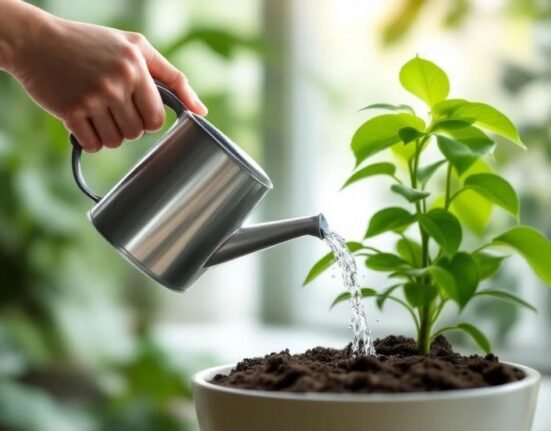
I began using the finger test — pushing my finger 2 inches into the soil. If it was dry at that depth, I watered. If not, I waited.
For larger pots, I used a wooden chopstick. If it came out damp with soil sticking to it, the plant didn’t need water.
Soil Moisture Decision Chart
| Soil Condition (2 inches deep) | Action | Risk if Ignored |
|---|---|---|
| Dry and crumbly | Water thoroughly | Wilting, root dehydration |
| Slightly damp | Wait 2–3 days | Overwatering |
| Wet and compacted | Do not water | Root rot risk |
| Smelly / swampy | Repot immediately | Fungal infection |
Results
Within two weeks:
- Yellow leaves stopped appearing.
- New growth emerged.
- Fungal gnats disappeared (because I wasn’t keeping soil constantly wet).
Hack #2: Light Is Food — Not Decoration
I used to think plants just needed “a bright room.” That’s vague and misleading.
Plants don’t care about décor. They care about light intensity and duration.
The Light Reality Check
I downloaded a light meter app and tested different areas in my home.
What I learned:
- My “bright” living room corner was actually low light.
- My kitchen window was the brightest spot.
- Winter light dropped by nearly 40%.
Light Requirement Table (Common Houseplants)
| Plant Type | Light Level Needed | Best Placement |
|---|---|---|
| Snake Plant | Low to medium | 6–10 ft from window |
| Pothos | Medium | Near east-facing window |
| Fiddle Leaf Fig | Bright indirect | Within 3 ft of south window |
| Succulents | Direct sunlight | South or west window |
| Peace Lily | Low to medium | North-facing window |
The Fix
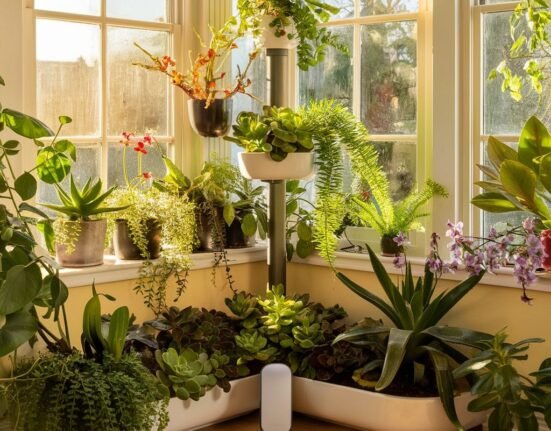
I rearranged my home based on plant needs instead of aesthetics.
Within a month:
- Leggy growth reduced.
- Leaf size increased.
- Colors deepened.
Hack #3: Drainage Isn’t Optional — It’s Life Support
I once believed putting rocks at the bottom of pots improved drainage.
It doesn’t.
Water doesn’t magically pass through rocks. It creates a perched water table, increasing root rot risk.
What Actually Works
- Pots with drainage holes.
- Well-draining soil mix.
- Emptying saucers after watering.
Ideal Soil Mix Comparison
| Plant Type | Standard Potting Mix | Add Perlite | Add Orchid Bark | Add Sand |
|---|---|---|---|---|
| Tropical foliage | Yes | 20% | 10% | No |
| Succulents | No | 40% | No | 30% |
| Cacti | No | 50% | No | 40% |
| Aroids | Yes | 25% | 20% | No |
After switching to customized mixes:
- Root rot stopped completely.
- Growth rate increased noticeably.
- Soil dried at a healthier pace.
Hack #4: Humidity Is the Silent Growth Multiplier
Many indoor plants come from tropical environments. My home, especially in winter, was closer to a desert.
Before Fixing Humidity:
- Brown leaf tips
- Curled leaves
- Slow growth
After Adding Humidity:
I introduced:
- A small humidifier
- Plant grouping
- Pebble trays (with water below pot level)
Humidity Impact Table
| Humidity Level | Plant Reaction |
|---|---|
| Below 30% | Brown tips, slow growth |
| 30–40% | Survival mode |
| 40–60% | Healthy growth |
| 60–70% | Tropical plants thrive |
Within weeks:
- New leaves were larger.
- Leaf edges stopped crisping.
- Overall vitality improved.
Hack #5: Fertilize Strategically, Not Randomly
I used to fertilize when I remembered — which meant either too much or not at all.
Plants need nutrients mainly during active growth (spring and summer).
Fertilizing Schedule Chart
| Season | Frequency | Strength |
|---|---|---|
| Spring | Every 2–4 weeks | Half strength |
| Summer | Every 2–4 weeks | Half strength |
| Fall | Once per month | Quarter strength |
| Winter | Rarely or none | Skip |
I also started flushing the soil with plain water every 2–3 months to remove salt buildup.
Results:
- Leaf color deepened.
- Growth became consistent.
- No more fertilizer burn.
Hack #6: Repot Before the Plant Begs for It
I waited until roots were coming out of drainage holes before repotting.
Now I check annually.
Signs a Plant Needs Repotting
- Water runs straight through soil.
- Roots circle the pot.
- Growth stalls.
- Soil compacts quickly.
Pot Sizing Rule
Increase pot size by only 1–2 inches in diameter.
Going too big traps excess moisture.
Hack #7: Clean Leaves = Better Photosynthesis
Dust blocks sunlight.
I didn’t realize how much until I wiped down a large-leaf plant and saw the difference.
Cleaning Routine
- Soft damp cloth every 2–3 weeks.
- Shower rinse for sturdy plants.
- Avoid commercial leaf shine sprays.
Before vs After Cleaning (Observed Changes)
| Factor | Before | After |
|---|---|---|
| Leaf color | Dull | Glossy |
| Growth rate | Moderate | Improved |
| Pest frequency | Higher | Lower |
Clean leaves breathe better.
Hack #8: Diagnose Before You Panic
Yellow leaves don’t always mean overwatering.
They can indicate:
- Nutrient deficiency
- Low light
- Natural aging
- Temperature shock
Quick Diagnosis Table
| Symptom | Likely Cause | Fix |
|---|---|---|
| Yellow lower leaves | Overwatering | Reduce watering |
| Pale entire plant | Low nutrients | Fertilize |
| Brown crispy edges | Low humidity | Increase humidity |
| Drooping but wet soil | Root rot | Repot |
| Leggy growth | Low light | Move to brighter spot |
Instead of reacting emotionally, I now troubleshoot logically.
Hack #9: Rotate for Even Growth
Plants lean toward light.
I now rotate pots 90 degrees every week.
This simple habit:
- Balanced growth
- Prevented stem bending
- Improved symmetry
Hack #10: Understand Seasonal Dormancy
One winter, I thought my plants were dying.
They weren’t. They were resting.
Growth slows in cooler months because:
- Light decreases
- Temperature drops
- Metabolism slows
Seasonal Care Chart
| Season | Watering | Fertilizing | Light |
|---|---|---|---|
| Spring | Increase | Resume | Bright |
| Summer | Frequent | Regular | Bright |
| Fall | Reduce | Decrease | Moderate |
| Winter | Minimal | Stop | Maximize exposure |
Accepting dormancy prevented overwatering and fertilizer damage.
The Transformation Timeline
Here’s a simplified progression of recovery:
Week 1: Adjust watering and drainage
Week 2: Rearrange light placement
Week 3: Add humidity support
Week 4: Begin proper fertilization
Month 2: Notice visible new growth
Month 3: Plants stabilize and thrive
Measurable Improvements
| Metric | Before | After |
|---|---|---|
| Yellow leaves per month | 8–12 | 1–2 |
| Plant loss rate | 3 per year | 0 |
| Growth speed | Slow | Consistent |
| Pest outbreaks | Frequent | Rare |
| Leaf size | Small | 20–40% larger |
The Bigger Lesson
Reviving plants wasn’t about buying expensive tools. It was about understanding their environment.
Indoor plants don’t fail randomly. They respond predictably to care patterns. When you adjust inputs — light, water, soil, nutrients — you adjust outcomes.
Consistency beats intensity.
Observation beats guessing.
And patience beats panic.
Frequently Asked Questions (FAQs)
1. How do I know if I’m overwatering or underwatering?
Check soil depth, not the surface. Overwatered plants usually have yellowing leaves and wet soil. Underwatered plants feel dry several inches down and may wilt but recover quickly after watering.
2. Should I mist my indoor plants daily?
Misting provides only temporary humidity. It evaporates quickly and doesn’t significantly raise overall humidity. A humidifier or grouped plants work much better.
3. How often should I repot indoor plants?
Most indoor plants benefit from repotting every 1–2 years. Fast growers may need annual checks, while slow growers can wait longer.
4. What is the best fertilizer for indoor plants?
A balanced liquid fertilizer (like 10-10-10 or 20-20-20) diluted to half strength works well for most foliage plants during active growth seasons.
5. Why are my plant’s leaves turning brown at the tips?
Brown tips are often caused by low humidity, inconsistent watering, or salt buildup from fertilizer. Increase humidity and flush the soil occasionally.
6. Can indoor plants recover from root rot?
Yes — if caught early. Remove the plant, trim black/mushy roots, repot in fresh well-draining soil, and adjust watering habits.